This guide will walk you through some common issues which are found in all sorts of classic cars, explain what you can do about it, and how to protect your classic and yourself with proper insurance.
There’s still a huge number of classic cars on the roads here in the UK, and you’ve only got to head to your local classic car show to see a massive variety of makes, models and eras on display.
I know from all the time I’ve spent driving classic VWs and chatting to people at all sorts of classic car shows across the UK, that there are some problems which seem to pop up in all classics, regardless of the make or model!
I’ll be covering everything from corrosion to criminals in this guide, giving you steps to prevent or fix these problems, and how classic car insurance can be massively helpful with all of them.
Jump To:
- What is a Classic Car?
- Why Is Classic Car Insurance So Important?
- Common Issues with Classic Cars, in No Particular Order
- Rust and Corrosion
- Staying Safe on Modern Roads
- Engine Problems
- Brake Problems
- Electrical Problems
- Cooling Problems
- Heating Problems
- Security Issues
- Maintenance Issues
- Finding the Right Mechanic
- Parts Scarcity
- Storing Your Classic Car
- A Quick Summary
What is a Classic Car?
It’s a simple enough question, but the answer might depend on who you’re talking to.
As far as the UK Government and DVLA is concerned, a vehicle becomes a historic (or classic) vehicle once it’s more than 40 years old. This means that once your vehicle passes this milestone you can apply for a vehicle tax exemption, and won’t need to get an MOT if there have been no ‘substantial changes’ made to the vehicle in the last 30 years.
Substantial changes here refers to modifications like replacing the chassis, swapping out the vehicle’s body, changing the axles, or replacing the engine to change the way the vehicle works.
This exemption rolls on every year at the start of April, so it’s worth keeping an eye on the gov.uk Historic Vehicles page to check when your car will officially become a classic.
For a lot of vehicle insurers, things are a bit less clear cut, and many will have their own definition. It’s often as much about how and when you use your vehicle as about its actual age, with the following factors often being taken into consideration, as we explained in our blog The Difference Between Classic Car Insurance and Daily Driver Insurance
- If your vehicle is between 15 and 40 years old,
- If your vehicle is used for leisure or occasional use, not for daily commuting,
- If your vehicle is well looked after and is securely stored (e.g., in a garage),
- In some cases, being a member of a classic car club can help.
Regardless of whether or not you’re using the ‘official’ DVLA definition of when a car becomes a classic, or you’re largely basing it on your gut feel, it’s as important to properly protect your classic car with the right type of insurance policy as it is to use the correct type of fuel or mechanical parts.
Why Is Classic Car Insurance So Important?
One of the biggest and best reasons to get specialist classic car insurance is that you’ll likely save a fair amount of money!
Classic car insurance policies tend to come with restricted usage, where you’re only insured to drive for a few thousand miles per year. At Just Kampers Insurance we offer a Limited Mileage Discount as part of all of our classic policies, which helps keep the price of insuring your classic down.
If a classic car isn’t being driven very often, it’s at much lower risk of being in an incident or needing to make a claim than a vehicle which is doing hundreds or thousands of miles a week, which is why most insurers are willing to offer a better price on cover for classics.
For example, we can insure your VW Beetle car from just £105 a year! Or your Non-VW Classic Car for the same amount.
Common Issues With Classic Cars, in No Particular Order
Here are a few of the most common issues which occur in most, if not all, classic cars.
These points aren’t in any particular order, and you can go straight to the one you’re most interested in by clicking on one of the links in the Jump To section towards the top of this page.
How to Prevent Rust and Corrosion in Classic Cars
When most people think of problems that classic cars face, they’ll think of rust. It’s an issue which affects all classic cars, to some extent, and is rightly feared as a problem which can sneak up from nowhere to cause serious damage to your classic.
Rust, also known as iron oxide, occurs when exposed metalwork is left to interact with moisture in the air. It’s effectively the result of a chemical reaction which leaves the metal panels and body components of your classic car severely weakened.
The steel used to create your car contains iron, which will readily react with the water and oxygen in the air if exposed to it for long enough. This is no small part of the reason that cars are painted – it’s not just for aesthetics, the paint is a really effective barrier between the elements and your vehicle’s metalwork.
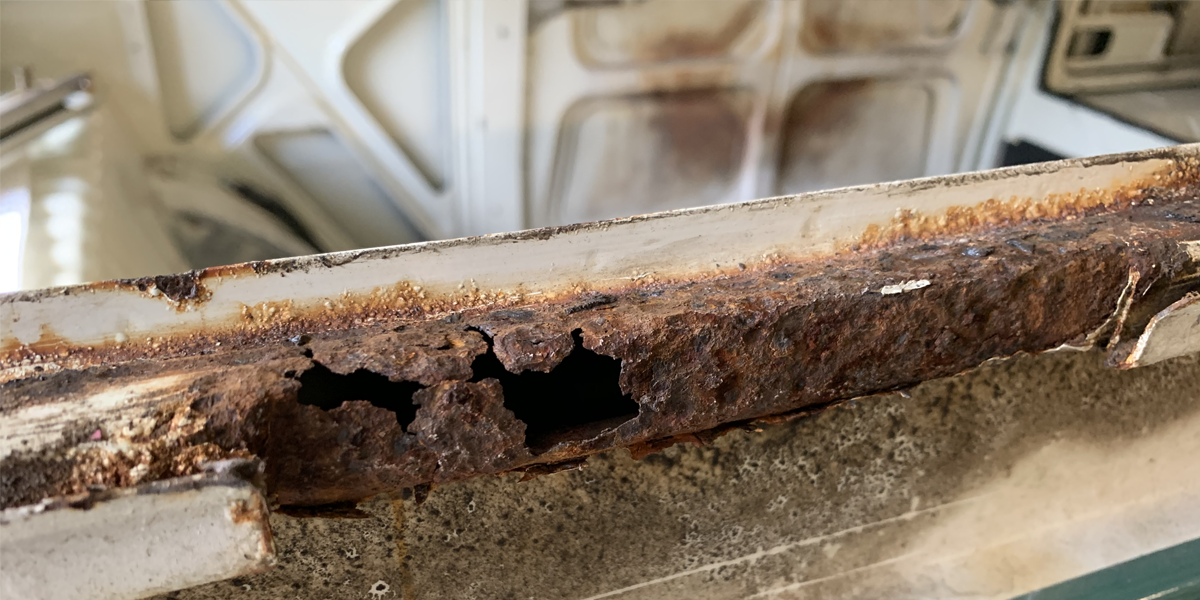
Damage to the paint on your classic car exposes the metal beneath to the air, rain, snow, and atmospheric humidity, as well as road salt and grit, which will speed up the chemical reaction that creates rust. Similarly, the underside of your classic is often coated in a sealant or rust-proofing agent to prevent the same from happening underneath your vehicle where you’re much less likely to see it.
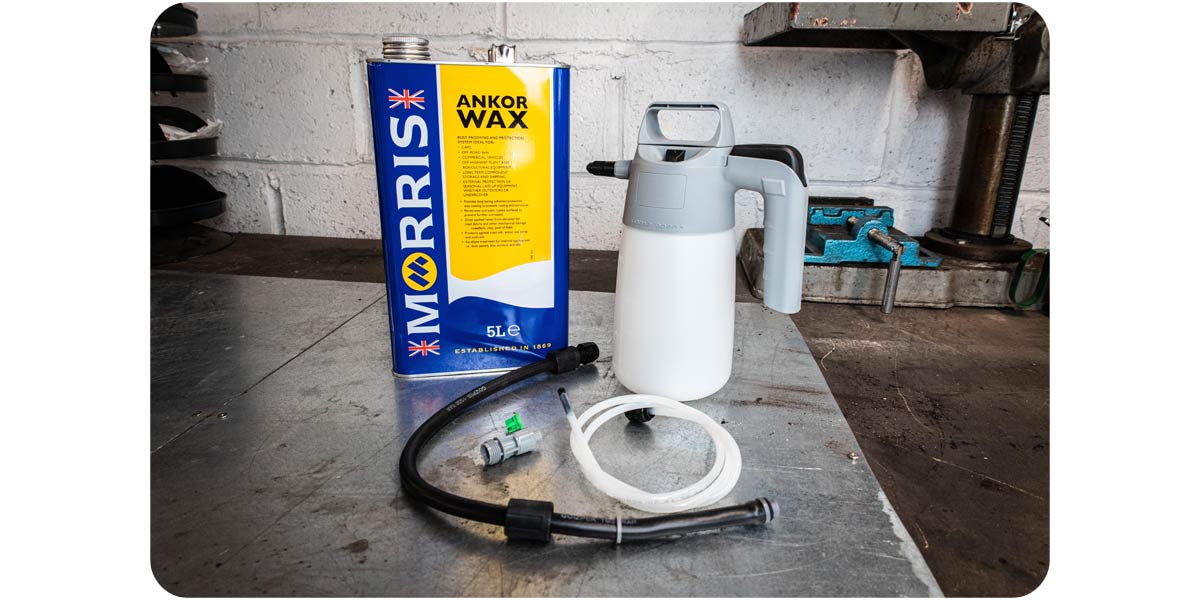
These rust proofing methods, like Ankor Wax or Noxudol, are generally really effective, but you’ll need to inspect the treated areas periodically to ensure that they’re still doing their work and your vehicle doesn’t require another coat. In some cases, you’ll need to remove the existing rustproofing entirely, clean the underside of your classic car, and then apply fresh, new coats of rustproofing to make sure it’s properly looked after and will keep going strong well into the future.
Our colleagues over at Just Kampers have created a video on How to Prevent Rust On Your Classic Car by Using Cavity Wax, which shows you how to apply rustproofing to your classic car.
Since rust is caused by moisture, and the winter months here in the UK tend to be wet, rainy, icy, and even snowy, plus a liberal coating of road salt which will only make rusting worse, and it’s little wonder that so many drivers opt to tuck their classic cars away for the winter to limit their exposure to the elements.
We’ve got a separate blog listing out tips on storing your classic away during the winter, which you can read here.
If you are taking your classic off the road for the winter, then it’s well worth speaking to your insurer about laid up cover.
Laid up cover is a specialist vehicle insurance policy which ensures your vehicle is covered while it’s kept off the road, but does not include any cover for road use. As such, it’s generally much cheaper than regular vehicle insurance, because if you’re not using your classic on the roads then you’re far less likely to need to make a claim on your insurance policy.
Keeping Your Classic Car Safe on Modern Roads
It’s no secret that safety standards in the automobile industry have come on in leaps and bounds over the years, from the invention of airbags in the 1950s, mandatory three-point seatbelts in 1968, through to modern lane assist technology.
Many of our beloved classic cars lack certain safety features which many of us take for granted in our ‘daily drivers’, whether they’re to help prevent traffic incidents or to help keep us safe if a crash does occur.
This perceived lack of safety is a valid concern for a lot of people, but there are plenty of things we can do to help keep ourselves and others safe while we’re driving our classic cars.
Simple steps like upgrading to convex wing mirrors can massively boost visibility while driving, retro-fitting three-point seat belts can keep occupants safe, and swapping to more modern lights (or upgrading from a 6v to a 12v electrical system) can help us see and be seen on the roads.
These safety upgrades don’t have to ruin the aesthetics of your classic, either, and many have been designed to add to your vehicle’s retro styling. You may even find that investing in some safety features can help lower your vehicle insurance costs, since you’ve shown that you’re taking extra steps to make your classic safer for yourself and other road users.
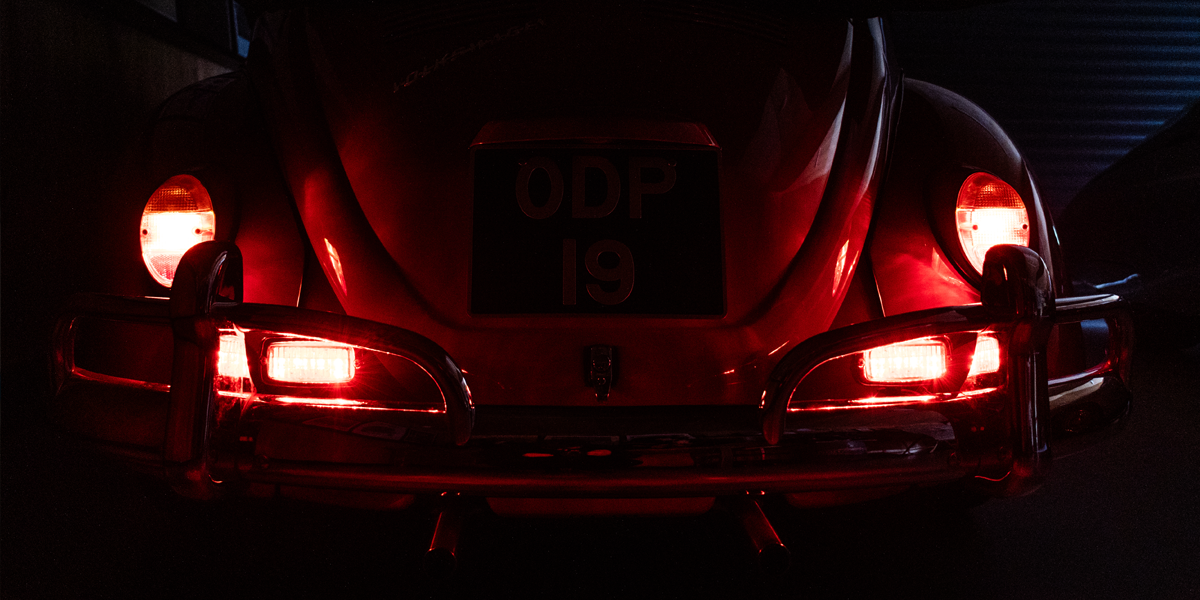
There’s a huge range of safety upgrades out there for all sorts of different makes and models of classic car and the team at Just Kampers, our sister company, have some great options in stock for classic Volkswagens including rear light upgrade kits, Securon seatbelts, and even complete disc brake upgrade bundles.
If you’re insured with Just Kampers Insurance, you’ll also get a 10% discount on orders from Just Kampers, to help you keep your classic on the road and ready for adventure without breaking the bank.
Give us a call today on 01256 44 45 46 to see how much you could save on insuring your classic car, and talk about how safety upgrades can help lower your premium.
Common Engine Problems Classic Cars Experience
Although it might seem strange to those of us who’ve been driving and enjoying classic cars for years, there’s still a general perception that the engines in classic vehicles are unreliable or underpowered.
While it’s true that the average Citroën 2CV’s engine is unlikely to thrill anyone, there are plenty of classics out there with some serious horsepower, and most classic car engines are really easy – and really enjoyable – to work on yourself.
Unlike modern vehicles, which require specialist tools and computer systems to diagnose and repair, a lot of really popular classic car engines can be maintained, serviced, and repaired at home with basic tools, a manual, and a free Sunday afternoon.
With regular maintenance, some help from your local owners club, and the confidence to give it a go yourself, you’ll quickly be able to keep your classic car’s engine running smoothly, notice if something seems off with it, and figure out what might have gone wrong.
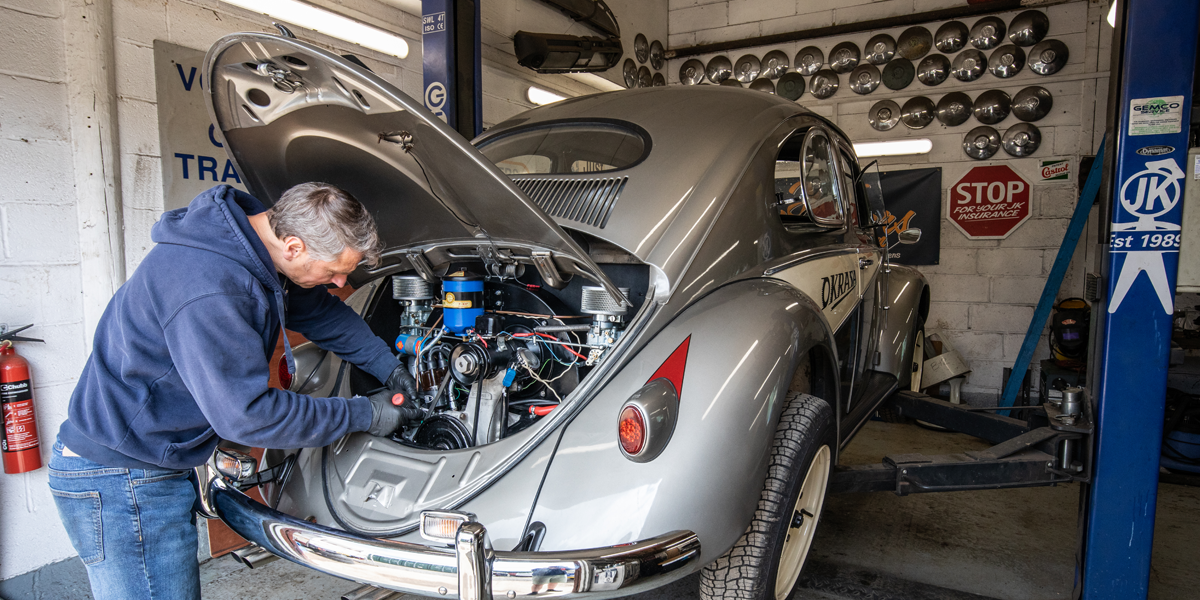
Generally speaking, the engine in your classic car will keep on running beautifully if you (or your trusted mechanic) stay on top of maintenance, but failing to do so can lead to problems.
If you do find that it lets you down, though, you’ll want to ensure that you’ve got proper breakdown cover, and consider carrying the parts and tools needed to fix common issues. It’s relatively unlikely that your roadside assistance service will be carrying engine components for your classic, but they’re pretty likely to be able to fit them to get you back on the road.
Luckily, we include breakdown cover in all of our classic (and modern) campervan insurance policies, as well as offering it as an optional extra starting from just £25.50 a year. You can click here to find out more about breakdown cover from Just Kampers insurance, or give us a call now on 01256 44 45 46 to find out more.
How to Avoid Brake Problems in Your Classic Car
While some classic cars don’t have as much ‘go’ as you might like, as we discussed above, others don’t stop quite as well as you’d hope.
The adoption of disc brakes in the 1950s made a massive difference to the stopping power of a lot of classics, and a lot of vehicles built before then are still running less-effective drum brakes.
The inability to stop quickly and safely can make for some pretty sketchy moments behind the wheel, and leads to a much more active and defensive style of driving, where you’re scanning for potential threats on the road like you’re doing your Hazard Perception Test, or stop you from driving your classic unless the weather, and road conditions, are perfect.
This doesn’t have to be the case, and for a lot of vehicles there are brake upgrade kits, or accessories which can improve the performance of your original brake set-up, to make driving (and stopping) less stressful. Similarly, keeping on top of maintaining your classic’s brakes, and servicing them regularly, will help to keep them working as efficiently as possible.
Leaking brake hoses, uneven wear on brake pads, stretched brake cables, and even damage from mice nibbling at things can all lead to major issues with your classic car’s brakes.
A ready supply of spare parts, tools, and the right attention given to your braking system, though, can massively improve your classic’s drivability, and safety, by giving you peace of mind that your brakes will kick in fully, and perform effectively, when you need them to!
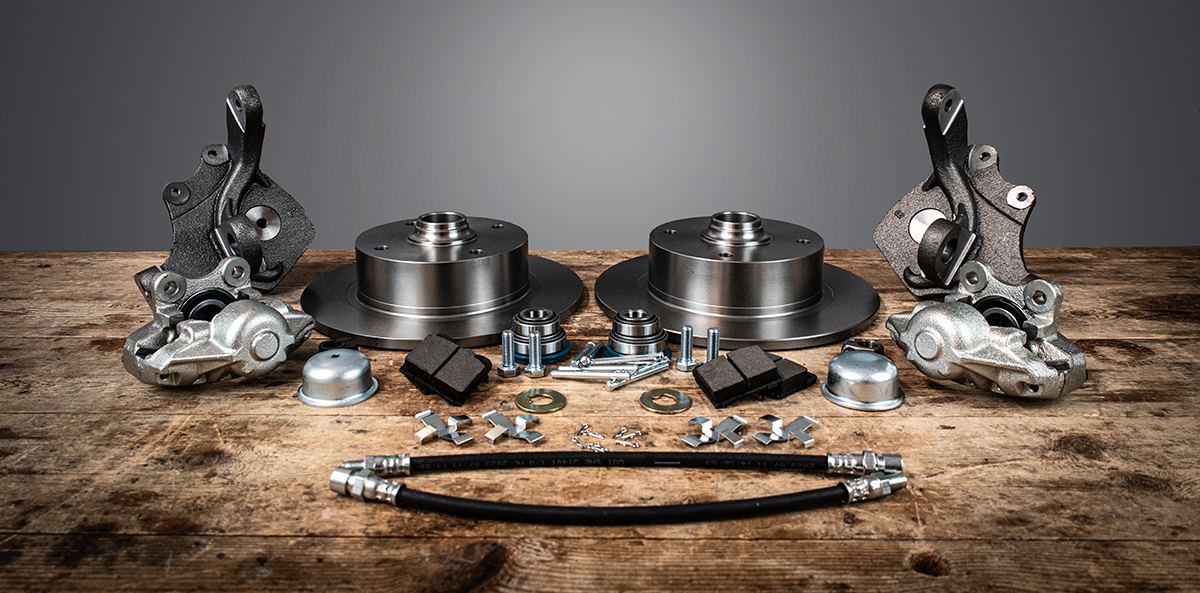
If you’ve got a lot of spare parts and accessories for your classic car tucked away at home, you can get spare parts cover to protect up to £2,000 of spare parts for just £17 per year with Just Kampers Insurance.
These parts are often stored in garages, sheds, or inside the vehicle themselves and so may not be included in your home or car insurance policy, but if you’ve got a hoard of OEM spares, or you’re in the middle of a project or restoration, then it’s sensible to make sure they’re properly covered.
Common Classic Car Electrical Problems
While a lot of people are happy to get stuck in to a mechanical problem, there’s fewer of us who are keen to start untangling any electrical faults which might pop up in our classic cars.
It’s fairly common to see some pretty unorthodox approaches to wiring and electrics in older vehicles, most of which have been worked on by a number of people over the years, some of them professionals and others who were enthusiastic amateurs.
You won’t have to look very hard to find horror stories of people pulling metres and metres of seemingly useless wiring from their classic car, all while trying to trace the source of a seemingly small electrical problem. Maybe the indicators have packed up, or the headlights seem a bit dim, and before you know it you’re hacking away at electrical cables like a manic explorer in a jungle of wires!
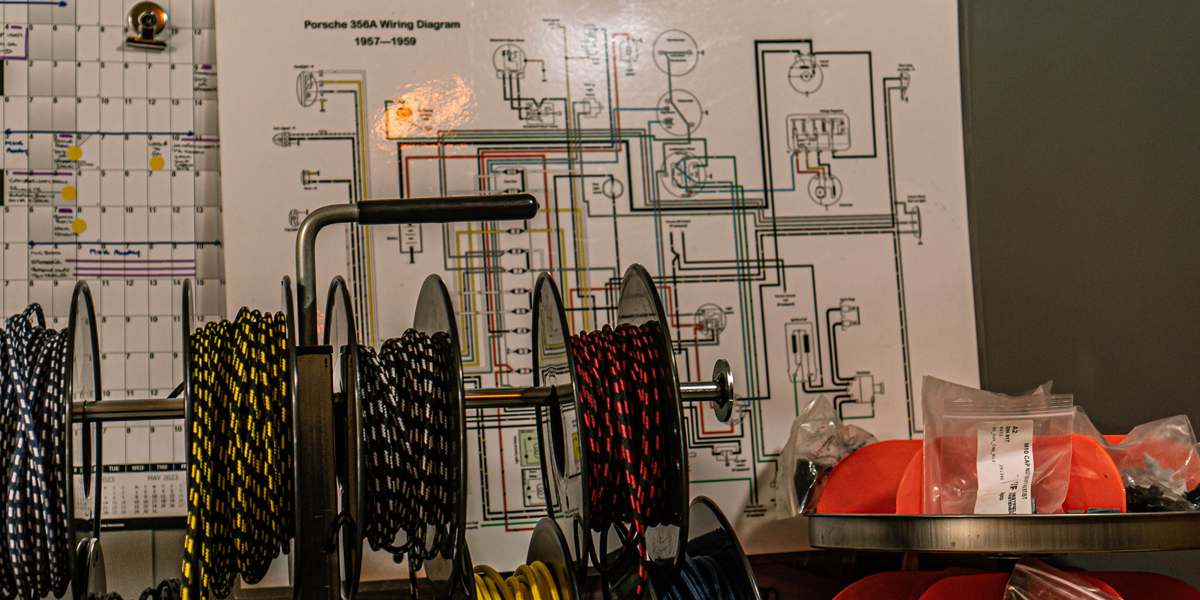
Our colleagues at Just Kampers once imported a VW T2 Bay over from California as a team restoration project, and found what felt like about a mile of redundant cabling which needed to be removed before they could get to things like the lights!
Fortunately, most classic cars have a fairly simple design, and the wiring is generally pretty accessible (note the qualifiers – there are definitely some classics out there where elements like wiring aren’t easy to access!), so if you do find yourself dealing with a rats’ nest of cables, or you just need to check why something in your electrical system isn’t working, it’s should be a relatively simple job.
You’re likely to find wiring diagrams for the make, model, and year of your classic car available online, as well as a wealth of information from fellow owners who’ve tackled the same issues in the past.
It’s definitely worth dealing with wiring issues in your classic car as soon as you spot them, though, as faulty wiring is a top cause of fires in classic cars.
Cooling Problems Which Affect Classic Cars
A lot of us will do the most miles in our classic cars during the summer months, when the roads are free of ice and grit, there’s festivals and events to drive to, and we’re less likely to encounter rain. Taking a classic car for a spin in the summer can remind you why you fell in love with it in the first place, and can also remind you that you’ve overlooked your vehicle’s cooling system!
Keeping your classic cool during the summer is a concern both for the engine, and for the interior itself, as you don’t want you or your engine to overheat.
How to I keep the inside of my classic car cool?
Starting with helping to keep the cab in your classic car cool, the most obvious solution is to open a window, right? But this can be easier said than done, especially if you’ve got worn out or broken window winder mechanisms.
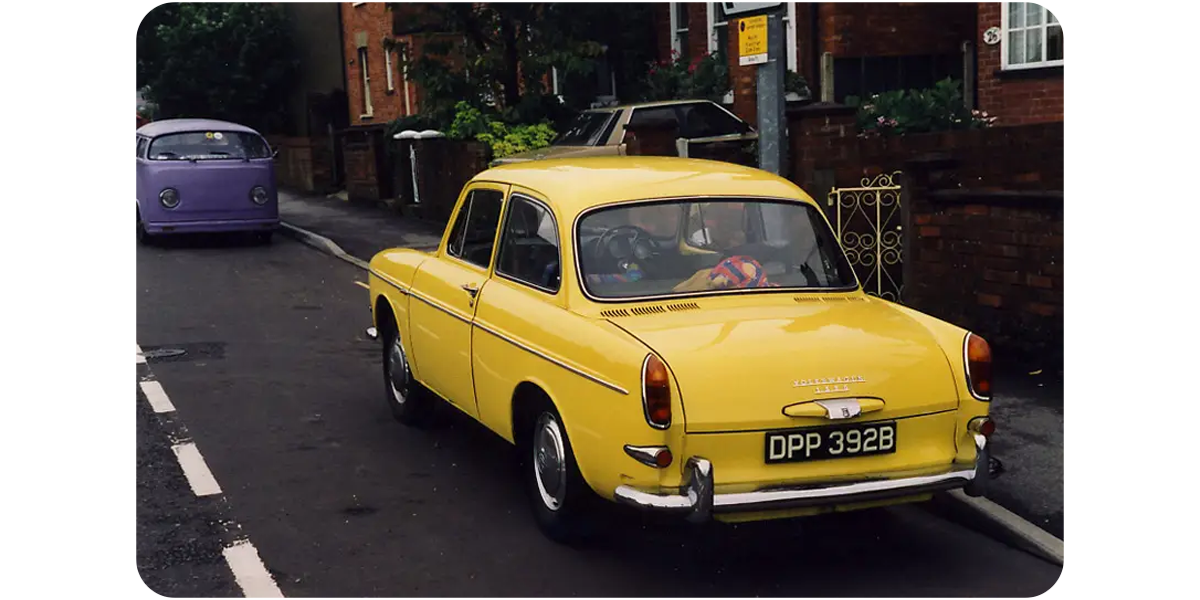
I spent a lot of time as a kid in a classic VW Type 3 which had a faulty window winder, where the glass used to free-fall back into the passenger door if given half the chance. My parents used an empty, folded-up Ribena carton to wedge it closed until they got around to fixing it, but it was a job which always got put off as it involved taking the door cards off which is a fiddly and time-consuming job – especially with two kids trying to ‘help’!
Generally speaking, though, while the winder mechanisms on classic cars can give out, they’re also relatively easy to work on and repair – once you’ve got access to them by removing the door panels on the inside of the affected door. This will often involve the use of a special tool to remove the clips holding them in place, but these tend to be readily available and affordable, if you don’t want to brute-force your way in with a flathead screwdriver!
Some classics are also blessed with opening quarterlight windows, which funnel air from outside your vehicle into the cab. You can angle these so that the breeze hits you directly, or cools the whole interior more generally. Over time these windows may need adjusting, as they spend a lot of time being buffeted by the wind rushing over them and can lose their ability to fully direct the breeze toward you, but they’re still a really effective, low-tech option in classic cars which have them.
There are also a lot of aftermarket options and accessories available help you keep the interior of your classic car nice and cool, including full air-conditioning kits which can be retro-fitted and the humble 12v dashboard fan.
A tangent about swamp coolers
If you’re looking for aftermarket options and accessories, then personally I’m a big fan of the ‘swamp cooler’ or evaporative cooler. While they might look clunky, a swamp cooler is really effective!
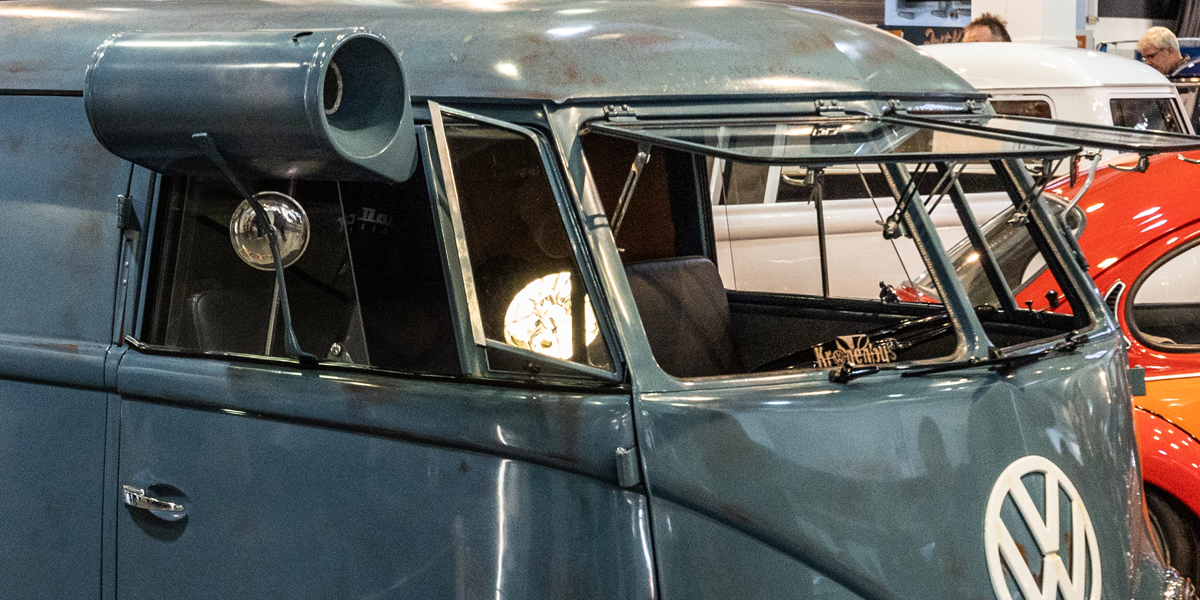
They’re fitted by partially opening the passenger window on your vehicle, placing the cooler over the glass, and then gently winding the window back up to hold it in place. Once fitted and filled with ice or cold water, it uses some pretty interesting physics to supply a steady stream of cool air into the inside of your vehicle while it’s in motion.
In essence, an evaporative cooler works by forcing warm air to pass over water, which absorbs some of the heat, before it continues its journey. The principle was first used thousands of years ago in Egypt, and works just as well today!
A word of warning, though – since most swamp coolers were created for the US market, they’re therefore also created for left-hand drive vehicles, so fitting one to a right-hand drive classic will mean you’re sat right next to the cooler and will get an amazingly cold ear.
How can I keep my classic car’s engine cool?
Given that most of us will do the majority of our classic car driving during the summer months, it’s important not to overlook your vehicle’s engine cooling system. Long drives to the beach or a car meet on a summers day are bliss, but a hot engine on a hot day can lead to disaster and an unexpected picnic at the side of the road, so keeping on top of your cooling system is vital.
Air-cooled engines are particularly susceptible to overheating when it’s particularly hot, as the air around the engine will already be relatively warm and so less able to absorb heat from the engine, but even water-cooled engines can struggle at times.
Tips on keeping air-cooled engines cool in the summer
It might be more accurate to call them oil-cooled engines, as the oil does a lot of the heavy lifting in your air-cooled engine by absorbing heat from the engine, travelling to the oil cooler where it’s cooled by exchanging some of its heat with the outside air, and then going back to absorbing more heat while keeping your engine running smoothly.
It’ll come as no surprise, then, that making sure you’ve got the correct amount of the right oil for your engine is vital. It’s also really important to make sure that vents which channel outside air into your engine compartment aren’t blocked, that the tinware which helps to channel that cool air to where it’s needed is in good shape, and that the seal around that tinware doesn’t have any gaps or damage to it.
If you want to go a step further, you can find a whole range of aftermarket accessories or upgrades to increase the efficacy of your engine by channelling more cool air into your engine bay or making the exchange of heat more effective.
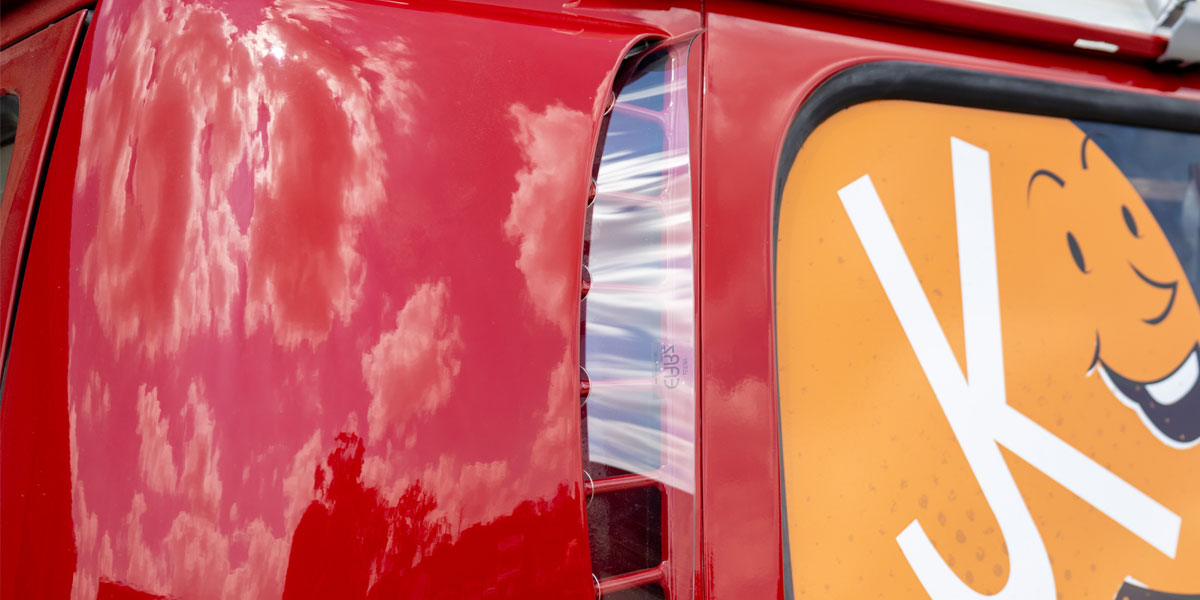
A lot of our colleagues at Just Kampers have a set of Earz fitted to their classic VWs, which help to get more air to flow into the engine bay on their VW campers and Beetles. These simple accessories clip on and off easily, and are transparent so they’re not particularly visible until you get up close.
Tips on keeping water-cooled engines cool in the summer
The water-cooled engine in your classic car will have a dedicated coolant system incorporated into it, which uses coolant to absorb heat from the engine so it can dissipate this heat through the radiator. As with air-cooled engines, it’s important to make sure you’ve got the correct levels of coolant and engine oil, and that you’re using the correct option for each.
Your coolant system can also spring leaks, which can be less obvious than an oil leak but no less damaging. If you do spot puddles under your classic car, then you’ll want to check the hoses, pipes, and fluid reservoir for any damage or leaks, and either tighten the connections or replace broken elements, to ensure your engine can keep cool.
It’s also worth noting that the air-conditioning (if your classic car is fitted with AC) will add extra stress to your engine, and so should be used sparingly and strategically if you’re concerned about your classic’s engine overheating, since the power for the air-con will come from your vehicle’s engine.
There are just as many aftermarket accessories to help bolster the coolant system on your classic car’s water-cooled engine, including auxiliary fans and oil temperature gauges (if your vehicle isn’t already fitted with one) to help you spot an overheating engine before any damage can be done.
A quick note on cooling modifications
If you’ve read the above and fancy investing in after-market air-conditioning, a temperature gauge, or even a swamp cooler, then it’s worth checking that these upgrades are still covered under your classic’s car insurance policy.
While some insurers may shy away from covering vehicles with modifications, we’re more than happy to insure modified classic cars. Just Kampers Insurance can offer you a great price on insuring modified classics, whether you’ve installed some subtle quality of life upgrades, or you’ve transformed your vehicle with suspension upgrades, new alloys, a custom paint job, and even nitrous oxide!
Give us a call today on 01256 44 45 46 to speak to us about modification cover, or click here to arrange a call back.
Common Heating Problems in Classic Cars
The heating system on a lot of classic cars is surprisingly good, especially in classics with air-cooled engines, assuming it’s all working correctly.
Iconic cars like the VW Beetle have a really impressive heating output when the original heating system, which takes warm air from the engine compartment through to vents in the cab, is all in one piece. Many Beetles have had J tubes fitted, which can improve engine performance at the cost of not being able to heat the interior, but it’s easy to reinstall a heat exchanger if you’re planning to drive your Bug through the winter – something they’re pretty good at!
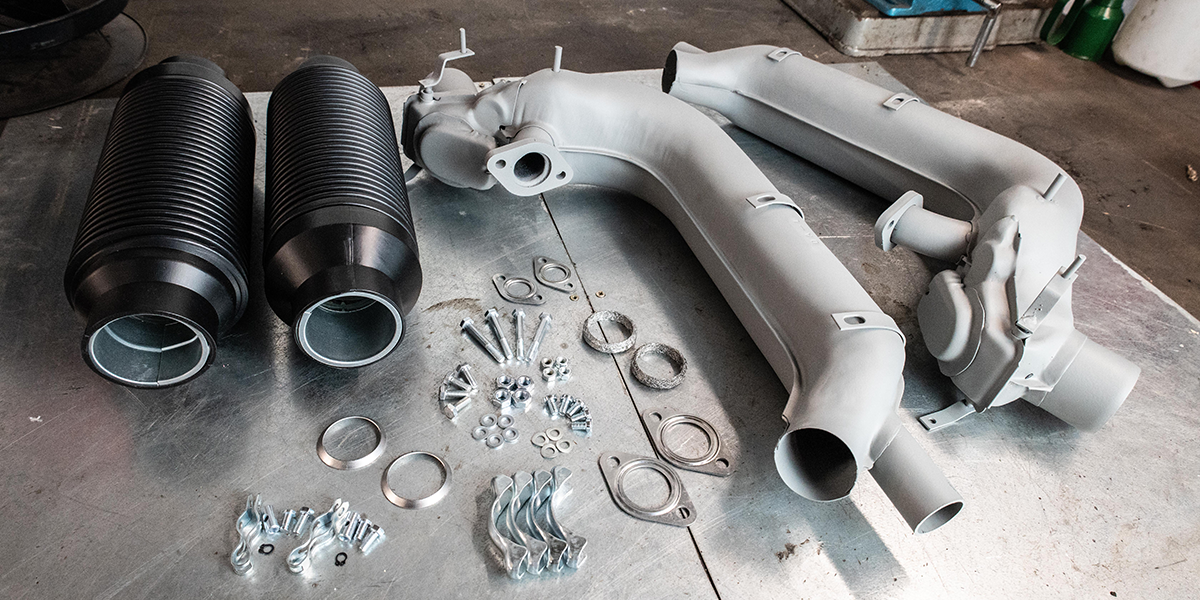
The same is true for a lot of other classics, where the original heating set-up is no longer working, but can be restored to its former glory to keep you warm and dry through the winter months, or for those early morning starts to get you to a classic car meet.
Given how simple the heating system is in many classic cars, identifying and fixing up the problem is generally pretty simple, and can have you toasty and warm in no time.
We know that a lot of people keep their classic cars tucked away through the winter (something we’ll talk more about later), but it’s nice to have the option to stay nice and warm if you do decide to get out there in your classic and enjoy it during the colder, darker months of the year.
Having said all that, you might decide that your classic will be hibernating through the winter, tucked away like a Blue Peter tortoise, and so having functional heating isn’t a big deal for you.
If that’s the case, it’s definitely worth looking at laid up cover from Just Kampers Insurance, which protects your vehicle while it’s off the road, and at a great price!
Potential Security Issues Facing Classic Cars
While it might be a disappointment to some to realise that you can’t actually unlock a car with a tennis ball, there are still some potential security issues present in classic cars which don’t affect more modern vehicles.
A lack of car alarms, old seals around doors and windows, protruding door lock catches, and older locking mechanisms are all potential security weaknesses around your classic car, which could increase the likelihood of it being stolen or broken into.
Luckily, there are a lot of ways that you can beef up the security on your classic car, whether you want those security measures to be really obvious to deter opportunistic thieves, more subtle, or a mixture of the two.
When I was growing up it was pretty common to see cars parked up with steering wheel locks on them, although these seem to have fallen out of favour a bit these days. They still work, though, as do similar devices like the Safe-T Pedal – a steel box, painted a conspicuous shade of yellow and locked over the foot pedals in your car.
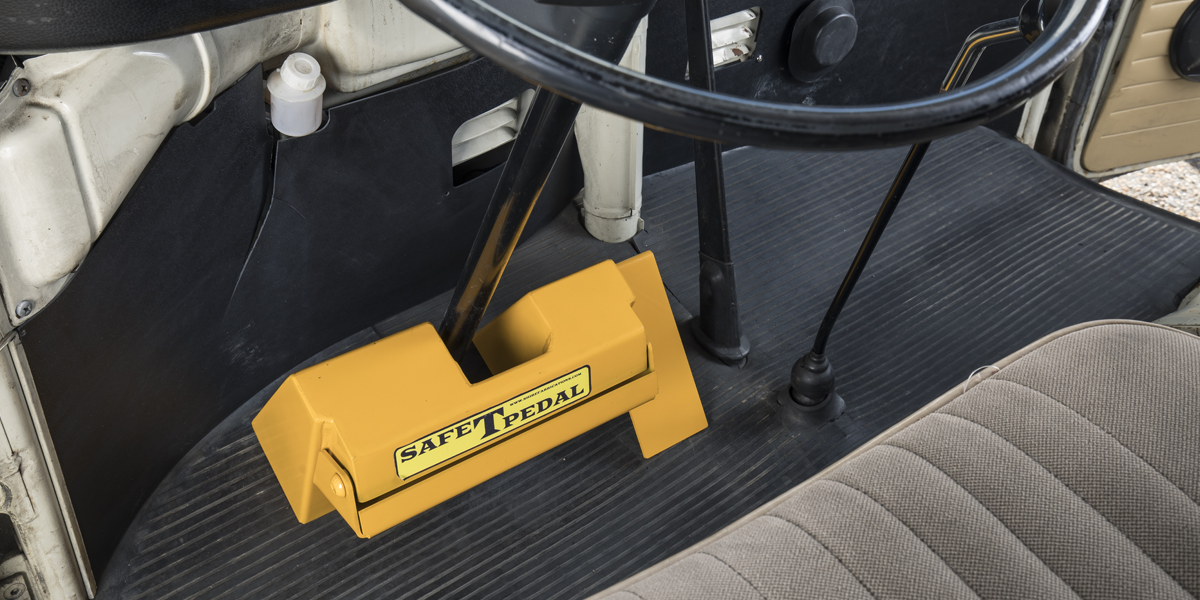
Tools like these make it very obvious to any would-be thieves that you’ve taken steps to ensure that it’s incredibly difficult and frustrating to attempt to steal the car by preventing the steering wheel from turning or completely blocking access to the pedals.
Similarly, aftermarket immobilisers, alarms, and even GPS trackers can be less immediately obvious ways to deterring attempts to steal your vehicle, or to help it be recovered if it is stolen.
For a low-tech solution, you can remove vital engine components like the starter to ensure that your car won’t fire up without you, or park another vehicle in front of your classic if you’re parking on your drive and don’t have a garage. Simple steps like this can be enough to put off a lot of would-be car thieves, who are generally looking to get into your car, start it up, and drive it away as quickly as possible to limit the chances of them being caught.
Even especially prepared and audacious thieves who arrive ready to tow or trailer your classic car likely won’t get far if they’re stuck trying to cut through a steel box to get your vehicle into neutral while an alarm blasts and the lights are all flashing!
There’s a dizzying range of different options out there to help you protect your classic, including many which I don’t have time to mention, which can be as obvious or as subtle, as high-tech or deviously simple as you like.
Why It’s So Important to Properly Maintain Your Classic Car
If you’ve jumped straight to this part of the blog, you won’t have heard me mention maintenance about a dozen times already, but if you’ve read everything so far then you might want to skip this part because I’ll sound like a broken record, or a particularly zealous advocate of vehicle maintenance!
A lot of the potential issues we’ve already covered can be avoided by keeping up with the recommended maintenance schedule for your classic car, which doesn’t sound particularly exciting, but can free you up to spend more time enjoying the open road and less time waiting for a mobile mechanic.
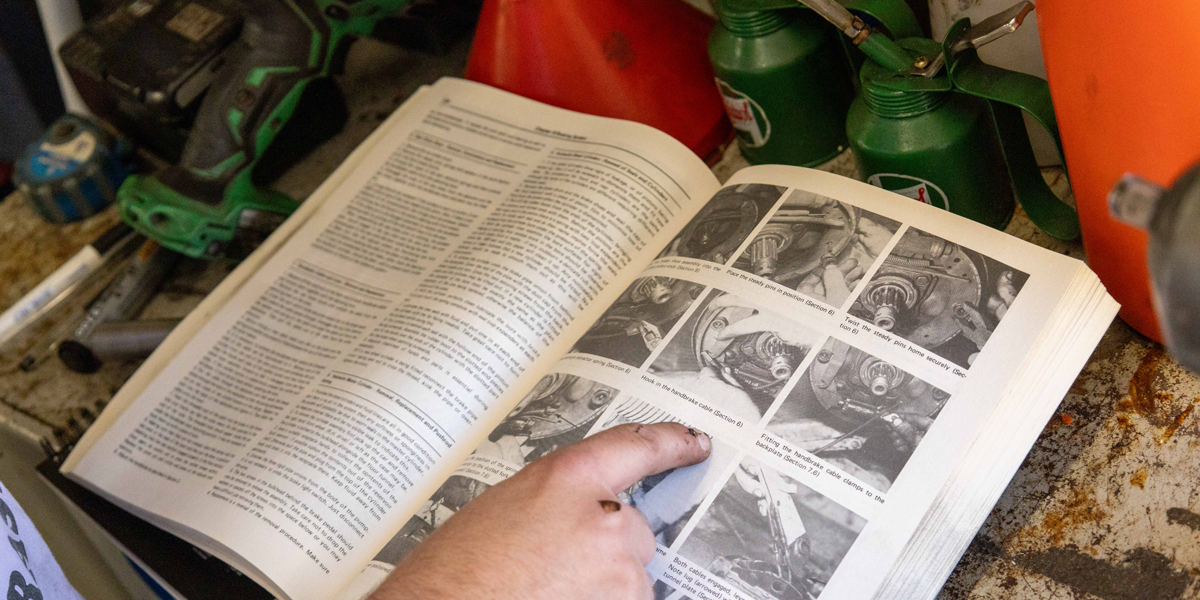
Keeping up with servicing and maintaining the different components of your classic will not only make it run more reliably, but it will help your vehicle to keep on going for years into the future and help deepen your connection to, and appreciation of, your classic.
It might sound a bit trite, but getting stuck in and working on your classic car can be just as enjoyable and rewarding as driving it, and with so many resources to help you tackle everything from oil changes to engine swaps, there’s very little to stop you from giving it a go yourself.
If you’re looking for a place to start, and own a classic Volkswagen, then our colleagues over at Just Kampers, our sister company, have some great resources available. As well as their Just Kampers YouTube channel, their website is full of helpful information and guides to help you get started working on your VW yourself.
Finding the Right Classic Car Mechanic
On the other hand, if you’re all too aware that you lack the time, space, tools, experience, or confidence to work on your classic car yourself, then there’s no shame in taking your vehicle to a specialist mechanic. I must admit that I fall into this category myself!
Although I’ve picked up a huge amount of information and advice while working with Just Kampers Insurance and Just Kampers, I only seem to have the power to break things, rather than maintain them, so it’s safer for everyone on the road if I leave the mechanical work to the experts – whether that’s a local garage or my very helpful colleagues.
Finding the right mechanic can be a bit of a daunting prospect, and it’s easy to spend hours and hours combing through nearby garages, reading their reviews, looking at their prices, checking their availability, and then trying to compare them to one you saw hours ago.
We’ve all poured a lot of time, money, and attention into our classic cars, and it’s only sensible that we’d want to find someone we feel like we can trust to take care of them for us.
If you’ve got a classic VW (or a modern one!) then check out this Garage Finder system from our sister business Just Kampers. It’s totally free to use, and lets you track down the right specialist mechanic and garage in your area.
Are Parts for Classic Cars Hard to Find?
Whether you’re planning to work on your classic car yourself, or you’re relying on experts from a local specialist garage, you will eventually need to find parts for your classic. For some vehicles this will be almost as easy as getting parts for a modern car, but for others it can become a pastime in and of itself, as you scour swap-meets, bookmark online listings, and ask owners clubs to see if you can track down the parts you need or want.
This can be a daunting prospect, as some vehicles are much better catered to than others, even if that vehicle is made by a company where parts for their classics are generally pretty widely available.
For example, I love the VW ‘Razor Edge’ Type 34 Karmann Ghia for its distinctive looks and wordy name, and while the Razor is based on the VW Type 3, it’s made up of a lot of Type 34-only parts which are infamously hard to get hold of. This has always put me off the idea of ever actually owning one, as I’ve grown used to being spoiled by the abundance of spares for the VW Beetle, but this scarcity of parts clearly hasn’t put everyone off as I still find Type 34s at shows and meets to stare at longingly!
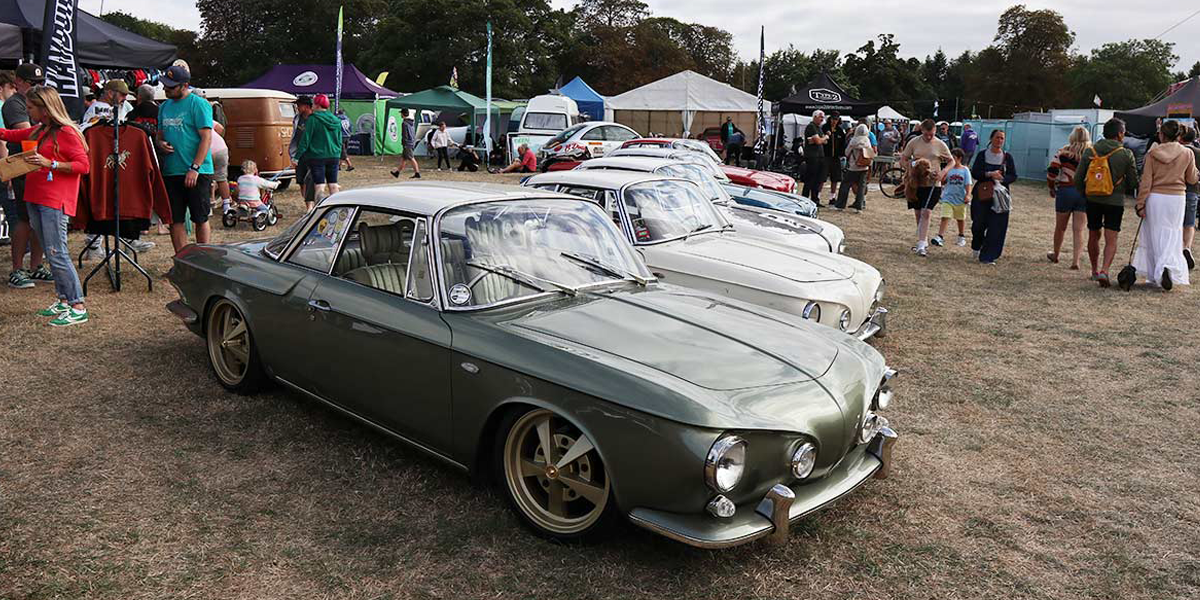
I don’t bring up hard to find parts as a way to put you off owning or driving a classic car, but it’s an issue which does affect a lot of us and so it’s worth discussing openly. There are classics out there where reproduction parts either aren’t readily available or aren’t great quality, and so original (or OEM) parts become a treasured resource – with a price tag to match.
There’s not much that can be done about this, except to do your research before buying a classic so you’ve got an understanding of how hard or easy it will be to track down spare parts if and when you need them, and to accept that you might be spending weekends travelling to swap meets or befriending fellow owners to track down choice parts.
Fortunately, there are a lot of options out there for getting your hands on a lot of the essential parts you’ll need to keep your classic car running, and if you’ve got your heart set on a specific set of wheels or retro accessory then it’s all the more reason to get out there in your classic and go to events, meets, and gatherings to see what you can find!
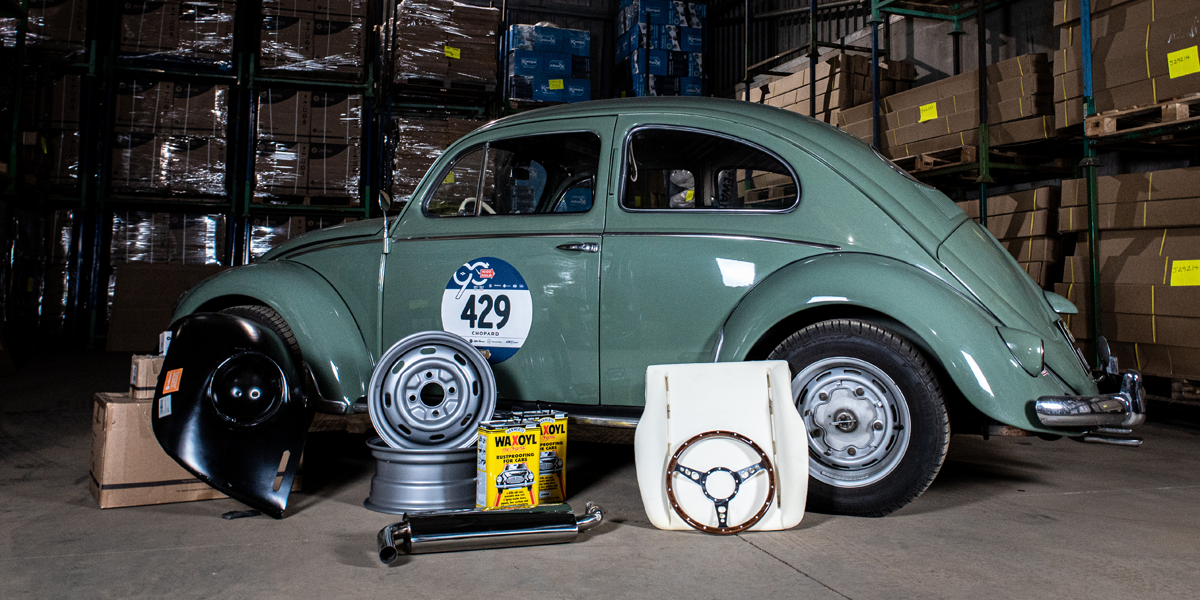
If you’re lucky enough to build up a collection of spares, then it’s definitely worth making sure they’re properly protected by insurance. Spare parts and accessories usually get stashed away in a garage (if you’ve got one and there’s still space in there!), a shed, or even inside the vehicle itself, and so may not be covered by the contents insurance of your house or car.
Spare parts cover from Just Kampers Insurance gives cover against loss or damage to any parts and accessories associated with your vehicle, but which aren’t fitted to the vehicle. You can get up to £2,000 of spare parts cover for just £17 per year, or up to £5,000 of spare parts cover for only £26 per year.
If this sounds like something you’d be interested in, then give us a call on 01256 44 45 46 to speak with our friendly team of experts, or click here to arrange a call back and we’ll phone you at a time which suits you!
Tips on Storing Your Classic Car
The last point I want to cover is on what to do with your classic car during the winter months, when most of us are far less inclined to jump behind the wheel and go for a drive. Between the poor weather, iffy road conditions, salt and mud on the roads, and there simply being fewer events to drive our classics to, a lot of people will hardly use their classic cars over the winter, if at all.
While I’m definitely in the camp which believes cars are built to be driven, and do just fine during the winter, I also appreciate that for a lot of people it’s simply easier to tuck them away until the weather improves in spring and not worry about taking them out over the winter.
It’s also a time when a lot of people will set aside some time to work on their classics, tackling issues which they spotted during the summer so they’re ready to cruise to their first show of the season with a new lease of life!
We’ve written up a whole separate blog with advice on storing your classic car over the winter, so I’ll summarise the points that my friend and colleague Mat made and leave you to read the full blog for yourself.
• Start by servicing your classic, which you’ll likely be able to do yourself, to ensure that it’s in the best shape when you come back to it in the spring – future you will be glad you did it!
• Give your classic car a really good clean, inside and out, before you store it. This will prevent anything stuck to the outside from damaging the paint and/or metalwork, and anything inside from going mouldy (especially important if you, like me, have kids who seem to create an improbable amount of mess when they eat!)
• Choose the right place to store your classic, and get it parked up neatly, in neutral, with the handbrake off. You can use chocks (or something more low-tech like a brick, one of those off-cuts of wood you’ve been saving because it looks useful, or a can of paint) to stop your classic from rolling, but keeping it in neutral with the handbrake off with prevent extended wear on the cables over the winter.
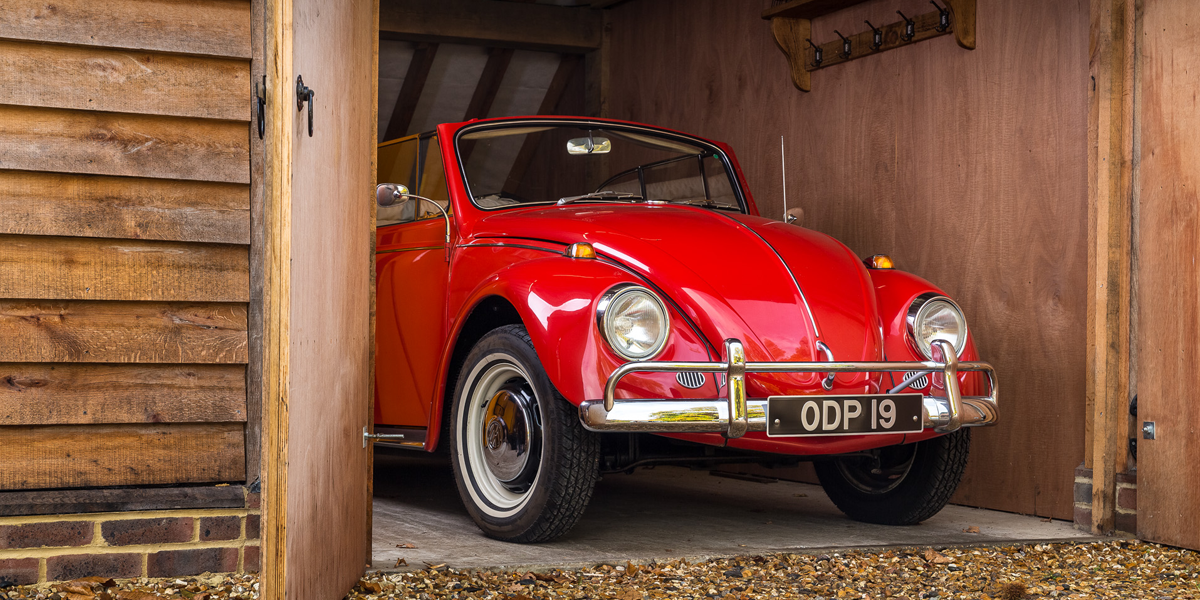
• Move your windscreen wipers up and away from the windscreen glass, disconnect your battery, crack the windows open slightly, pop a moisture trap inside, and consider raising your vehicle up on axle stands, if possible. Each of these steps will help prevent damage to your classic car while you’re not using it, which is something you don’t want to have to deal with when the sun finally comes back and you’re itching to take your classic for a drive!
• Prevent corrosion in your fuel tank, by either leaving it full of fuel over winter, or completely emptying it before you tuck it away. Some people will swear that totally emptying your fuel tank is the best option, while others will only ever leave their fuel tank full, but either approach is fine!
• Consider covering your vehicle up, especially if it’s outside, to help keep the worst of the weather away from your precious classic.
• Make sure your vehicle is secure, with some visible deterrents to put off would-be thieves who might spot your classic while it’s stored away for the winter.
• Be sure to check in on your classic over the winter, to check that it’s all still fine and empty the moisture trap if needed. You should also check the interior for any signs that mice have moved in to escape the cold, as they’re likely to make a real mess and chew your classic’s wiring!
A summary of what we’ve covered so far
If you’ve read this far then thank you for bearing with me, and I hope you’ve learned some interesting and/or useful tips for common issues you can expect to deal with, how to tackle them, and what Just Kampers Insurance can do to help.
We’ve got a huge amount of expert knowledge built up in the team here, and blogs like this help us to share that information with you to help you get the most out of your classic car.
You’ll find plenty more blogs just like this one from myself and my colleagues here at Just Kampers Insurance, and can give us a call on 01256 44 45 46 to see how much you can save on insurance for your classic.
Thanks again for reading this far, and have a great winter!