
How to Prepare your Classic VW Car or Campervan for Long Term Storage

Published 25 November 2025

()

Preparing your classic VW car or campervan for long-term storage is essential to prevent its deterioration and to ensure that it remains in good condition during long-term storage. This blog will provide you with a step-by-step guide to help you in the process.


Jump to:

Selection of a suitable storage site
Give your VW a service
Prepare your fuel system
Look after your battery
Tyres
Give your VW a pre-hibernation wash and wax
Clean the interior
Apply some security
Leave the handbrake off
SORN
Consider Laid Up Insurance
Recommissioning your vehicle
Summary

    Suitable storage

    Selection of a suitable site is your first consideration. Ideally, it will be warm, dry, possibly air-conditioned, secure from potential risk or theft and not so far from home that you can’t visit it every few weeks to check on its condition. Alternatively, on your drive with a quality breathable and waterproof cover will suffice.
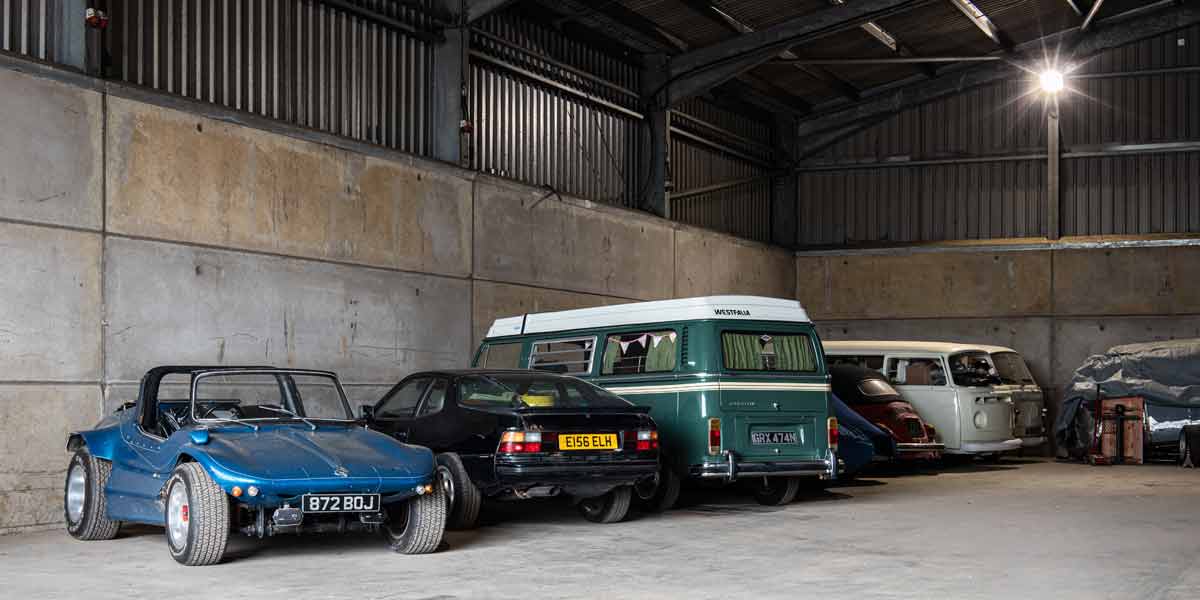
    Long Term Storage Preparation - Just Kampers Insurance - Suitable Storage

    Ideal storage for your classic

    Give your VW a service

    Service the vehicle to ensure that when you bring it out of long-term storage, it is ready to go for the new season. Consider getting the engine flushed and change the oil and the oil filter to ensure that contaminants don’t sit in the engine for long periods, which could lead to corrosion. Top up all fluids, including brake fluid, transmission fluid and coolant if applicable.
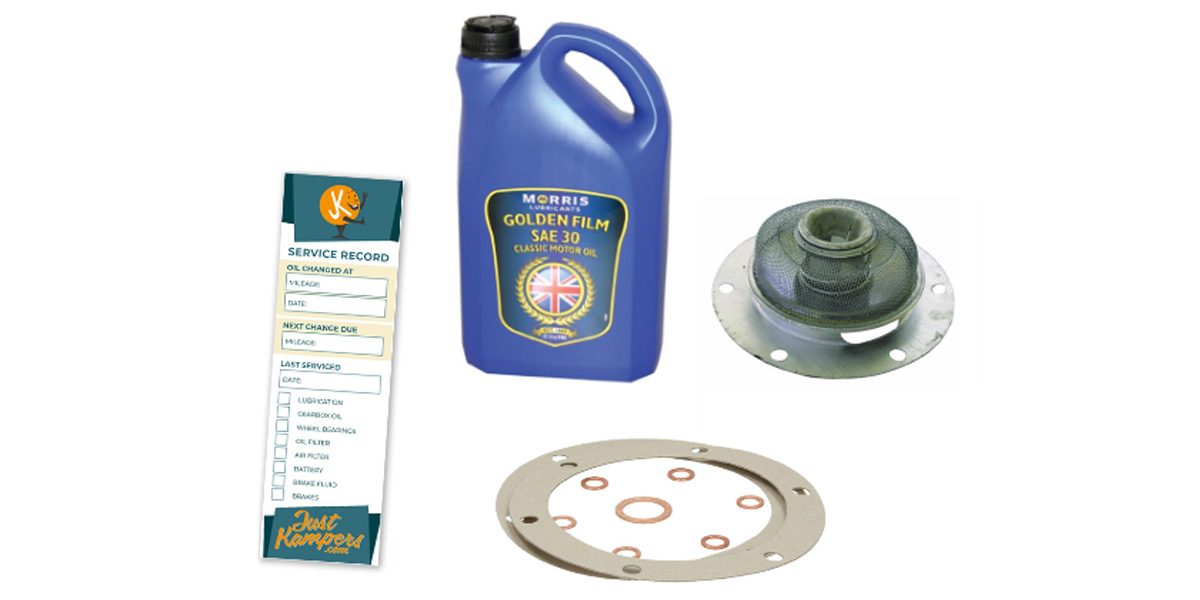
    Just Kampers Oil Change Kit - J48799

    Air-cooled Oil Change bundle kit – J48799
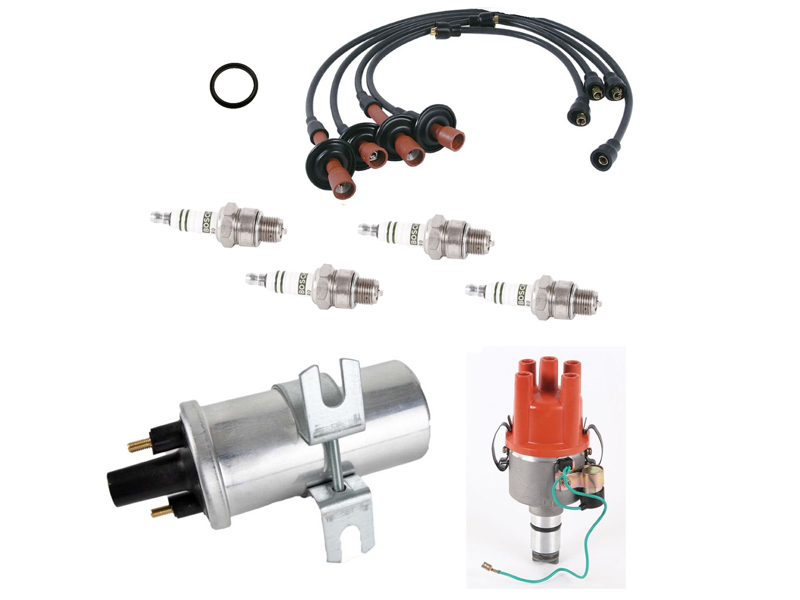
    Just Kampers Ignition Bundle Kit - J48828

    009 Ignition Bundle Kit VW Beetle, VW T2 Split & T2 Bay – J48828

    Prepare your fuel system

    Fuel system preparation should be carried out by filling the fuel tank completely to prevent moisture buildup, and while you’re there, add a fuel stabiliser to keep the fuel fresh. Run the engine for a few minutes after to distribute the stabiliser throughout the system.

    Look after your battery

    Give your battery some love, disconnect the battery and store it in a cool, dry place. Maybe consider putting it on a trickle charger to ensure it is in optimum condition for restarting your car in the future.

    Tyres

    Tyres should be inflated to the manufacturer’s specifications to prevent flat spots from occurring. Alternatively, use tyre cradles or remove the wheels completely and leave the vehicle on axle stands.

    Give your VW a pre-hibernation wash and wax

    Wash and wax the vehicle thoroughly to remove any dirt, grime or contaminants that could damage your paint work. Move the wipers off your windscreen to prevent the rubber seizing to the glass and tearing on next time they are used.
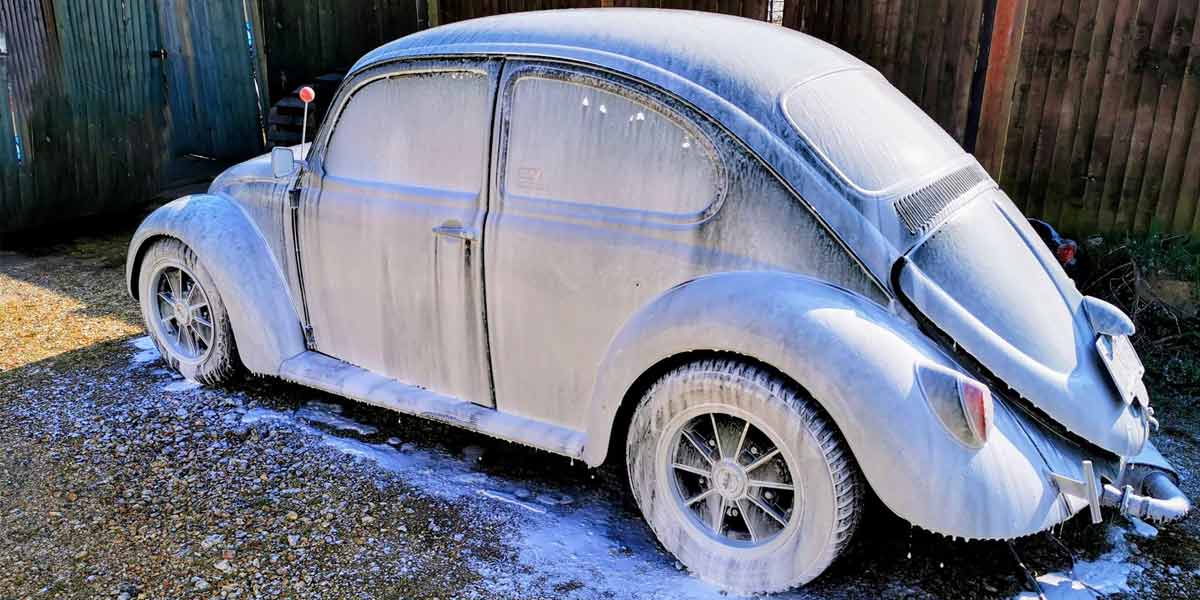
    Long Term Storage Preparation - Just Kampers Insurance - Wash And Wax

    Clean the interior

    Clean inside the vehicle, ensuring that you remove any rubbish, especially food or drink, as this could encourage rodents to nest down inside your vehicle. Place a moisture trap or two inside to aid in keeping a dry atmosphere in the interior. Leave the windows open just enough to allow the car to be ventilated.

    Apply some security

    Security of your vehicle will be enhanced by fitting a steering wheel lock and/or a pedal lock to prevent unauthorised use or theft.

    Leave the handbrake off

    Leave the handbrake off to ensure that the handbrake doesn’t seize during storage. Chock the wheels if not removing them and using axle stands.

    SORN

    SORN your vehicle if applicable through the DVLA if you are storing it for a long period, as this will save you money while it is not in use.

    Consider Laid Up Insurance

    If you’re storing your air-cooled VW for the off-season, whether you’re doing a full restoration or simply parking it up through winter, then the “Laid Up Cover” from Just Kampers Insurance is a brilliant fit.

    This policy protects your vehicle while it’s off the road and safely tucked away on your drive, in a garage or even on a secure trailer, and it covers key risks like accidental damage, fire and theft (you choose the level of cover). It doesn’t cover road use, so you’re covered for storage months while you get the dust layer on, rebuild, or just give your VW a well-earned rest. With no set time limit on how long the vehicle can stay laid up, it gives you flexibility to pause driving without losing protection. If you then decide to hit the road again, the friendly Just Kampers team can switch you back into full-use cover when you’re ready.

    Recommissioning your vehicle

    Recommissioning your vehicle at the end of your storage period should be a simple operation if all the above steps have been taken when laying it up. Replace the wheels if removed. Check all fluid levels and check for any fluid leaks on the floor. Re-fit the battery and check your lights. Start the engine and allow it to run for a few minutes. Test the brakes and take it for a drive.

    In Summary

    By following the above steps, you will help to ensure that your classic VW car or camper remains in the best condition it can during long-term storage and be ready to start where you left off the last time you drove it.

    Don’t forget to re-tax if you have declared your vehicle SORN during storage. 

    What Should I Do and Not Do if I Have an Accident? FAQs

    Do I need to tell my insurer about an accident if I’m not making a claim?

    Yes, you should still notify your insurer about the incident, even if you don’t intend to claim for damage to your own vehicle. Your policy may require you to report incidents which could potentially lead to a claim, particularly if another driver later decides to make a claim against you.
    Reporting the accident promptly also ensures your insurer has a record of your version of events.

    How quickly should I contact Just Kampers Insurance after an accident?

    You should report an accident as soon as reasonably possible. Having your policy number, details of what happened, information about the other people and vehicles involved, photographs and any witness details to hand can help make the process easier. Just Kampers Insurance customers have access to a claims service 24 hours a day, seven days a week.

    Will I have to pay my excess if the accident wasn’t my fault?

    If you make a claim through your own insurance policy, your policy excess may still be payable initially. Depending on the circumstances of the accident, you may subsequently be able to recover this from the responsible party.

    Your claims handler can explain what applies to your particular claim and whether your excess may be recoverable.

    Can legal protection help if the accident wasn’t my fault?

    Just Kampers Insurance policies include legal protection, which can provide assistance following a non-fault accident, subject to the policy terms, limits and exclusions.

    This can include help pursuing eligible uninsured losses, such as an excess you have paid, as well as assistance with certain legal expenses, vehicle hire or claims relating to injuries and other losses.

    Will I get a courtesy car while my vehicle is being repaired?

    This will depend on your cover and how your claim is handled. If you make a claim under a comprehensive policy and use an approved repairer, a courtesy car may be available for the duration of the repairs, subject to availability.

    Different arrangements may apply following a non-fault accident, so speak to your claims handler before arranging alternative transport yourself.

    What happens if my campervan or motorhome is written off?

    Your insurer will assess the vehicle and the terms of your policy before determining how the claim will be settled.

    This is particularly important for classic, converted and specialist vehicles, where modifications and the vehicle’s specification can have a significant impact on its value. If your policy includes Agreed Value cover, check your policy documents to understand how this applies to a total-loss claim.

    What if modifications to my campervan are damaged in the accident?

    Make sure you tell your claims handler about damage to modifications and converted parts of the vehicle, rather than documenting only the exterior bodywork.

    Photograph damaged pop-tops, awnings, furniture, fitted equipment and other converted elements where it is safe to do so. Keeping photographs and documentation relating to modifications before an accident can also help demonstrate your vehicle’s specification and condition.

    Should I arrange my own garage to repair the vehicle?

    Speak to your insurer or claims handler before authorising significant repairs. The insurer may need to inspect the vehicle, review photographs or agree repair costs before work begins.

    This can be especially important with classic vehicles, campervans and motorhomes, where specialist components or conversion work may require particular expertise.

    What should I do if the other driver’s insurer contacts me directly?

    Don’t ignore correspondence about the accident, but avoid getting drawn into discussions about liability or agreeing a settlement without speaking to your insurer.

    Just Kampers Insurance advises customers to forward third-party correspondence unanswered so it can be dealt with appropriately.

    What if the other driver doesn’t have insurance or leaves the scene?

    Gather as much information as you safely can, including the vehicle registration, make, model and colour, photographs or dashcam footage, and witness details.

    Don’t attempt to chase a vehicle that leaves the scene. Report the incident to the police where required and contact your insurer promptly so they can advise you on the next steps.

    Can I claim for belongings damaged inside my campervan or motorhome?

    Whether damaged belongings are covered will depend on your individual policy and the cover you have selected.

    If items inside your vehicle are damaged in an accident, photograph them and keep any evidence of ownership and value, such as receipts. Don’t dispose of damaged items until you have spoken to your claims handler.

    What happens to my no-claims bonus after an accident?

    The effect on your no-claims bonus will depend on factors including how the claim is recorded and the terms of your policy. Even where you have a protected no-claims bonus, a fault or pending claim may still affect future insurance premiums.

    Check your policy documents or speak to the Just Kampers Insurance team if you’re unsure how a particular claim could affect your policy.

    What information should I have ready when I report an accident?

    It helps to have as much information as possible available, including your policy number, the date and location of the accident, details of the other driver and vehicle, photographs of the scene and damage, witness details, dashcam footage and any police reference number.

    Don’t worry if you don’t have everything immediately. Report the incident promptly, and your claims handler can explain what additional information may be needed.

    Did you find this blog useful?

    Click on a star to rate this blog

    Average rating / 5. Vote count:

    No votes so far! Be the first to rate this blog

    Written by: Mat Williams

    Mat has worked in and around Just Kampers since 2009, mainly helping out with the setting up of shows and movement of vehicles. He is a lover of all things outdoors, especially long-distance adventures on foot. However Mat has now matured to realise that there is a better way to travel than on blistered feet, he’s now a road trip convert!

    Whatever you drive, we've got you covered

    Get a quote now