We’ve put together this guide to DVLA campervan classification, and what to do if your reclassification request is refused by the DVLA (Driver and Vehicle Licensing Agency).
It’s becoming ever easier to convert your own camper using readily available kits and YouTube tutorials, but many people don’t find getting their vehicle reclassified as a campervan quite so simple.
Fortunately, it’s no longer necessary to get your camper reclassified by the DVLA unless the body type of your vehicle is now different from what’s listed on your log book (V5C).
If you do still need or want to get your campervan reclassified as a motor caravan, this guide will explain how the DVLA classifies campers, why they might reject a reclassification from a van to a camper, and what you can do if your reclassification isn’t approved.
What is a ‘motor caravan’?
The DVLA groups motorhomes, campervans, and day vans all under the same classification of ‘motor caravan’. However, if you’ve converted a van or similar vehicle into a campervan or motorhome, then you’ll often need to obtain reclassification to a motor caravan.
While classification doesn’t affect insurance, and won’t affect how you drive it, it can be important for licensing and for the DVLA to understand the vehicles on the road.
How do I get my vehicle reclassified as camper?
To get the DVLA to change the classification of your vehicle to a campervan (or motor caravan, to use their term), you’ll need to follow these steps.
Send DVLA Proof of Your Campervan’s Permanent External Features
When you apply to have your camper reclassified by the DVLA, you’ll be given a tick list with the following options on your reclassification form, and must supply photos to prove that your camper does have these features and that they’re permanent.
These permanent external features include:
Two or more windows on at least one side of the main body
These cannot be the windows in the cab doors, and must provide ‘a reasonable amount of daylight’ into the living area of your camper. There is no specific guidance about what level of daylight is a reasonable amount, but the windows will need to be real windows.
A separate door which provides access to the living accommodation of the vehicle
This will usually be the sliding door on the side of your camper, and if you’ve got a window on this door, then it counts as a separate window on the main body to fulfil the point above.
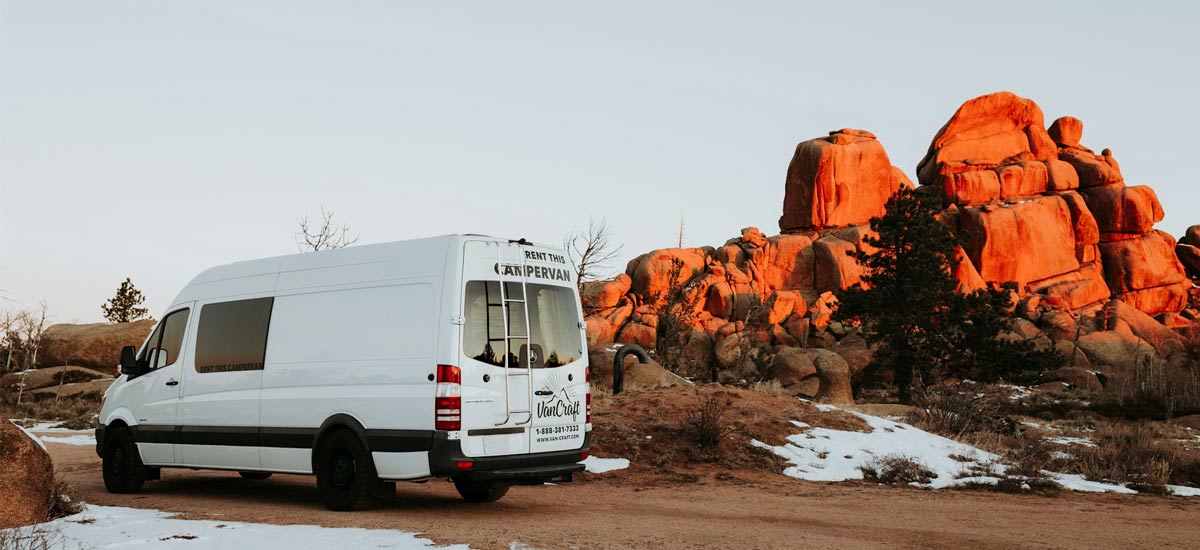
Motor caravan style graphics on both sides of the vehicle
Again, there’s no specific guidance or requirements about what exactly these need to be, but the standard swooshes, compasses, and mountain ranges you’d expect to see on a motorhome are generally seen as being acceptable.
An awning bar attached to either side of the vehicle
This requirement is also somewhat vague, but you’re not necessarily required to invest in a Fiamma awning for your camper and can instead fit a rail which you could attach a free-standing or drive-away awning or sun canopy to.
A fixed high-top roof
This does not include a pop-top or elevating roof, but instead refers to a roof which is permanently higher than a standard vehicle roof.
Along with this tick list, you’ll also need to provide the following:
A photo of the vehicle identification number (VIN/chassis number)
V5C registration certificate (log book) showing that your camper has one of the following body types:
• Ambulance
• Box van
• Goods
• Insulated van
• Light goods
• Light van
• Livestock carrier
• Luton van
• Minibus
• Multi-purpose vehicle (MPV)
• Panel van
• Specially fitted van
• Special mobile unit
• Van with side windows
External photos, with the registration plates visible, showing:
The front, rear, and both sides of your camper. These photos should clearly show the vehicle, and any of the Permanent External Features which were listed above.
And finally, Internal photos of your camper showing:
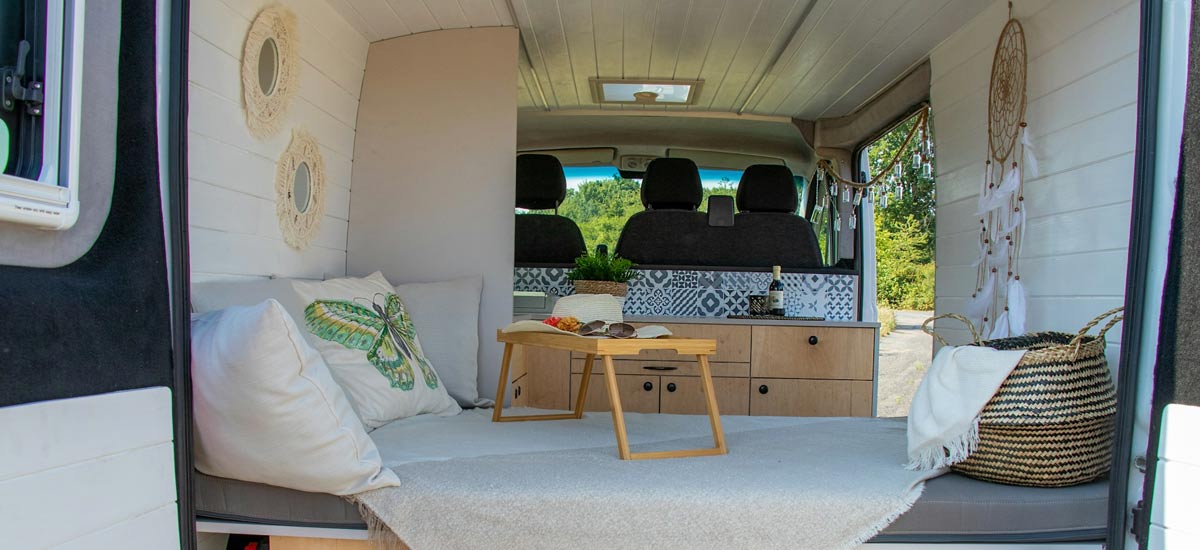
Seats and a table
These need to be an integral part of your motor caravan’s living accommodation area, and mounted independently of other items.
While you can have a detachable tabletop, the table leg(s) which the tabletop mounts to must be a permanent feature. Here’s an example from our sister company Just Kampers.
Your seats must be fixed to the floor or sidewall and available for use at the table.
Sleeping accommodation
Your motor caravan’s bed may be converted from the seats, such as a ‘rock and roll bed’, but must be an integral part of the vehicle living accommodation area.
The bed must also be secured as a permanent feature, either with the base structure of the vehicle floor or to the side wall, unless the sleeping accommodation is provided over the driver’s cab compartment.
Cooking facilities
You’ll also need to make sure that your motor caravan has at least a single-ring cooker or a microwave, and it has to be secured directly to the vehicle floor or side wall as a permanent feature.
If the cooker is fuelled by an on-board gas supply, then the gas bottle must be secured in a storage cupboard or to the vehicle structure.
If the cooker is fuelled by gas from an external supply from outside the vehicle, then the fuel supply pipe must be permanently secured to the vehicle structure.
Storage facilities
The requirement for storage facilities are pretty simple, and can be a cupboard or locker which is an integral part of the vehicle living accommodation.
It needs to be mounted independently of other items, unless it’s incorporated below the seat, sleeping accommodation or cooker.
You’ll also need to make sure it’s secured permanently to the vehicle floor or side wall, unless the storage facility is over the driver’s cab compartment.
To support your reclassification, you’ll have to submit evidence of the above to the DVLA.
This is in the form of photos, a V5C, and the motor caravan vehicle checklist which you can download from the DVLA website.
DVLA’s Camper Reclassification Checklist
If you’re not sure that you’ve done everything you need in order for your campervan to be reclassified by the DVLA into a ‘motor caravan’, or you want to better understand what’s involved, then here’s a helpful checklist to guide you.
Internal Features Your Camper Must Have:
▢ Seats and a table.
▢ Sleeping accommodation.
▢ Cooking facilities.
▢ Storage area.
Permanent External Features Your Camper Must Have:
▢ Two or more windows, on at least one side of the vehicle’s main body.
▢ A separate door which provides access to the living accommodation of the vehicle.
▢ Motor caravan-style graphics on both sides of the vehicle’s exterior.
▢ An awning bar attached to either side of the vehicle.
▢ A fixed high-top roof.
Documents You’ll Need to Send:
▢ Your vehicle’s V5C registration certificate (log book), showing one of the body types listed above.
▢ A photo showing your vehicle’s VIN / chassis number.
▢ Photos showing the front of the vehicle, both sides, and the rear.
▢ A photo showing the seats and table inside the vehicle.
▢ A photo showing the sleeping accommodation inside the vehicle.
▢ A photo showing the cooking facilities inside the vehicle.
▢ A photo showing the storage area inside the vehicle.
You can download a checklist form which the DVLA has put together here, which you must fill in and submit with your photographs and any other documentation required.
What evidence do I need to submit?
In order for the DVLA to even process your application, you must provide the following:
- A completed motor caravan conversion checklist, which you can find here
- A V5C currently showing one of the body types listed above
- Photos showing the required internal features with all features in the ‘in use’ positions, as well as the windows letting light into the living area.
- Exterior photos showing the campervan from all angles, with registration plates clearly shown
- Photos showing the VIN/chassis number on the bodyshell or original chassis.
Please note that all photos must be clearly described on the back, including the date the photo was taken and the vehicle number plate. Your vehicle may also be subject to an inspection, and failure to facilitate this will result in a refused application.
Where do I send off Evidence to the DVLA?
The DVLA requires that you send all evidence to:
DVLA
Swansea
SA99 1BA
At the time of writing in April 2026, there’s no alternative online method to submit evidence. You can find more information on submitting evidence here on the DVLA site.
Why did the DVLA refuse my campervan application?
Truthfully, no one knows. The reasons given are often vague and don’t match up with the regulations given.
It’s worth taking the time to re-read the guidance from the DVLA website, and ensuring that you’re 100% compliant with everything included in the three major areas (body type, external features, internal features), and that you’ve clearly demonstrated that with your photographs and other evidence, before submitting your application.
This should give you the best possible chance of having your application approved.
However, if you feel that you’ve complied fully with all of the DVLA requirements and still had your application rejected, then it may be worth contacting them for information as to why.
You should note, though, that there’s no longer a requirement for you to reclassify your campervan with the DVLA unless the body type of your vehicle has changed.
Want to insure your converted campervan?
As we mentioned above, the DVLA classification of your campervan or motorhome won’t affect your insurance, so you can still get campervan or motorhome insurance and enjoy your home away from home.
Speak to our friendly team of experts here at Just Kampers Insurance, and we can help you find incredible deals on vehicle cover for your motorhome or campervan. We’ve been providing specialist insurance for campervans and motorhomes since 1998, so we know exactly how to get you a great deal on your tailored policy.
Call us on 01256 44 45 46 or you can request a call back and we’ll phone you at the time and date you pick.
A Quick Summary
If you’ve got a van that you’ve converted to a campervan, you don’t have to get it reclassified by the DVLA as a ‘motor caravan’, but you can still do so if you want or need to. All you need to do is provide the DVLA with some photos and a completed checklist of features which your campervan has.
In some cases, these applications get rejected, and it’s not always very clear why.
If this happens to you, we recommend that you thoroughly check the DVLA guidelines and resubmit your application. If this is again unsuccessful, try contacting the DVLA directly for more details.
DVLA Campervan Reclassification FAQs
Does a pop up tent satisfy the DVLA motorhome conversion requirements?
No, a pop-up tent, pop-top roof, or roof-mounted tent will not fulfil the DVLA’s requirements if you’re looking to have your vehicle reclassified as a campervan or ‘motor caravan’, to use the DVLA’s term.
On their website, the DVLA states that your vehicle must have a high-top roof, and clarified that this does not include a pop-top elevating roof.
Is a camper van a commercial vehicle?
Generally, no, campervans are not commercial vehicles. For a vehicle to be officially classified as a campervan (or a ‘motor caravan’, as the DVLA puts it) it will likely need to be formally reclassified as such by the DVLA, which can be achieved via the steps listed on this page and on the DVLA’s website.
Can a campervan be classed as a dual purpose vehicle?
It is possible for a campervan to be a dual purpose vehicle, but it’s also very difficult to create a vehicle which fulfills the criteria to be both.
The definition of a dual purpose vehicle given by the DVLA explains that they’re vehicles built or converted to carry both passengers and goods, and need to weigh no more than 2,040 kg when unladen, and is either.
The DVLA also explains that they are either constructed or adapted so that the driving power of the engine can bet ransmitted to all wheels, or permanently fitted with a rigid roof, at least one row of transverse passenger seats behind the driver’s seat, and will have side and rear windows.
They also state that there must also be a minimum ratio between the size of passenger and stowage areas, but aren’t clear on what that ratio is.
We would advise looking for more information directly from the DVLA here.
Does having my campervan classes as a motor caravan by the DVLA automatically change its vehicle tax class too
Having your camper reclassified as a ‘motor caravan’ by the DVLA will affect the vehicle tax it pays, but as these rates are changing relatively regularly at the moment, it’s best to confirm this with the DVLA when they approve your camper’s reclassification.
You can find up to date information about the different vehicle tax rates on the DVLA website here.
For more information about tailoring insurance policies to your campervan or motorhome, whether you’re after affordable premiums, or something with that little bit more protection, consider coverage from the experts at Just Kampers Insurance.
In this article
- What is a ‘motor caravan’?
- How do I get my vehicle reclassified as camper?
- Send DVLA Proof of Your Campervan’s Permanent External Features
- DVLA’s Camper Reclassification Checklist
- What evidence do I need to submit?
- Where do I send off Evidence to the DVLA?
- Why did the DVLA refuse my campervan application?
- Want to insure your converted campervan?
- A Quick Summary
- DVLA Campervan Reclassification FAQs