This guide takes you through the UK laws on towing with a campervan, covering essential rules, regulations, and insurance considerations to ensure you’re fully compliant on the road.
When you begin to take holidays with a growing family, want to travel with friends, or simply want a bit more space than your traditional campervan, towing is ideal.
For many, towing is not something they’ve ever considered. However, towing from your campervan can be one of the most effective ways to access extra space, perhaps a caravan, a car, or even a trailer.
Towing with your campervan is entirely legal if you check the weight restrictions of everything included. In this blog, we explore all the options of how you can tow with a campervan, including rules, regulations and recommendations.
Why Tow with a Campervan?
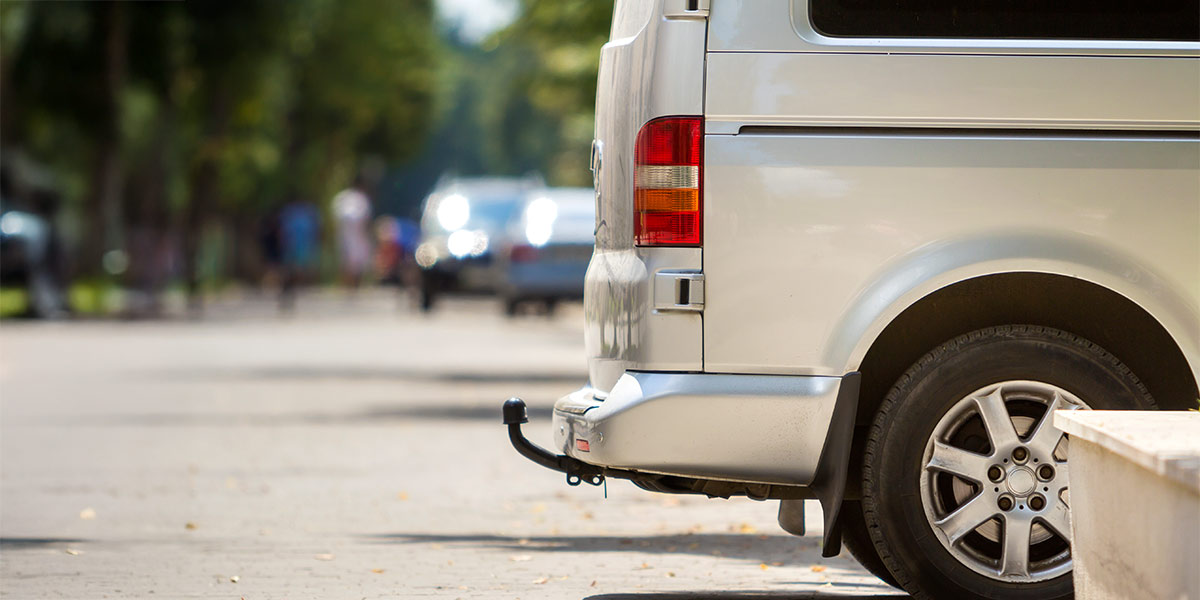
For some people, especially those with VW campervans or smaller vans, there isn’t always enough cabin space to carry and store all their equipment. For some VW campervan owners, they need to provide enough sleeping berths for their family. Others perhaps need to make it feasible for friends to come and stay with them – and this is where towing comes in handy.
Most VW campervans don’t necessarily have a huge amount of space, and if you’ve got specialist requirements such as medical equipment to support a family member, sports equipment for your favourite hobby, or you just need more room for extra comfort, the available space isn’t always enough.
Towing a trailer could be the perfect solution for carrying all the extra kit you need. if you want to bring a caravan along, you no longer have to rely on a separate car to tow it – your campervan may be able to handle that.
What are the Weight Restrictions When Towing with a Camper Van?
This will vary depending on your specific campervan. You’ll need to understand its weight limits and run a few calculations to determine a safe and sensible towing capacity. Getting this right is essential for safety and legal compliance.
Most modern VW Transporters can tow upwards of 2,000 kilos – but it also depends on the type of vehicle you are towing.
The Gross Train Weight (GTW) of your vehicle refers to the combined total weight of your vehicle, the trailer/vehicle being towed, and everything being carried in both. The GTW of your origninal vehicle plays a big role in determining how much you can safely tow. Always check the manufacturer’s guidelines, which will dictate the official limits and may include specific towing restrictions in the owner’s manual.
You must also think about what is sensible. Most experts recommend that when towing, the total weight of the trailer and its load should be no more than 75% of your vehicle’s Maximum Authorised Mass (MAM) – which is the maximum weight your vehicle is allowed to carry, including passengers and cargo.
The Camping and Caravanning Club recommends towing no more than 85% of the MAM (or kerb weight). While you technically can tow up to 100%, it is not advised as this could cause issues with the braking functions for both vehicles, the driver’s safety, and potentially your ability to manoeuvre correctly, particularly in tighter areas.
The GTW and the MAM of your vehicle will be listed either in the manufacturer’s handbook or inside one of the door frames of your campervan.
What Licence Do I Need for Towing?
From the 16th December 2021, if you passed your driving test after the 1st January 1997, you’ll be allowed to tow trailers up to 3,500kg MAM. You don’t need to contact the DVLA, and when you do get a new photocard licence, the category BE will be added.
If you had booked a test for driving with a trailer, this will have been cancelled, and you no longer need a special test to tow trailers.
Learn more on the government website.
Prior to the 16th December 2021 change, the rules were:
There are two considerations here. First, what licence category you hold, and secondly the year you were issued your licence.
If you got your licence before the 1st of January 1997, it’s likely that you’ll be able to tow a MAM of 8,250kg. If you got your licence after the 1st of January 1997, you will probably be able to tow no more than 3,500kg.
However, if you passed your test after 1st January 1997 and want to tow heavier weight, then you will need to pass the C1 + E regulation theory and practical test. This will allow you to tow a combined MAM of 12,000kg. However, most people will be fine with their existing licence regulations.
Maximum Authorised Mass means the combined weight of the two parts, and so the tractor unit or main vehicle and the towing unit, or towing vehicle. Most people can drive a vehicle with a trailer of up to 750kg in weight or a trailer that is heavier, if the car and the trailer combined reaches no more than their Maximum Authorised Mass allowance.
Insurance When Towing with a Campervan
As campervan policies are often quite specific, it may be that yours will not automatically cover you for towing. You may need to take out a specialist campervan policy or discuss with your insurer to ensure that you are allowed to tow on the back of your campervan.
They may impose weight restrictions on you, in order to be guaranteed by a policy, or ask that you only tow certain types of vehicles. For example, you may not be able to tow an A frame with a car under certain policies.
You will also need to consider your breakdown cover. Would your breakdown cover be able to rescue both you and the vehicle you are towing? If not, you’ll need to make sure that you’ve got breakdown cover that can cover all eventualities and adequately rescue or provide a fix that works for your situation.
FAQs on Towing with a Campervan
Can you tow a caravan with a campervan?
Yes, you can. As long as the maximum authorised mass doesn’t exceed the limit on your insurance or the legal limit, and your licence limit if the trailer is more than 3,500kg, then it’s perfectly possible to tow with a campervan.
Can you tow using a VW campervan?
Yes, you absolutely can. VW Transporters tend to be able to tow up to 2,500kg, so it’s important that you check your percentages and make sure that you’re safe when towing with your VW campervan.
What should I do to make sure my camper van is safe?
As well as following this government guideline checklist, which details everything you need to do before you take off with your boat, motorhome, or campervan, it’s important that you also check the specifics of your vehicle.
For example, make sure you’ve got your vehicle’s correct and up-to-date information in case you get pulled over, ensure that your brakes are in good working order and have been checked recently. Make sure that the weight of your vehicle when you’ve loaded up everything doesn’t push you over the limit, this can be checked at a weighbridge.
Can Just Kampers Insurance Help?
Absolutely! Since 1998, we’ve been providing specialist campervan insurance designed to fit your unique needs. Many of us are campervan owners ourselves, so we truly understand what matters to you – so your camper is in safe hands.
Get a quote or speak to our team today.
Summary
With the right preparation, towing from your campervan can be a great way to get extra space on your travels.
It’s completely doable, as long as you stay within the legal limits, adhere to your vehicle’s weight capacities, hold the correct licence, and ensure your insurance policy covers towing.