Campervans and motorhomes are both incredibly popular options for people looking to hit the open road and enjoy an extended camping holiday or epic road trip, but what are the differences between these two options?
We’ve put together this helpful guide explaining the differences between campervans and motorhomes, and the pros and cons of each. From initial costs and modifications, through to insuring your new home away from home, we’ve got everything you need to help you decide which option is best for you.
Here at Just Kampers Insurance, we specialise in camper cover, offering both campervan insurance and motorhome insurance.
We’ve been doing this since 1998, so our friendly team have decades of experience to help you get the best deals on your cover.
What is the Difference Between a Campervan and a Motorhome?
The differences between campervans and motorhomes might seem obvious at first, but with vans getting larger and easier for people to convert into campers, the distinction is starting to blur a little.
On closer inspection, campervans and motorhomes are different both on the surface and below it. These differences will inform whether you’d be better off with a camper or a motorhome, and range from simple aesthetic differences down to the availability and cost of the equipment you can kit them out with.
The most obvious difference between a campervan and a motorhome is that a motorhome is built on a larger chassis like a truck, and has a self-contained living space.
A campervan may have self-contained quarters too, but is usually much smaller. Typically, a campervan isn’t divided between the cab and dwelling area either, although you can get curtains to divide the two from each other.
Lets take a look at their definitions so we can further distinguish between them:
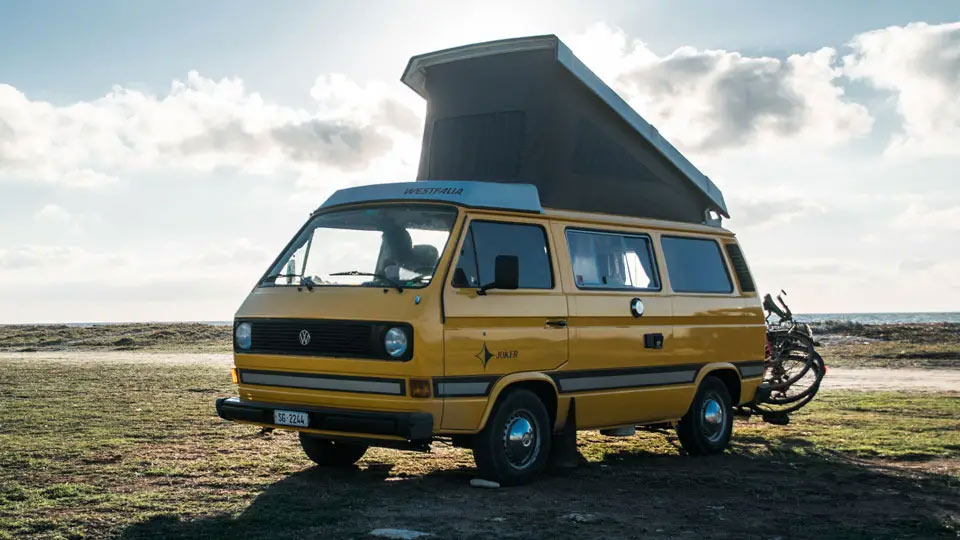
What is a Campervan?
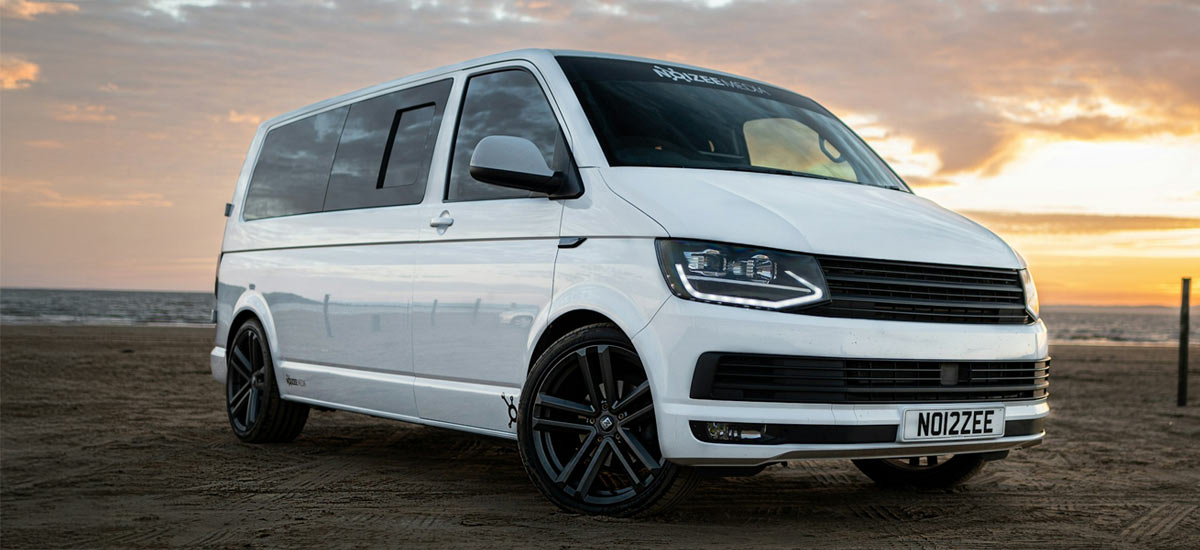
Defined as a smallish, self-contained van, a campervan has been equipped for both transport and accommodation. Generally, a camper has no separation between its cab and living quarters, which typically contain facilities for cooking, washing, and sleeping.
For many, the idea of a campervan is popularly associated with a van that has been fitted and kitted, normally as an ongoing DIY job, with a range of equipment, features, and accessories that liken it to a home on wheels. When shortened to camper, it can refer to an interest, a lifestyle, or a means of transport closely coupled with camping.
Unlike a motorhome, campervans are commonly built for easy, long-form travel but at a cheaper cost, and make it easier access to things like ferries, car parks, and country roads.
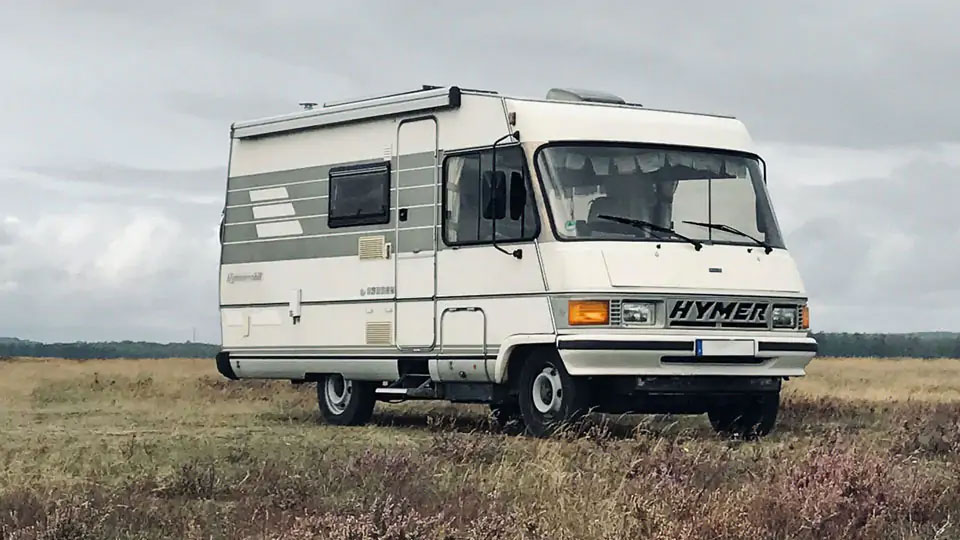
What is a Motorhome?
While campervans are suited to long weekends or short trips, motorhomes are generally far larger and tend to be geared to bringing comfort on the road. Though mistakenly interchanged with campervans, these are generally modelled around fixed features.
They both share a desire for recreational travel, but motorhomes are larger and use a truck or bus chassis to bring in extra space to the living quarters. The living quarters in motorhomes are much more compartmentalised compared to campervans.
Is a Campervan Cheaper Than a Motorhome?
When it comes to expense, the luxury and scale of motorhomes will usually be costlier than campers. Campervans, being small and adaptable, means they can run at cheaper costs, and generally aren’t as expensive to buy initially.
In many areas, campervans are the cheaper alternative to motorhomes, and include potential savings for:
• Fuel economy
• Parts
• Ferry charges
Is it Cheaper to Tax and Insure a Campervan or a Motorhome?
Generally, when it comes to the broad costs of ownership, campervans are the cheapest option of the two. Even with tax and insurance, campervans tend to run on more affordable premiums, especially when you partner with a specialist insurer like Just Kampers Insurance.
However, motorhome insurance may not cost nearly as much as you think. Since motorhomes aren’t generally driven nearly as often as normal vehicles, are driven at lower speeds, and are mostly on the roads during the summer when the weather conditions are better, they’re often not seen as such a high risk by insurers, so you can get some great deals on motorhome insurance.
For example, Just Kampers Insurance can insure a motorhome from just £225, which is a great deal that often catches people by surprise, as they expected it to cost more.
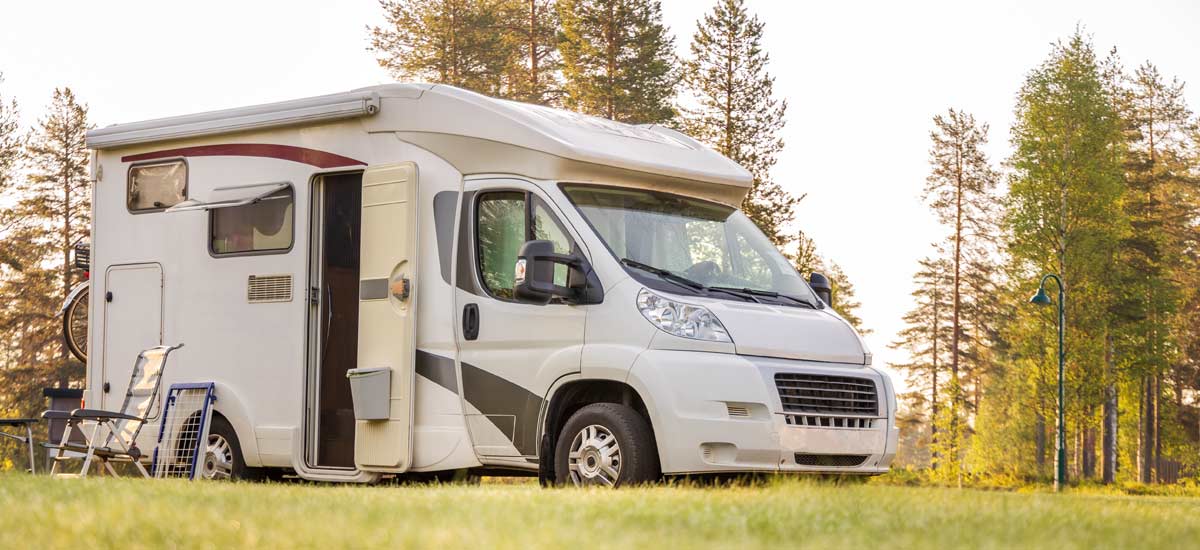
The Benefits of Motorhomes
Ideal for a more luxurious, comfortable escape, motorhomes can give their owners a sense of relaxed travel. These are often kitted out with an array of luxurious fixed features – depending on whether it’s a coach-build or A-Class. Either way, the vehicles integrate comfort into function with compartmentalised areas, like kitchens and bedrooms.
Motorhomes are larger, wider, and roomier. The obvious sacrifice is cost, as they generally run on a more expensive economy for areas like fuel use, or parts. You may also find it challenging to negotiate narrow roads, busy towns, car parks, and vehicle height/weight restrictions, but a bit of planning can help you avoid a lot of these issues.
The main functionality of a motorhome is its self-containment, incorporating many creature comforts. It’s less rugged, somewhat durable, and can withstand testing journeys, much like its smaller, sleeker counterpart – the campervan.
The Benefits of Campervans
The classic camper, especially Volkswagen buses, are iconic vehicles and have been touring since the 1950s. They’re iconic in culture, but beyond that, campervans are known for being practical modes of transport with built-in, custom living quarters.
Modern campervans, like those converted from the Ford Transit or Mercedes Sprinter, are every bit as enjoyable and comfortable, and arguably more reliable.
Many campervans have different roofs, such as pop-tops, or expanding roofs. This flexibility of space sets campervans apart, as users can customise their living quarters. Pop-tops, for example, can expand the space of your vehicle once it’s stationary, which can be ideal for camping excursions when you need a bit more room.
Aside from adjustable space, especially in the living quarters, and different modification options, campervans are preferable for those who plan on driving a lot. Campers tend to be smaller, easier to drive, and easier to park. The smaller sizes of campervans make them better suited to camping and being outdoors.
To help you decide if a campervan is the right choice for you, read our blog: Should I buy a campervan?
For more information about tailoring insurance policies to your campervan or motorhome, whether you’re after affordable premiums or something with that little bit more protection, consider coverage from the experts at Just Kampers Insurance.
Click here for more information on motorhome insurance, or you can click here to learn more about campervan insurance.
If you’ve got any questions, or need any additional information, then get in touch with our friendly team of experts here at Just Kampers Insurance. You can call us on 01256 44 45 46 or click here to arrange a time for us to call you.
Summary
While campervans and motorhomes are both designed for road trips and adventure, there are some key differences between them.
Motorhomes are typically larger and more luxurious, with spacious living areas that maximise comfort on long journeys.
Campervans on the other hand are a bit more compact. Although they can still provide everything you need, their smaller size means they are far easier to manoeuvre and park from towns and cities to narrow country lanes.
Campervans also tend to be more affordable than motorhomes; not just in regards to the initial purchase price, but also for things like fuel economy, tax, and insurance.
That said, both campervan and motorhome insurance can be less than you think, especially when you choose a specialist provider like Just Kampers Insurance. We’ve been insuring these kinds of vehicles since 1998, so we know exactly how to get you a great deal on your policy.
Get in touch or get an online quote to find out more.
Looking for Parts and Accessories for your Camper?
Take a look at our sister company, Just Kampers! They have a wide variety of campervan essentials so you can make your camper truly your own.
For more information about tailoring insurance policies to your campervan or motorhome, whether you’re after affordable premiums, or something with that little bit more protection, consider coverage from the experts at Just Kampers Insurance.
In this article
- What is the Difference Between a Campervan and a Motorhome?
- What is a Campervan?
- What is a Motorhome?
- Is a Campervan Cheaper Than a Motorhome?
- Is it Cheaper to Tax and Insure a Campervan or a Motorhome?
- The Benefits of Motorhomes
- The Benefits of Campervans
- Summary
- Looking for Parts and Accessories for your Camper?