
Although it’s always lovely to fire up the BBQ while you’re on your travels in your camper, the weather doesn’t always allow for it, and you’ll likely end up needing to cook inside your campervan at some point.
While this is still fun, the confined space, naked flames, flammable gases, and soft furnishings are not the best of bed fellows!
This blog will look at how to cook safely in your camper and how your cooking equipment could affect your insurance premiums and any possible claims should a fire occur.
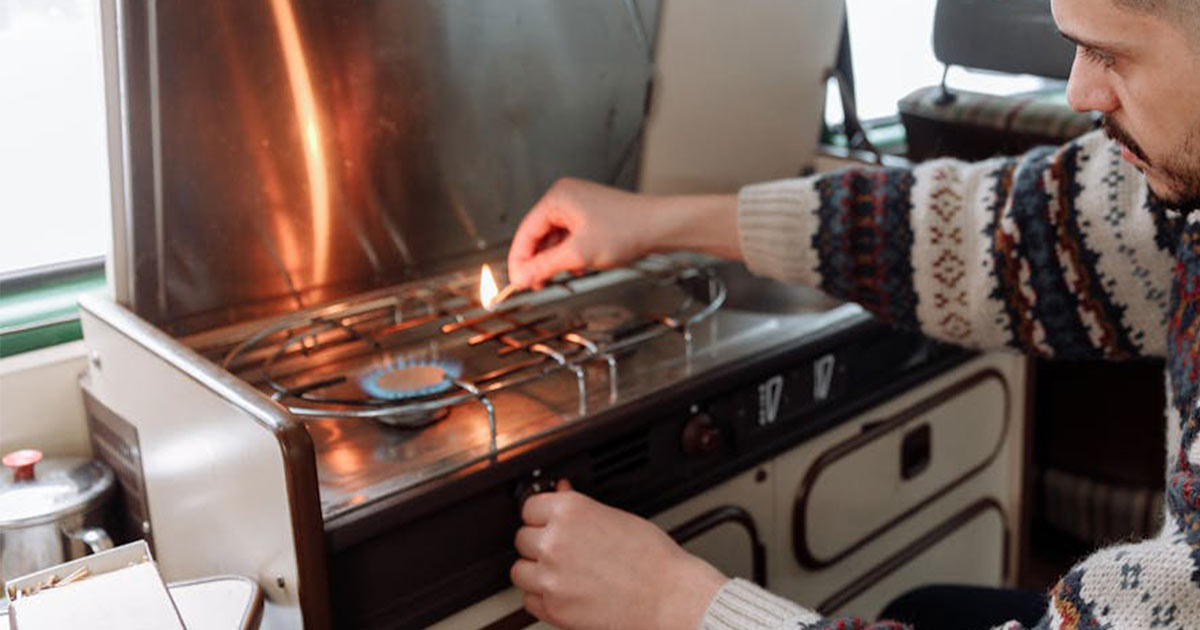
Tips for Safe Cooking Practices in Your Camper
Use of Suitable Appliances
Always use appliances that are specifically designed for mobile use, whether that be a fixed unit or a portable one. These appliances are designed to be safe to use in your vehicle or awning.
Fuel Safety
Ensure that all joints and connections in pipes and rubber hoses are secure and in good condition and check for leaks regularly. Consider disconnecting the gas for long journeys or if the cooker is not going to be used for a while.
Here’s a handy guide with more information about campervan and motorhome gas safety.
Ventilation
All liquid and gas-fuelled cookers will, as a byproduct of combustion, produce carbon monoxide, which is a poisonous, odourless and colourless gas. Carbon Monoxide is incredibly dangerous, and can quickly build up to deadly levels in an enclosed space.
Good ventilation in and around your cooking area will prevent the buildup of this harmful gas by allowing it to seep away through vents in the floor or open windows. It’s often thought that carbon monoxide will naturally sink to ground level as it’s heavier than air, but this isn’t actually true and so it’s important to have windows or even doors open to allow the gas to escape.
Having a carbon monoxide detector fitted can alert you at an early stage to the presence of this gas. It’s also vital that you never use a hob, BBQ, or any other cooking device as a heater to warm up your tent, awning, camper, or motorhome due to the risk of fatal carbon monoxide poisoning.
Proper ventilation will also prevent water vapour from building up, which isn’t a danger like carbon monoxide, but it could in the long-term lead to dampness, mold, or even corrosion inside your camper.
Our sister company, Just Kampers, offers a wide range of top-quality parts and accessories for campervans, including roof vents and carbon monoxide detectors, as well as thousands of other essentials.
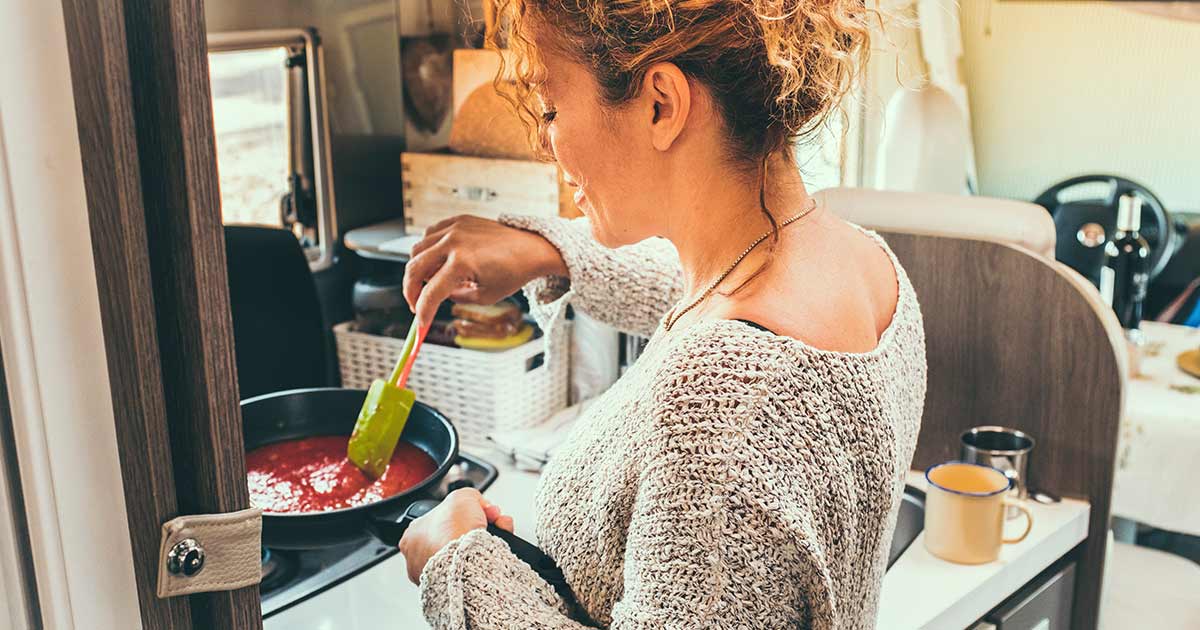
Fire Extinguishers and Fire Blankets
This one pretty much speaks for itself, but ensure that it is the correct type of extinguisher for your fuel source or flammable materials within your van or awning.
An ABC type of extinguisher should cover all your bases in a camper as it is good for use on wood, paper and textiles (A), flammable liquids (B) and flammable gases (C). Ensure that your extinguisher is in date and accessible when cooking. Fire blankets can be very effective on pan fires.
Keep a Clear Workspace
Ensure that your cooking area is kept clear of flammable materials, paying special attention to curtains and other soft furnishings. Space is at a premium inside campervans, and work surfaces can easily become cluttered and difficult to work on, which can lead to accidents.
Do Not Leave Unattended
Do not leave your cooker lit with food cooking on it, as when fires start, they spread quickly in confined spaces and you will need to react straight away to stay safe and protect your camper from unnecessary damage.
How Cooking Equipment Can Affect Your Vehicle Insurance
Policy Requirements
Your insurance policy may have specific requirements about the type of cooking appliance you have fitted that are governed by recognised safety standards. Failure to meet these could void your insurance in the event of a fire concerning that appliance.
Level of Risk
Risk can be assessed based on your cooking equipment and type of fuel, with the more hazardous, liquid fuel, possibly attracting higher premiums.
Lower Premiums
With most policies there can be reductions in risk and therefore in premiums if suitable safety equipment like fire extinguishers, fire and carbon monoxide detectors are fitted.
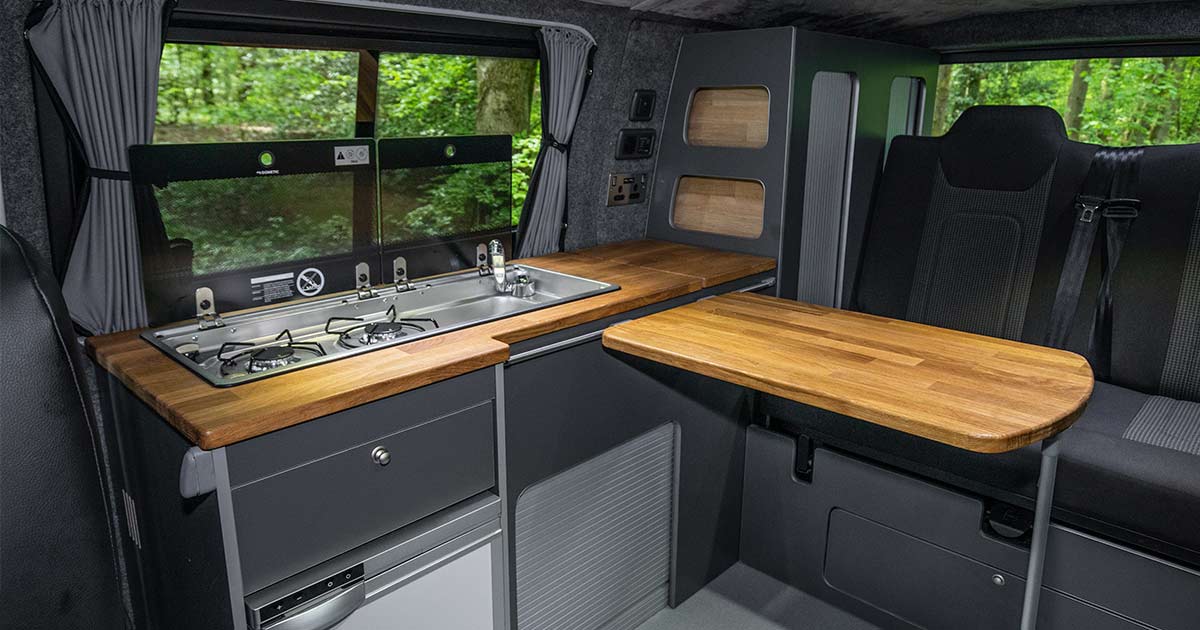
Liability Coverage
If when cooking with non-recognised equipment (a campfire for example), a subsequent fire causes damage to other people’s property, this could affect your public liability cover.
Validity of Claim
If a fire causes damage and a claim is made, the insurers may inspect your camper and cooking appliances to determine how the fire has happened and decide if your claim is valid or not. If you are found to have been negligent or using unsuitable cooking appliances, then you could find that your claim is denied.
Summary
Cooking in your camper is all a part of that self-sufficient vibe we all like when packing up our vans and going on our adventures, but don’t forget the inherent risk of doing so.
By following the above simple advice and practices you’ll stay safe and be cooking like a pro wherever you go. As always, if you are in any doubt about what you fit in your van, or how you intend to use it may affect your cover, speak to your insurance provider. Bon Appetit!
In this article
- Tips for Safe Cooking Practices in Your Camper
- Use of Suitable Appliances
- Fuel Safety
- Ventilation
- Fire Extinguishers and Fire Blankets
- Keep a Clear Workspace
- Do Not Leave Unattended
- How Cooking Equipment Can Affect Your Vehicle Insurance
- Policy Requirements
- Level of Risk
- Lower Premiums
- Liability Coverage
- Validity of Claim
- Summary