
Restoring an air-cooled classic Volkswagen such as a T2 Bay or a Beetle for a first-time owner can be a daunting but very rewarding project.
I’ve picked up a lot of useful tips from all the time I’ve spent working on my own T25 campervan, as well as speaking to my colleagues here at Just Kampers Insurance who’ve also got a wealth of valuable experience in working on all sorts of classic VWs, which I’ve distilled down into this handy guide for anyone looking at restoring their air-cooled Volkswagen in the near future.
Jump to:
Researching and Planning Your Restoration Project
Essential Tools for Your Restoration
Tackling Your Project’s Electrical System
Fixing Your VW’s Suspension and Brakes
Researching and Planning Your Restoration Project
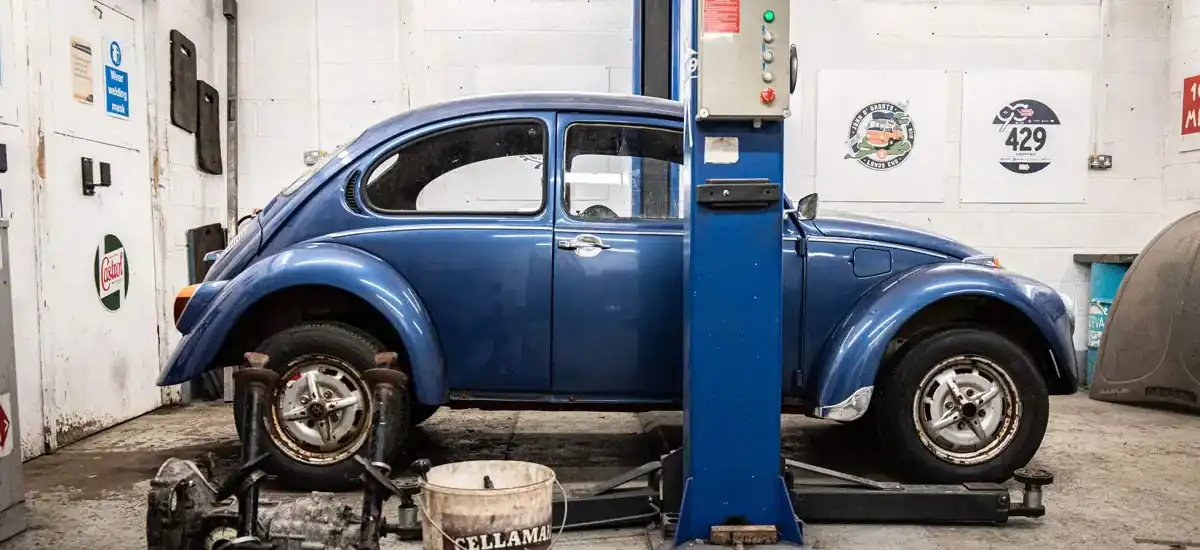
A great place to start with any project is to familiarise yourself as much as you can with the specific model of VW that you want to restore.
Collect as many resources as you can, like repair manuals and restoration guides, not to forget the many online forums that are a treasure trove of information, full of people who have lots of experience and are more than happy to share it within the classic VW community.
Our sister company, Just Kampers, has some great resources on their website, as well as a YouTube channel which includes a lot of great ‘How To’ videos.
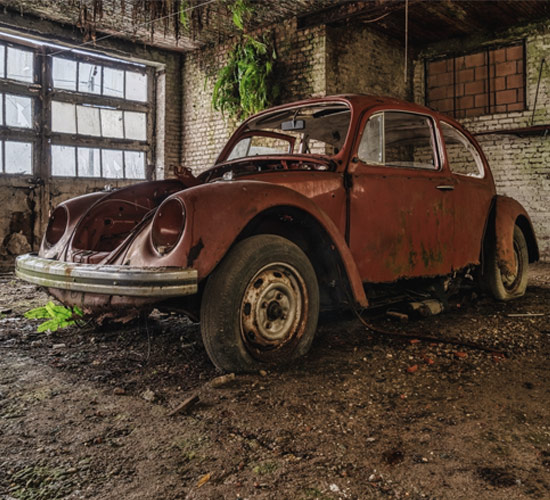
Take a good look through the interior and exterior of your VW, and make a list of which areas definitely need attention, and other which would be nice to work on if you’ve still got the time, money, and enthusiasm. Then you can put these into order, from most to least important, and do some research on what’s involved in tackling each step.
Setting a Project Budget
You will have an idea in mind of how much you can afford to spend on your restoration, and that figure will determine the level of restoration you can realistically achieve, from full concourse nut and bolt rebuild to preservation or cosmetic restoration to basic upgrades or modifications.
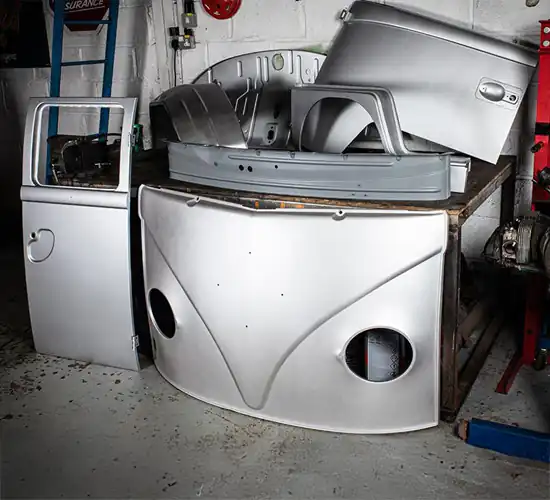
Make a list of all the parts you would expect to need and find costings for them online.
It’s worth noting at this point that if you’re insured with Just Kampers Insurance, you’ll be able to order parts from Just Kampers, our sister company, with a 10% discount which can quickly add up to massive savings over the course of a restoration project.
Any work you carry out yourself is ‘free’ but for jobs that you can’t take on you will have to factor in the hourly rate of a professional to do it for you.
You could phase your restoration if you haven’t all the money up front and treat it as a project to be done over many months, or possibly even years!
Essential Tools for Your Restoration
There are basic tools such as wrenches, sockets, screw drivers, pliers and torque wrenches to specialty tools that are vehicle specific, like engine stands and a dolly to hold the body while work on the body panels is carried out.
Using the list of priority jobs you created earlier, work out which tools you’ve got and which you don’t. If you’re part of an owners’ club you may be able to borrow some tools from fellow members (and maybe get them to help you out, too!), while for other tools and equipment you’ll likely need to look at sourcing them yourself.
Ensure that you protect yourself adequately, too, while you’re working on your air-cooled VW. Plenty of my colleagues here at Just Kampers Insurance and over at Just Kampers have got stories of nasty workshop injuries they’ve suffered while working on their vehicles, and most of these are avoidable if you’ve got the proper safety kit.
Invest in safety glasses, dust masks, and gloves for protection, as well as a proper first aid kit and any equipment-specific safety gear like a welding mask etc.
Create a Workspace
Set up a well-lit and clean workspace with enough room to dismantle assemblies such as the engine and to store them in the dry while your vehicle is in parts.
Have an organised storage area where you can keep track of small and large parts, so nothing gets lost prior to reassembly.
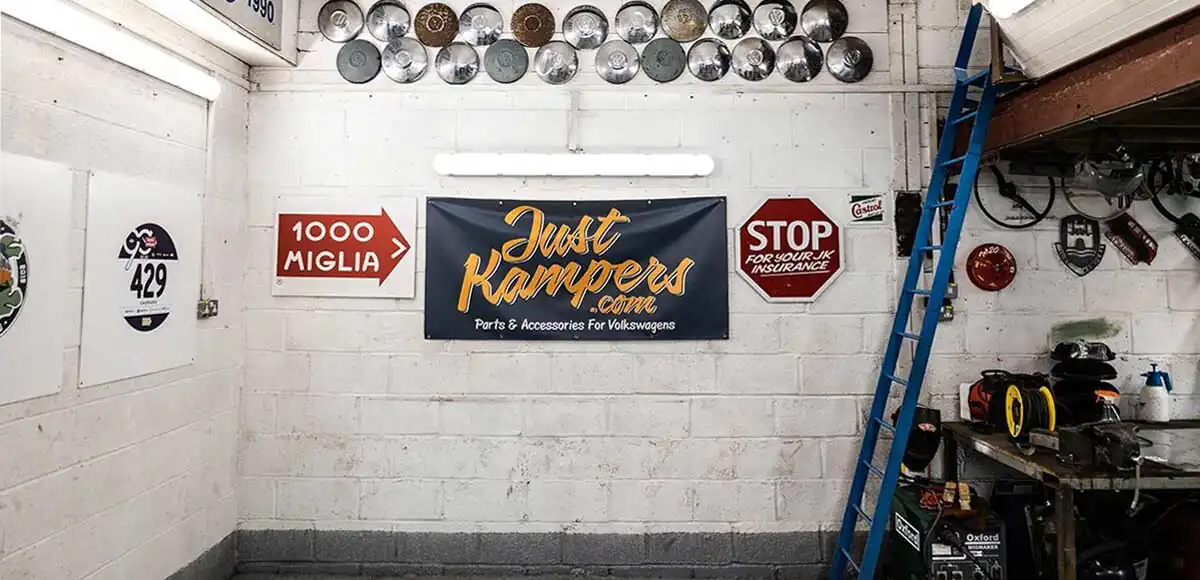
Making sure you’ve got a workbench set up at a comfortable height, as well as things like a heater, kettle, and radio will make the workspace nicer and easier to use, which will help motivate you to get out there and get some work done when it’s cold, dark, and miserable out there and you’d rather be finding an excuse to stay indoors.

Why compromise on insuring your precious vehicle when we’ll give you £50* if we are not the cheapest.
Start With the Body
Address body work and rust issues first. This is a sensible place to start, is quite satisfying to do, and gives you a great sense of achievement which you can use to power you on to some of the more intricate jobs.
Sand down rusted areas, apply a rust treatment product and consider professional help for significant body repairs. Our colleagues over at Just Kampers have put together a useful Garage Finder tool which can help you find a workshop near you, if needed.
I had to do plenty of this while working on my VW T25, and used a liquid rust treatment to coat any exposed metalwork that wasn’t going to be painted so that it didn’t rust again.
Look at the Floor Pan on Your Air-Cooled VW
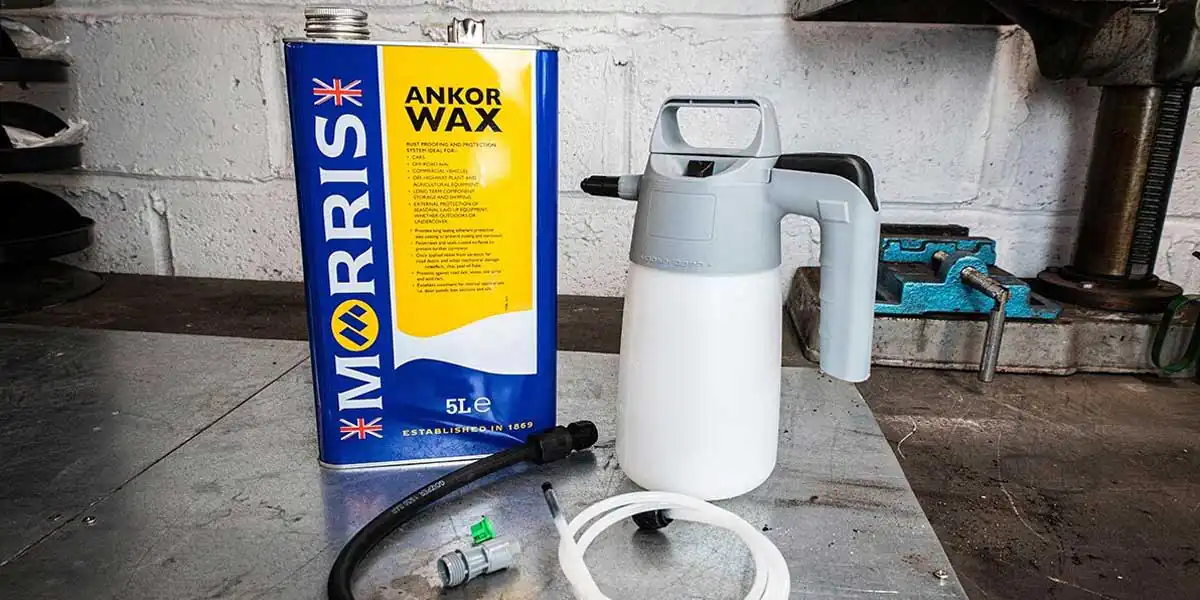
Clean the floor pan and inspect it for any signs of rust or damage. Treat these areas as necessary, and seal the underside of the floor pan with a treatment such as Morris Ankor Wax.
This is a pretty essential part of your vehicle, so take the time to remove any paint, old sealant, and anything else which stops you seeing the condition of the metal itself.
Mechanical Overhaul
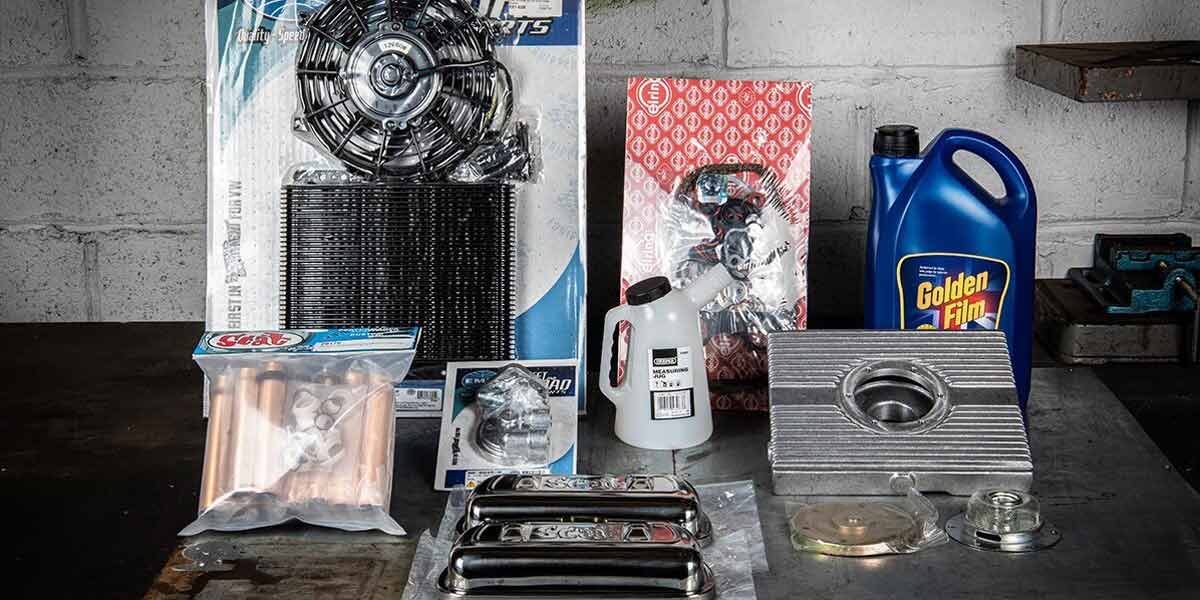
Focus on the engine and transmission. Go through each part one by one, check for worn out components, replace all the fluids, and consider if an engine rebuild is necessary.
There’s a wealth of information out there about how each of these systems is supposed to be set up and run, which will help you work out if there’s an issue, where it’s located, and how to fix it. I used one of the Kamper Manuals from Just Kampers while working on my T25, but you’ll be able to find an impressive amount of information in your VW’s original handbook, as well as online, too.
Chasing issues back to the source and fixing them can be time consuming, but it’s also really satisfying when you’ve gotten it all right and your classic is running right again!
Tackling Your Project’s Electrical System
Inspect all wiring, lights, connections, fuses, and other electrical components. Replace the fuses and any connectors that are starting to show signs of perishing, and swap out any frayed or damaged wires.
It might also be necessary to replace the battery, as these do have a finite shelf life.
A lot of us who have restored a classic VW have found that previous owners have added in large amounts of additional wiring, sometimes for no apparent reason, but there are wiring diagrams available online for a whole range of air-cooled Volkswagens which you can refer back to and see how your vehicle should be wired, even if the wiring now looks a lot more complicated than perhaps it should.
Fixing Your VW’s Suspension and Brakes
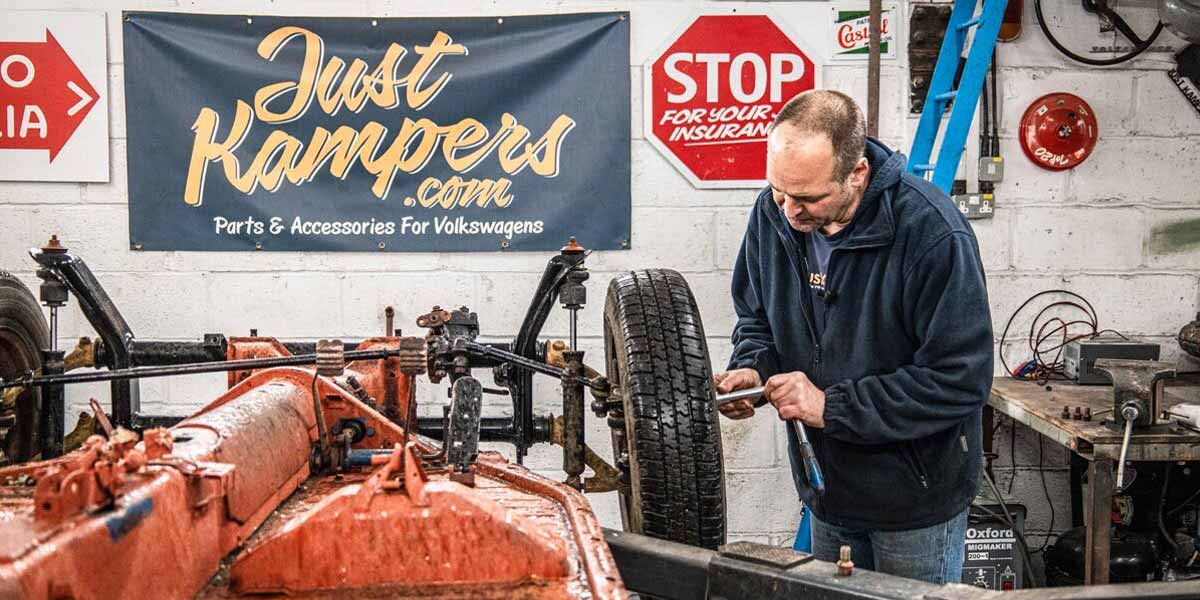
Check ball joints, bushings, brake lines and rotors. At this stage it may be worth considering upgrading some suspension parts to improve general handling if desired, or to upgrade from drum brakes to disc brakes which will make a big difference to how efficiently your VW stops.
A lot of brake hoses get targeted by rodents, who apparently love chewing on them, so if your Volkswagen has been off the road in storage for a period of time it’s possible you’ll need to replace multiple brake hoses and other rubber parts which have suffered rodent abuse.
Interior Restoration
This is usually left till last as you want to keep it clean.
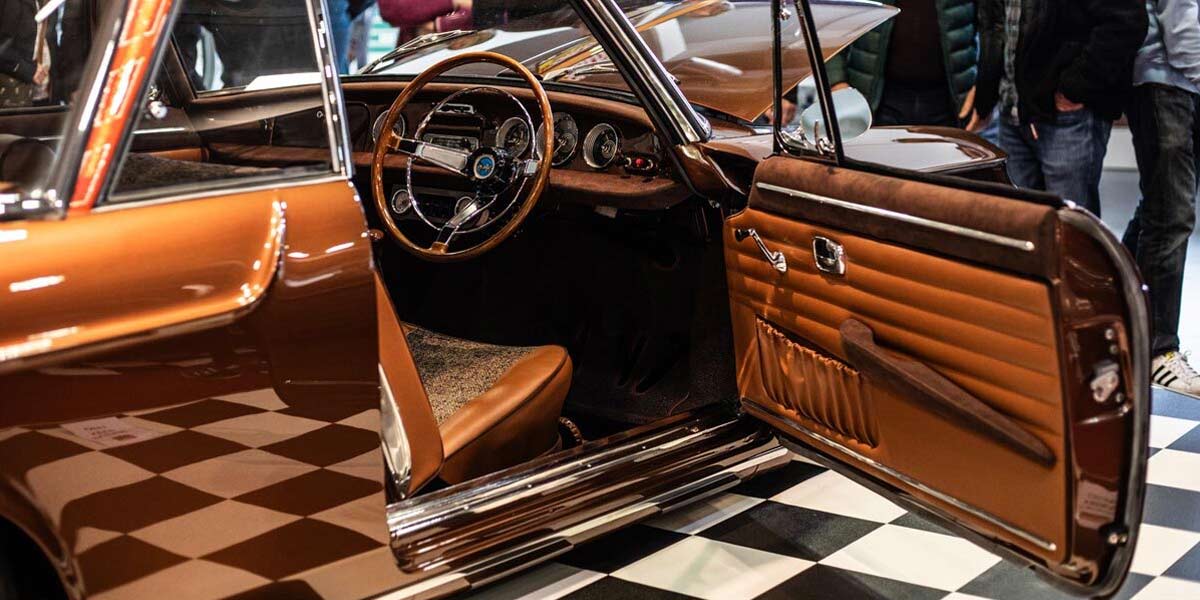
Clean, repair or replace any worn or damaged seat upholstery, carpets, and linings. Whether you want to replace your vehicle’s interior parts to match the style it would have left the factory with, or upgrade to something more modern, is entirely up to you, but there’s a huge range of different options out there and it’s well worth taking a look to see what you like the look and feel of.
Document the Restoration
Take lots of photos throughout the whole process of your restoration, as this helps you to track progress and will add value to your vehicle. Retain any major receipts as proof of work completed, and keep them all in one place so you can make sure you’re sticking to the budget you set at the start of the project.

Summary
Restorations can take longer, and cost more, than originally anticipated so be patient and be prepared for changes and unexpected issues.
If you research, plan thoroughly and work methodically you will be able to restore your classic air-cooled vehicle and be proud of what you have achieved for years to come.
As a last note, always remember that the air-cooled community is a large and friendly place where much advice and help can be gained so don’t be afraid to get out there on the forums and tap into this massive resource of information, you are not alone!
Top tip: Don’t forget to protect your classic while it’s off the road. Laid Up Cover keeps it safe during restoration and gives you complete peace of mind.
In this article
- Researching and Planning Your Restoration Project
- Setting a Project Budget
- Essential Tools for Your Restoration
- Create a Workspace
- Start With the Body
- Look at the Floor Pan on Your Air-Cooled VW
- Mechanical Overhaul
- Tackling Your Project’s Electrical System
- Fixing Your VW’s Suspension and Brakes
- Interior Restoration
- Document the Restoration
- Summary