
This quick blog will give you some quick and easy ways to protect your classic VW camper from thieves.
While plenty of people will happily smile or wave as you drive past in your classic VW campervan, there are some people who look at it as a chance to make some money by stealing your belongings from inside it, or stealing the whole camper itself.
Luckily, there’s plenty you can do to deter and prevent thieves from targeting your campervan, which we’ve laid out in this handy blog!
What Do I Need to Keep a Classic Camper Secure?
Let’s run through a few items and some handy equipment that will help you keep your classic VW campervan safe and sound.
Keep It Locked
This first point is the most obvious, but it’s not always that easy when many of our classic Volkswagens have multiple, nearly-identical keys which each do a different job.
If you are leaving your camper unattended for any period of time then ensure that you lock all windows and doors, especially after you’ve fuelled up and go to pay at a petrol station.
In order to do this, you must ensure that all your locks and window catches are in good working order in the first place! The louvre windows or quarterlights can be a weakness in classic VW campers, so make sure these close properly and can’t be forced open.
Fitting an Alarm to Your Classic Camper
Consider fitting a Thatcham-approved electronic alarm system to deter unauthorised access to your camper, and display a security sticker stating its presence. This alone may be enough to put off a would-be thief.
Thatcham is a UK-based testing and research centre which is trusted by manufacturers and insurers, and sets standards for vehicle security. This means a Thatcham-approved alarm is a sound investment, if you’ll excuse the pun!
Classic Volkswagens weren’t originally built with an alarm system, but they can be relatively simple to install if you’ve got a local specialist near you who can take on the job.
Classic Campers and GPS Trackers
Fitting a tracker to your classic campervan, and having a visible sticker displaying that it’s fitted with a tracker, can be enough to deter some from targeting your camper in the first place.
Should the worst happen and your camper is stolen, a GPS tracker could greatly assist in tracking its movement and location, thus making recovery easier.
Steering Wheel Locks for Classic Campervans
A good old fashioned steering wheel lock can provide a credible visual deterrent to opportunistic thieves, as well as a physical barrier to the steering wheel of your vehicle which can make it far harder to steal.
This can be especially effective if you park your camper in such a way that it can’t be moved or rolled without first turning the steering wheel, and then lock the steering wheel in place with a clamp!
Pedal Locks
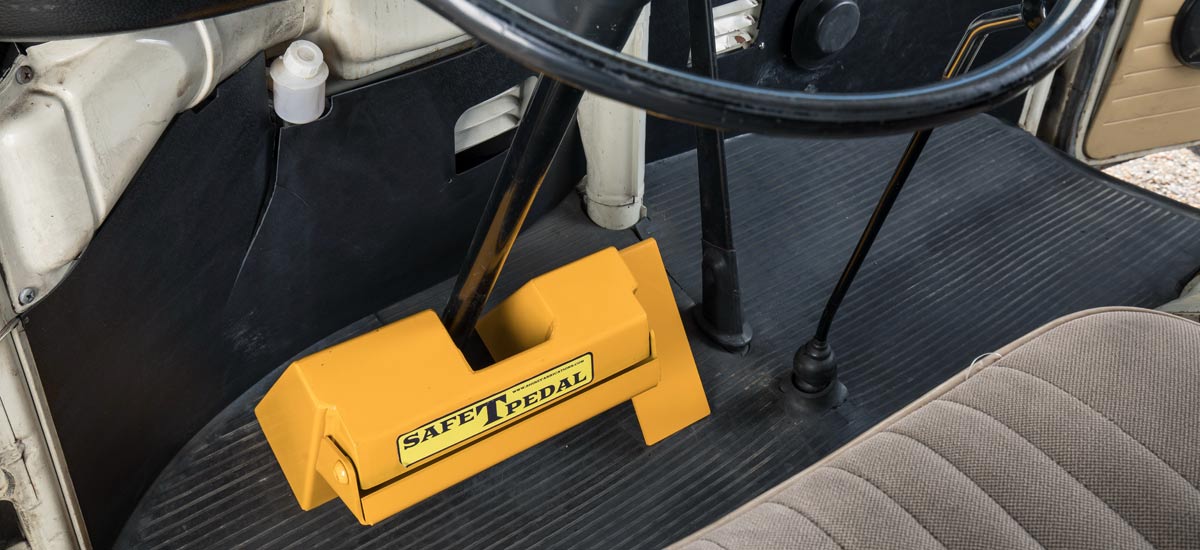
Pedal locks like the Safe-T Pedal are tough metal boxes which lock over the accelerator, brake, and clutch pedals in your classic camper so that the vehicle can’t be driven when fitted.
As well as being a visual deterrent for any would-be car thief, they’re also a strong physical barrier which will need to be removed before your camper can be moved. This is easier said than done, as they’re incredibly difficult to remove without power tools, which many car thieves wouldn’t employ as they’re noisy and draw unwanted attention.
Wheel Clamp
Similar to steering wheel and pedal locks, a wheel clamp is a very obvious anti-theft tool which can be seen from across the road, rather than only being seen when looking into your camper from up close.
Wheel clamps speak for themselves, but can be bulky and are probably best used when parked up on your drive or when you’re static for a long time. They can help prevent your camper being driven or towed away, and will put off a lot of car thieves who don’t have the determination and tools to bypass the clamp.
How to Reduce the Risk of Your Classic VW Camper Being Stolen
Where possible, try to avoid parking in remote, unlit areas at night. Stick to well-lit car parks or campgrounds where there is already a level of security in place in the form of CCTV, lighting, or controlled access.
Do not have valuables on open display; keep them hidden away and consider installing a small safe for passports and money if you’re travelling abroad.
Install an electronic immobiliser that requires a specific key or fob to disable to make starting the engine more difficult.
Alternatively, consider fitting a hidden physical kill switch on the ignition system in the engine bay.
As stated previously, a sticker stating that certain security systems are fitted can also have a powerful deterrent effect.
Classic Campers, Theft, and Specialist Insurance
In the event of your campervan or its contents being targeted by thieves you will need to rely on your insurance to ensure that you are not left out of pocket for damages or losses incurred.
You’ll therefore need to make sure that your insurers are kept up to date on the specifics of your campervan in terms of modifications that you have installed and any additional security measures that you have employed.
Need Parts and Accessories for your Classic Campervan?
Classic VW Campers need plenty of care and attention to keep them at their best.
Head over to our sister company, Just Kampers! With a huge range of top-quality parts for all kinds of classics, including the VW Split Screen, T2 Bay, and T25, you’ll find everything you need and more, to keep your pride and joy running smoothly.
They’ve also got a library of useful resources, from how-to videos and informative blogs through to a shows and events calendar!
And the best part? When you insure your vehicle with us, you’ll get 10% off parts and accessories at Just Kampers – a win-win!
Summary
The key to keeping your valuable campervan secure and safe from theft lies in a two-pronged approach of physical and environmental security measures. Fit physical and electronic security devices to your van to deter or make the actual act of theft harder and therefore less likely.
Lessen the likelihood of your van being targeted in the first place by being vigilant and aware of your surroundings and the risks that they pose. Everyone is in the sights of thieves, just try not to make yourself the centre of the target.
In this article
- What Do I Need to Keep a Classic Camper Secure?
- Keep It Locked
- Fitting an Alarm to Your Classic Camper
- Classic Campers and GPS Trackers
- Steering Wheel Locks for Classic Campervans
- Pedal Locks
- Wheel Clamp
- How to Reduce the Risk of Your Classic VW Camper Being Stolen
- Classic Campers, Theft, and Specialist Insurance
- Need Parts and Accessories for your Classic Campervan?
- Summary