If you drive a classic VW Beetle, Bus, Type 3, or any of the old-school air-cooled legends, you already know the charm isn’t just in the look. It’s in that unmistakable engine note and the simplicity under the decklid. But simplicity doesn’t mean neglect is an option. These little machines reward care, and if you stay on top of things, you’ll avoid pricey breakdowns and keep more money in your pocket for road trips, upgrades, or the next project.
Jump to:
Keep Your Oil Fresh and Flowing
Adjust Your Valve Clearances
Step-by-Step: How to Adjust Air-Cooled VW Valves
Keep an Eye on Your Ignition System
Don’t Ignore Cooling Tinware and Seals
Fuel System: Keep It Clean, Keep It Tight, Keep It Safe
Why Just Kampers Insurance Is Worth It?
Summary
Better still, with Just Kampers Insurance, you get solid cover, optional breakdown assistance, and a tidy Price Promise. Plus, if you’re already shopping for parts over at justkampers.com, you can score an extra 10% shop discount with your policy. Not too shabby.
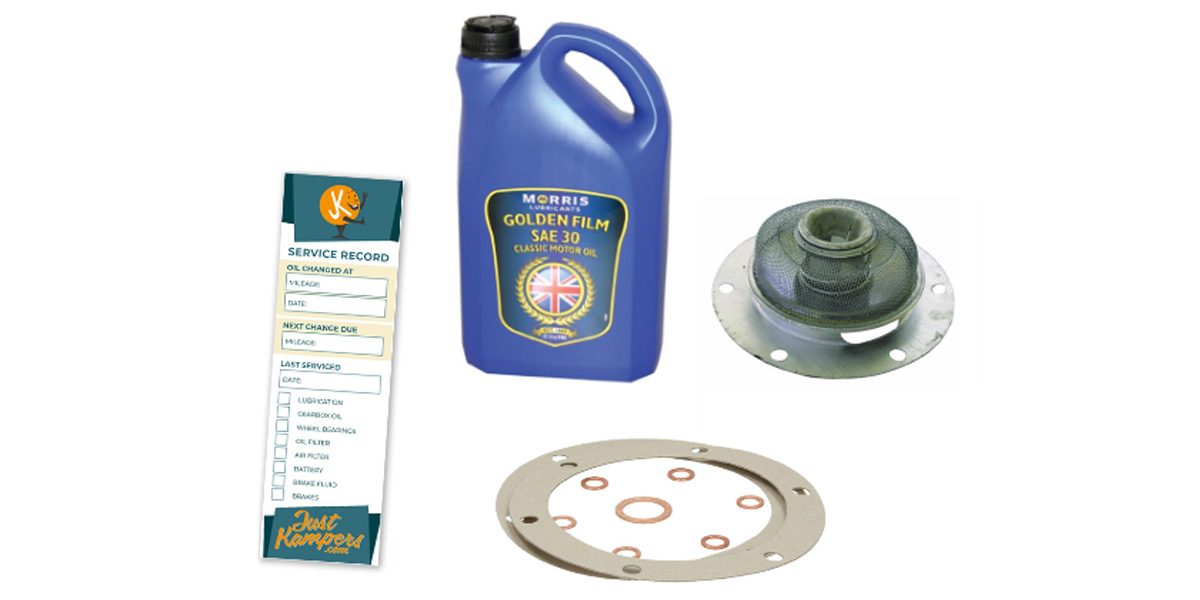
Oil Change Kit VW Beetle 1969–2003, T2 Bay 1600cc 1969–1979 & Brazilian Bays
Keep Your Oil Fresh and Flowing
Air-cooled engines run hotter than their water-cooled cousins, which means oil is doing double duty: lubricating and helping control temperature. Change it every 3,000 miles or at least once a year. Don’t push it. A neglected oil change is how engines seize, bearings fail, and bank balances cry.
While you’re at it, swap the oil strainer and gaskets. It’s cheap, it’s quick, and it’s one of the best preventative steps you can take. If you need parts, you can check out categories like engine service items:
Adjust Your Valve Clearances
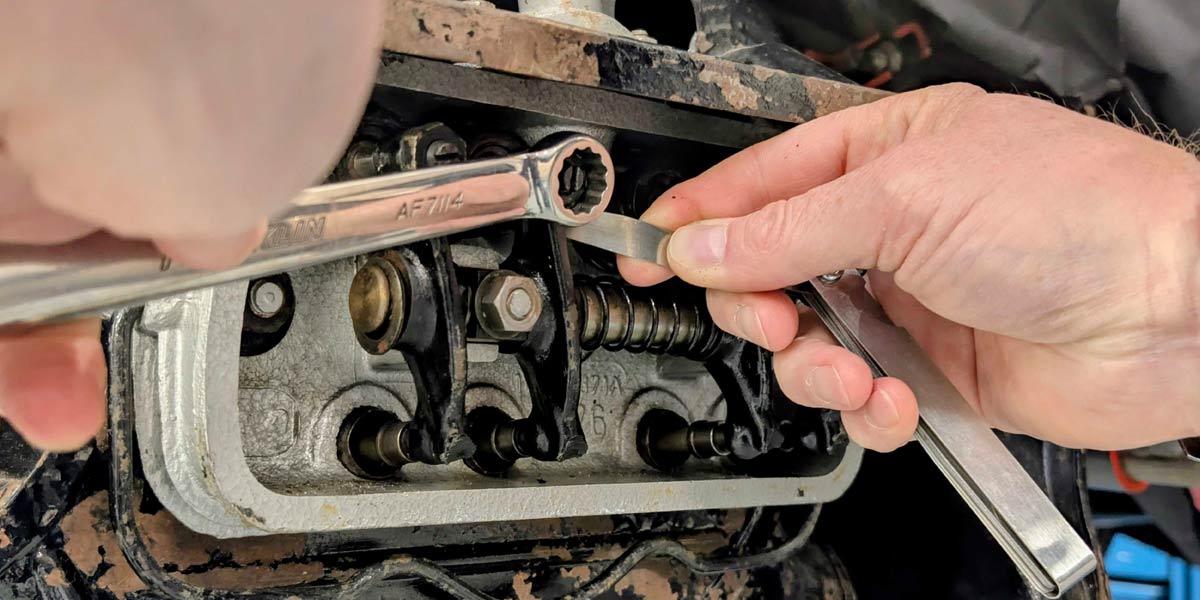
If you’ve ever wondered why seasoned VW owners always talk about “doing the valves”, it’s because this is one of the most important maintenance jobs on an air-cooled engine. Incorrect valve clearances lead to poor running, hot spots, and, in the worst case, burnt valves or dropped seats.
Most classic VW engines need valve checks every 3,000 miles. It’s a half-hour job once you get the hang of it and can seriously extend the life of your engine.
Step-by-Step: How to Adjust Air-Cooled VW Valves
Assuming classic VW flat-four with solid lifters (e.g., Beetle, Type 2 Bay/early T25 air-cooled, Type 3). If you have hydraulic lifters (some late Type 4 engines), the procedure and clearances differ, check your handbook.
Specs (typical)
Clearance: 0.006 in (0.15 mm) on both inlet and exhaust with a stone-cold engine (left overnight).
Firing order: 1-4-3-2.
Tools: Feeler gauges (0.006 in / 0.15 mm), 13 mm spanner, flat screwdriver, plug spanner (optional), rag, new rocker cover gaskets, brake cleaner, torch, gloves.
1) Prep the vehicle
Park on level ground, handbrake on, in neutral.
Let the engine go completely cold.
Disconnect the battery negative (optional but safe).
Remove both rear wheels (optional for access on buses), then the rocker/valve covers (pry off bail wires carefully). Catch drips with a tray.
2) Set Cylinder #1 to TDC (compression)
Remove the distributor cap. Turn the crank clockwise with a 19 mm socket on the crank pulley bolt.
Align the TDC mark on the pulley with the case split.
Confirm the rotor points to the #1 lead position on the distributor body. Both #1 rockers should be relaxed (you can wiggle the arms).
3) Adjust #1 inlet and exhaust
Pick the valve, slide the 0.006 in (0.15 mm) feeler between the valve stem and the adjuster screw face.
Loosen the 13 mm locknut slightly.
Turn the screwdriver on the adjuster until the feeler has a light, even drag.
Hold the adjuster steady and snug the locknut.
Re-check: the feeler should still drag lightly. If not, repeat. (Over-tight = burnt valves; too loose = noise and wear.)
4) Rotate to the next cylinder in firing order
Rotate the crank 180° each time to reach the next cylinder at TDC on compression, following 1 → 4 → 3 → 2.
After #1: 180° to #4 (rotor points to #4).
Another 180° to #3.
Another 180° to #2.
Adjust both valves on each cylinder as in Step 3.
5) Refit rocker covers
Clean mating faces. Fit new cork/silicone gaskets lightly oiled.
Seat covers squarely; flick the bail wires up to lock.
Wipe down, check for leaks.
6) Final checks
Spin the engine by hand once more to be sure nothing binds.
Refit the distributor cap and reconnect the battery.
Start the engine; it may tick slightly at first, then settle to a smooth idle.
After your next short run, have a look for any oil weeps and re-check clearances at your next service.
Tips from the workshop
If a feeler won’t go in at all, don’t force it, back off the adjuster first.
Always adjust cold. “Warm” clearances are inaccurate on air-cooled engines.
Note any valve that keeps tightening up between services, that can hint at seat recession or a stretching valve.
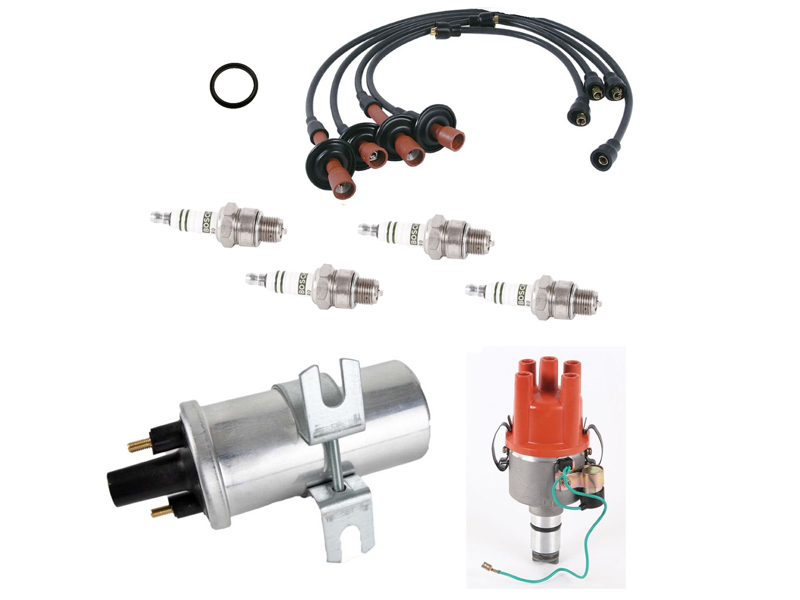
009 Ignition Bundle Kit VW Beetle 1968–1998, VW T2 Split 1950–1967 T2 Bay 1600cc 1967–1979
Keep an Eye on Your Ignition System
A tidy ignition system makes all the difference. Points, condenser, rotor arm, cap, plugs, and leads all wear out eventually. You’ll feel it as hesitation, misfires, and rough idle.
If your VW feels grumpy on start-up or sluggish on hills, it might be time for a tune-up. You can browse ignition components here:
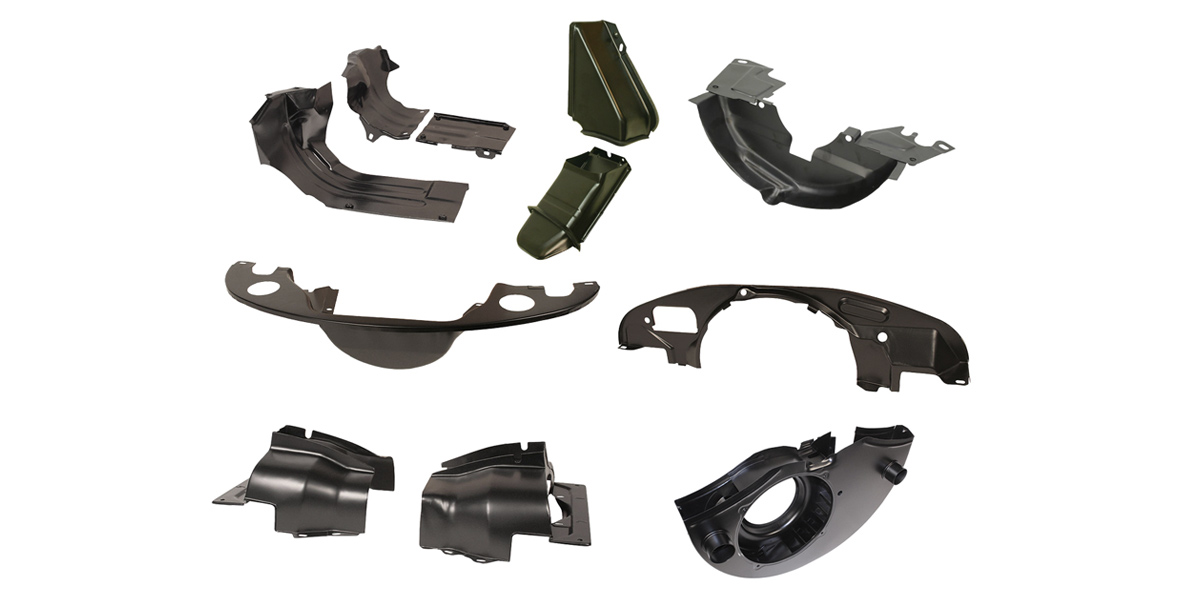
Tinware Bundle Kit Twin Port 1300-1600cc VW Beetle 1971 on
Don’t Ignore Cooling Tinware and Seals
Air-cooled engines depend on their tinware and rubber seals to funnel air where it needs to go. Missing tin, perished seals, or gaps around the engine bay mean hot air gets sucked back into the fan, and temperatures rise. Overheating is the silent killer of these engines.
A quick engine bay check can save you an engine rebuild. If you’re missing tinware or seals, it’s worth replacing them ASAP.
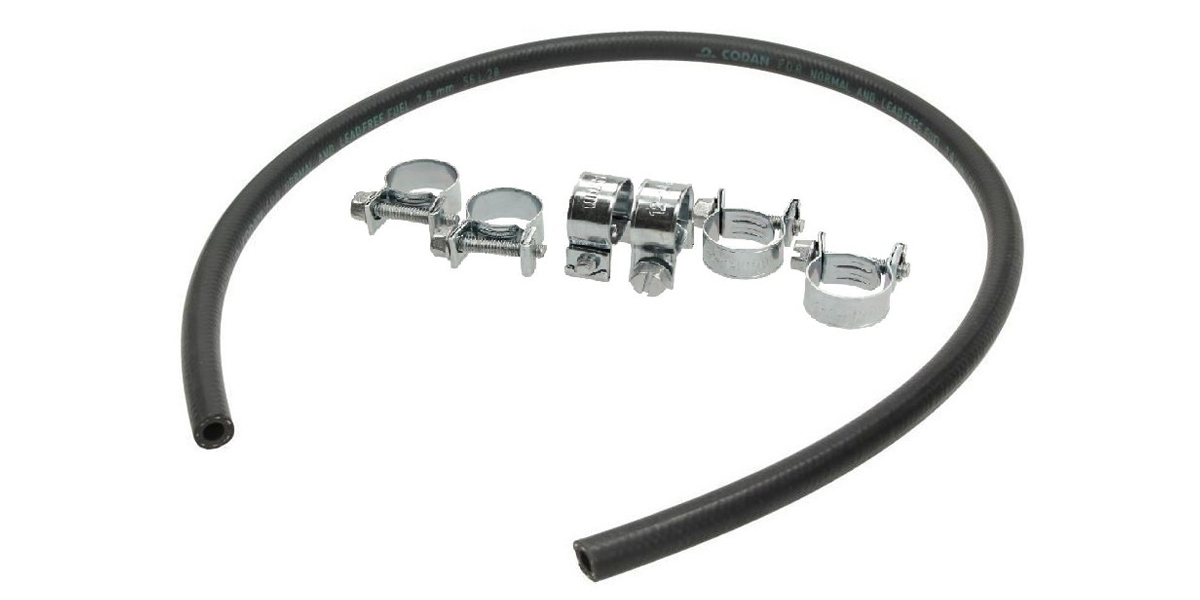
7.6mm Ethanol / Bio safe Fuel Hose ( 1 metre) With 6 Fitting Clips
Fuel System: Keep It Clean, Keep It Tight, Keep It Safe
Old VW fuel hoses can crack from age or ethanol content in modern petrol. Replace them with proper ethanol-safe hose, keep clamps snug, and make sure your fuel filter is located safely away from hot spots.
This isn’t just about breakdowns. It’s about keeping your VW out of fire-risk territory.
Why Just Kampers Insurance Is Worth It?
Choosing Just Kampers Insurance means you’re getting cover tailored for your Classic Air-cooled VW, not a generic policy. With two decades of experience, they understand what owners of campervans, classic VWs, or modified Volkswagens need in terms of protection and value. Just Kampers Insurance policies are designed to recognise the true worth of your vehicle, support modifications, and give you peace of mind on the road.
Key benefits at a glance:
• Agreed-value cover that protects your VW at its true worth, not just market value.
• £50 Price Promise and 10% parts discount at JustKampers.com with every policy.
• Modification cover built-in — so your upgrades, custom work and classic details are recognised.
• Optional Breakdown cover across the UK and Europe, helping you stay on the move with confidence.
• Specialist support from VW-focused experts who understand the quirks of air-cooled cars and camper-conversions.
Having a policy from Just Kampers means you’re not just insured; you’re supported by a team that shares your passion, understands your vehicle, and responds to your needs.
In Summary
Your air-cooled VW engine is a tough little workhorse, but it’ll only stay that way if you show it some love. Regular servicing, keeping temps under control, and replacing small parts before they become big problems will save you a heap of money over the long run.
And pairing that care with the right insurance and breakdown cover from Just Kampers Insurance? That’s how you keep the classic VW life fun, affordable, and stress-free.
Don’t forget, when you insure with us, you get 10% off parts and accessories from our sister company, Just Kampers!