While enjoying the campervan lifestyle in your cherished home from home, with all your amenities for comfortable living installed, it can be easy to forget the risk of fire from a number of causes within the confined space. Easy to forget, that is, until it actually happens!
This blog will outline the main causes of fires in campervans, as well as means of preventing them, to help you keep yourself, your campervan, and other people as safe as possible.
I will split the blog into two areas of interest: inside the van; and engine bay fires.
Understanding the causes of fire and implementing preventative measures is essential for a safe and enjoyable trip. First, we will look at what to do if your camper catches fire.
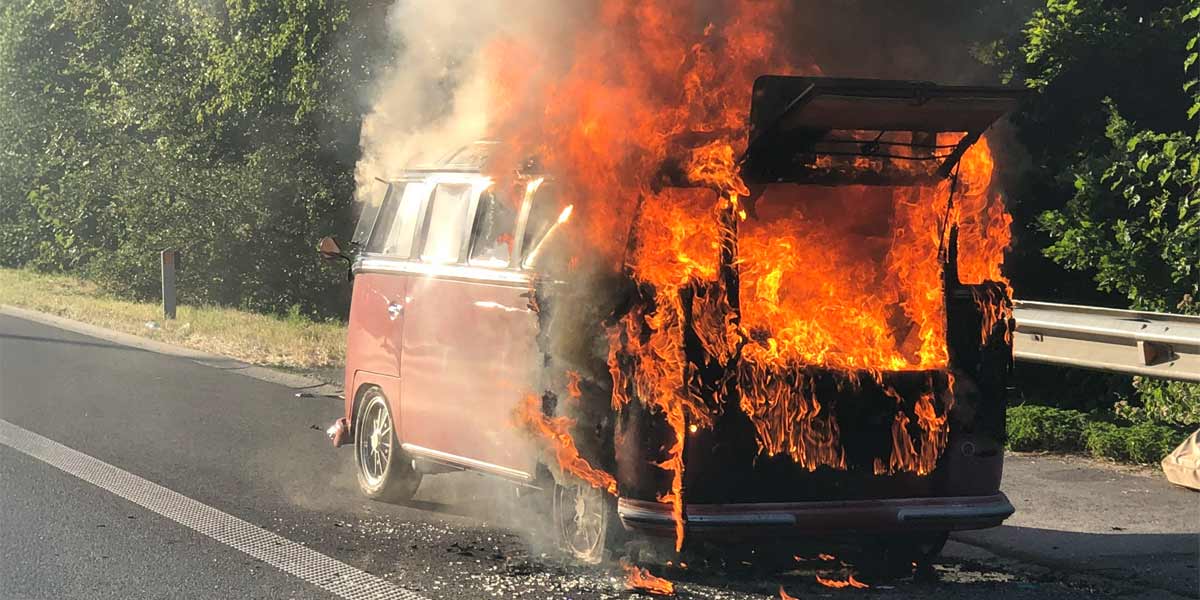
What To Do if Your Campervan Catches Fire
- Evacuate everyone from the vehicle immediately. Do not waste time grabbing personal possessions, but take your fire extinguisher with you.
- Call emergency services.
- Do not attempt to fight the fire yourself unless there is a realistic chance of you putting it out.
- If using a fire extinguisher, always aim at the base or source of the fire.
- Close any fuel, gas or power cut offs, but only if safe to do so.
We don’t want you to have to use the above advice, as it means that sadly a fire has already occurred.
Please read on for tips on how to avoid this in the first place.
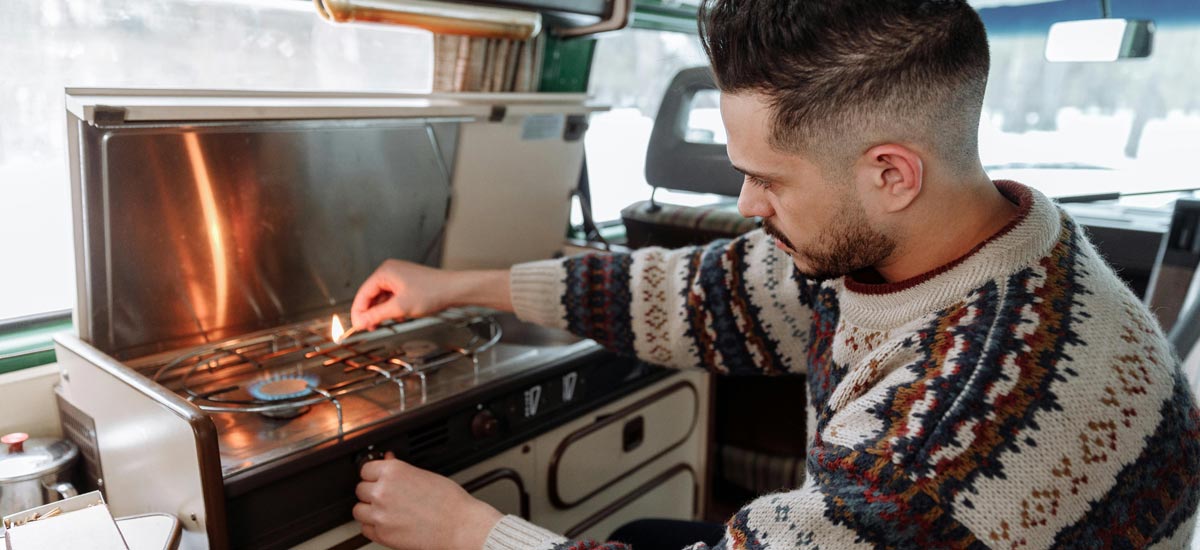
Common Causes of Fire Inside Your Camper
Camper Gas Safety
Most campers use and store propane or butane gas for the purpose of cooking or heating, so there is obviously an inherent risk in using these flammable gases within your vehicle. The main hazard is that of gas leaks which can result in explosions or carbon monoxide poisoning, the silent killer! The immediate investigation of unusual smells or hissing sounds is a vital part of prevention of potential danger.
Preventative Gas Leaks in your Campervan
This starts right back at the installation phase of your appliances and gas lines, by ensuring that they are installed in line with the manufacturer’s guidelines and any specified regulations. If you are unsure about installing safely yourself, or are unsure about an existing set up in a camper which was converted before you bought it, then get a professional technician in to inspect it.
Install a carbon monoxide detector that in effect is an electronic ‘sniffer’ and will warn you at an early stage of any gas leaks. Install a smoke detector, too, as not all fires are caused by issues with gas.
Regular checks and maintenance of gas lines, appliances and fittings is essential to ensure the safe condition of the system. While travelling, consider removing the regulator from your gas cylinder so that it can’t be opened accidentally, and for longer term storage it’s often worth removing the cylinder from the vehicle completely.
Using Gas Safely
Always ensure that there is a suitable fire extinguisher of the ABC type in easy reach, and that you know how to use it properly. A fire blanket can also be highly effective for cooker fires.
Make sure you know location and operation of any gas shut off valves, to cut off the supply of gas to any fires if they do occur.
Always ensure plenty of ventilation around your appliance when cooking in your van, and ensure gas rings are fully turned off after use.
Don’t leave your cooker unattended while it is lit. Pans can boil over and extinguish the flame, leaving unburnt gas to build up in your camper.
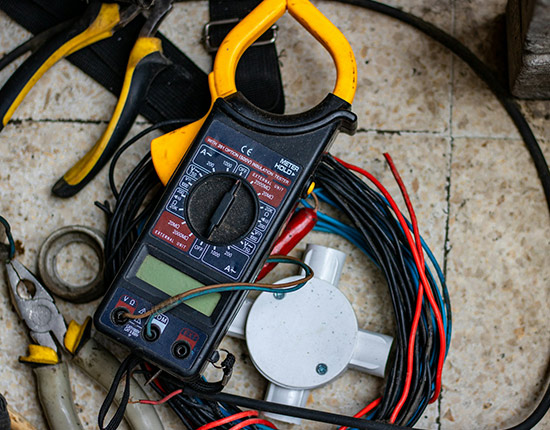
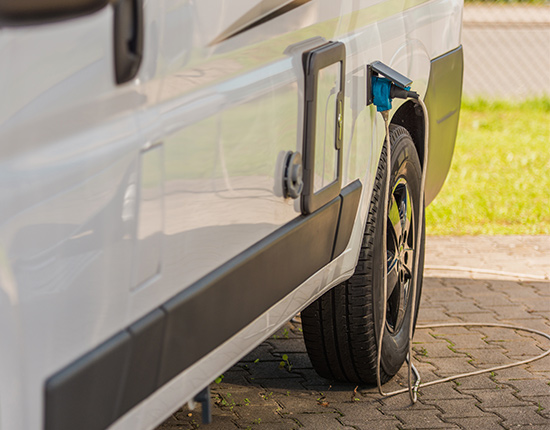
Electrical Fires in your Camper
Flammable liquids, gasses and solids all need a spark to create combustion, so it is no surprise that a camper van containing all these elements is at risk of fire from electrical components and wiring, even from a 12-volt system. Here are some key points to avoiding electrical fires in campervans.
Causes of Electrical Fires
Overloading the wiring by using too many appliances at the same time, causing overheating of cables.
Overheating of installed appliances due lack of ventilation, and not following manufacturer’s instructions regarding this.
Condition of wiring is also a factor especially if the wires are improperly installed, uninsulated, or frayed. This can lead to short circuits and therefore a source of ignition due to a spark.
Faulty electrical appliances powered from an external power hook up can also be a risk.
Preventing Electrical Fires in your Camper
Avoid overloading of your wiring by knowing the total wattage of the appliances you’re using at the same time. This information is available from the device’s manufacturer, and is usually displayed on a sticker or label on the appliance itself. Overloading is a particular issue when using an electrical hook up.
Maintain and inspect your appliances regularly, to ensure they are in good and safe condition.
Use circuit breakers and ensure correct fuses are fitted.
Test and inspect wiring to ensure good and safe condition and that it is fit for the purposes it is being used for. Repair or replace any damaged wiring as soon as possible.
Our sister company, Just Kampers, has a huge range of top-quality parts, accessories, tools and appliances for all kinds of campervans. Browse the full range and make your campervan your home.
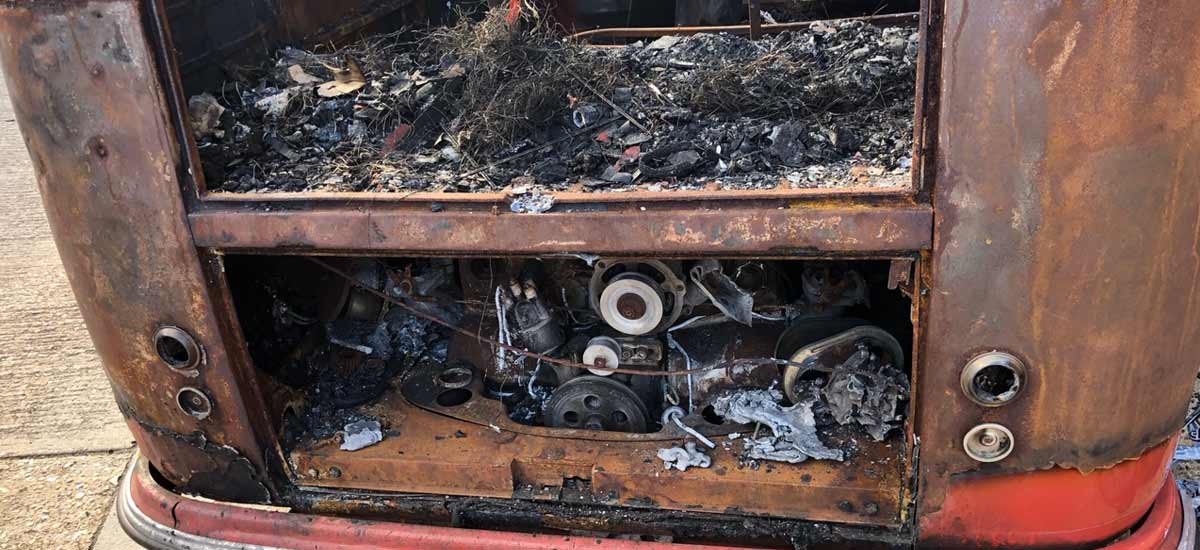
Campervan Engine Fires
Reducing the risk of engine bay fires lies in a combination of regular maintenance and sensible driving style to prevent overheating. We’ve all heard the horror stories of campervans catching fire while driving, especially classic campers. While it’s definitely something which can happen and must be taken seriously, you can dramatically reduce the risk of a fire in your camper’s engine bay with a few simple steps. First, we will take a look at what causes engine bay fires in the first place.
Common Causes of Engine Fires
Leaking fuel lines and components seem to be the number one cause. There is an obvious hazard of fuel leaking onto hot parts of the engine or other sources of ignition leading to combustion.
Short circuits of electrical wiring due to poor connections, faulty wiring, and worn insulation which can lead to fire by igniting nearby material or leaked fuel.
Oil and fluid leaks on hot engine components.
Overheating of the engine itself.
Preventing an Engine Fire in your Camper
Regular servicing and maintenance in adherence with your vehicle’s maintenance schedule. Pay particular attention to the condition of your fuel lines, as well as how securely they’re attached.
Performing regular oil changes and checks, as well as coolant checks and changes where applicable, will help your engine to run more smoothly and keep itself cool, as oil is a key part of your engine’s cooling system.
Check fuel lines for signs of wear, corrosion, perishing or leakage, especially with petrol engines due the to the increased levels of ethanol now present in it.
Ensure all wiring and electrical connections are sound, free of corrosion and liquid contaminants. Any frayed or damaged wiring should be replaced immediately with the correct type of wire to prevent major issues.
While you’re driving, it’s always important to keep an eye on your engine’s temperature and investigate the cause as soon as it rises above normal parameters.
Check that heat shields around the exhaust and engine are correctly fitted and intact.
Fit either an automatic engine bay fire suppression system or carry a suitable fire extinguisher in a readily accessible place. It’s also important to ensure that these devices are still in date and functioning correctly, as having an expired fire extinguisher can be as bad as not having one.
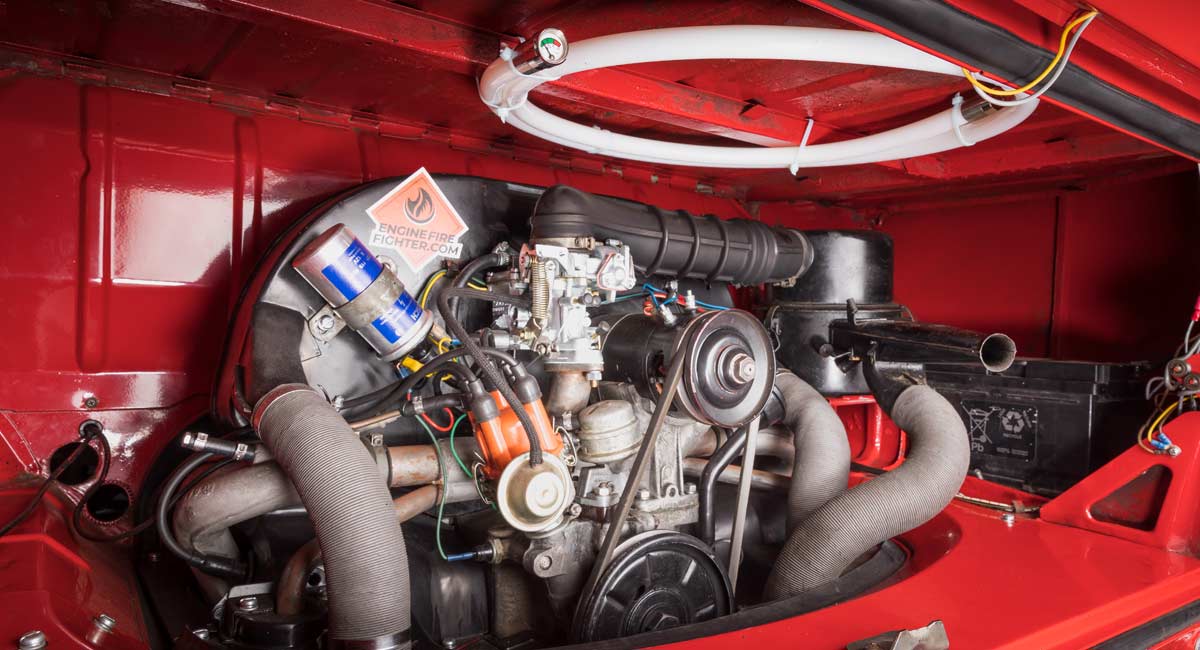
Summary
The key to fire prevention in your camper lies in a proactive approach to the above issues. There is no substitute for regular servicing, maintenance and inspection of your vehicles systems and equipment to ensure that the risks of fire are kept to an absolute minimum. Accepting that regardless of the above advice fires can still happen, always ensure that you have suitable firefighting equipment installed in your camper just in case.