
Insurance Groups Explained

Published 30 August 2024 | Last updated 21 January 2026

()

Here’s a quick guide to help you understand the different vehicle insurance groups, to help you get the right insurance at the right price.

We’ve been insuring all kinds of vehicles since 1998, so we know exactly what to do to get you the best deals on your vehicle insurance policy. 

There are different insurance groups for cars, vans, and campervans, and your vehicle’s insurance group can play a significant role in determining the cost of your insurance premium.

This blog explains what insurance groups are, how they’re determined, and how they can impact your campervan insurance costs.
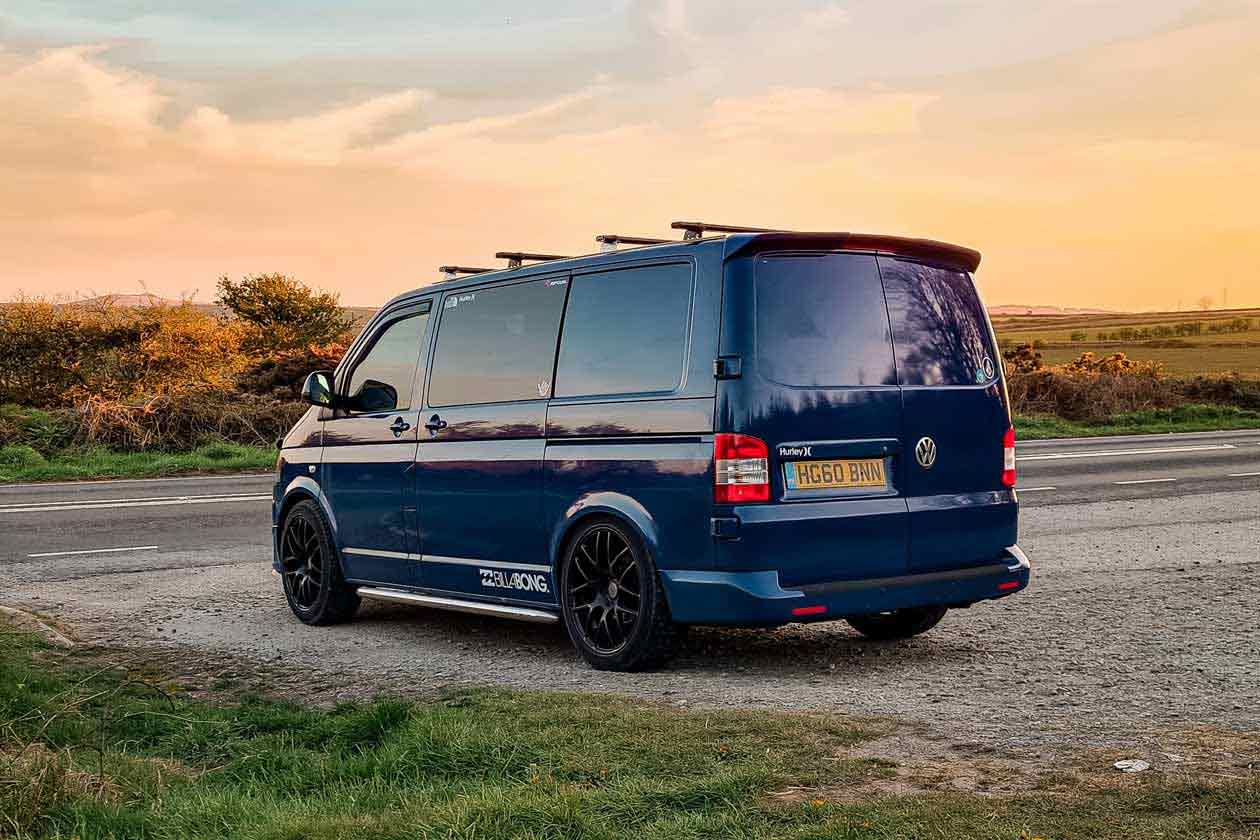
Converted VW T5.1 Camper

What Are Vehicle Insurance Groups?

Insurance groups are categories which insurance providers assign to vehicles based on various factors which can affect their risk level and therefore the cost of insurance.

In the UK, vehicles are typically classified into one of 50 insurance groups, with group 1 being the least risky (and cheapest to insure) and group 50 being the most risky (and most expensive to insure).

What Factors Determine Insurance Groups?

There are a number of different factors which can influence the insurance group of a vehicle, including:

Vehicle Performance: High-performance vehicles with powerful engines are generally placed in higher insurance groups due to both the increased risk of accidents and higher repair costs.

Safety Features: Vehicles equipped with advanced safety features may be placed in lower insurance groups because they’re less likely to be involved in accidents, or those accidents are likely to be less severe.

Cost of Repairs: The cost and availability of spare parts, as well as the complexity of repairs, can also affect the insurance group. Vehicles that are expensive to repair are placed in higher groups, while those with plentiful parts which are quick and easy to install may be placed into lower groups.

Security Features: If your camper is fitted with robust security features, such as alarms and immobilizers, it’s likely to be placed in a lower insurance group as it’s less likely to be stolen.

Value of the Vehicle: More expensive vehicles typically fall into higher insurance groups due to the higher potential cost of claims, and because they’re often more likely to be targeted by thieves.

How Do Insurance Groups Affect Campervan Insurance?

The insurance group of your campervan will directly impact your insurance premium, with vehicles in higher insurance groups generally incurring higher premiums.

For self-built campervans, understanding the base vehicle’s insurance group can help you estimate your insurance costs more accurately.
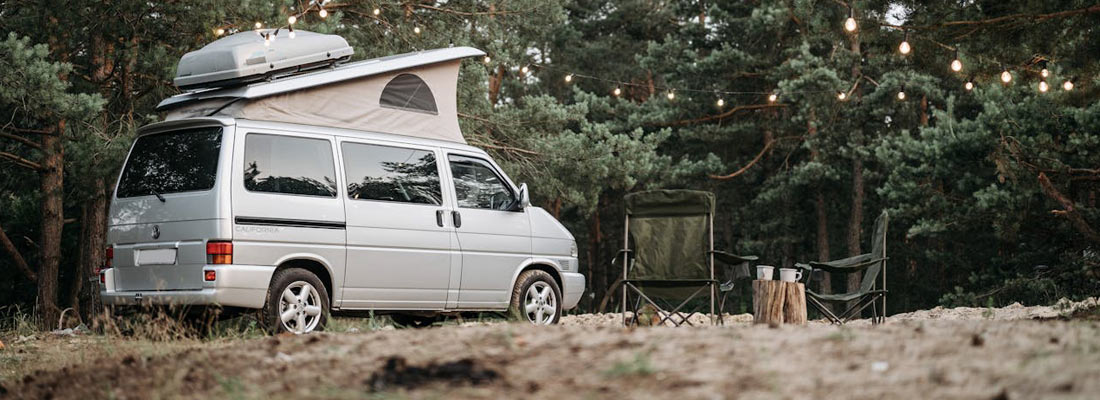
Silver VW T4 Transporter Campervan

What Examples of Popular Campervan Makes Are Available?

Here’s a look at the insurance groups which some popular campervan brands are generally placed into by insurance providers:

Mercedes-Benz: Known for their high-performance and luxury, Mercedes-Benz campervans, like the Sprinter, often fall into higher insurance groups due to their value and repair costs.

Hymer: As a premium motorhome manufacturer, Hymer vehicles are typically placed in higher insurance groups, reflecting their high value and extensive features.

Peugeot: Models like the Peugeot Boxer can vary in insurance groups depending on the specific configuration and features. Generally, they are mid-range.

Renault: The Renault Trafic is a popular choice for conversions and tends to fall in mid to upper insurance groups, influenced by its versatility and performance.

Ford: Ford Transit vans, widely used for conversions, range from mid to higher insurance groups depending on the model and specifications.

Toyota: Known for reliability, Toyota campervans like the HiAce often fall into mid-range insurance groups.

Citroën: Citroën Relay vans, popular for DIY conversions, typically fall in the mid-range of insurance groups.

Fiat: The Fiat Ducato is another popular conversion base, with insurance groups ranging from mid to high.

Vauxhall: Models like the Vauxhall Vivaro are versatile for conversions and generally fall into mid-range insurance groups.

Volkswagen: VW campervans, especially the iconic Transporter, can range from mid to high insurance groups, reflecting their popularity and value.

What about Self-Build and DIY Campervans?

For self-build and DIY campervans, the insurance group of the base vehicle is a critical starting point. However, the modifications and additions you make during the conversion process can also affect the insurance classification.

Adding features like enhanced electrical systems, solar panels, and custom interiors can impact the overall value and insurance group of your campervan.

Be sure to check out our sister company Just Kampers if you’re looking for parts and accessories for your campervan conversion. They offer everything from fridges to rustproofing, and everything in between!

In Conclusion

Understanding insurance groups is essential for managing the cost of insuring your campervan, and knowing how these groups are determined and how they affect your premiums can help you make informed decisions.

For self-build and DIY campervans, it’s crucial to consider both the base vehicle’s insurance group and the impact of any modifications.

By choosing your base vehicle wisely, enhancing security features, maintaining safety standards, and shopping around for the best rates, you can effectively manage your campervan insurance costs.

To learn more about campervan insurance and explore coverage options tailored to your needs, visit Just Kampers Insurance.

So, give us a call on 01256 44 45 46 and let one of our specialist team discuss your requirements. Or Get an online quote today or arrange a call back and let us call you at a convenient time.

What Should I Do and Not Do if I Have an Accident? FAQs

Do I need to tell my insurer about an accident if I’m not making a claim?

Yes, you should still notify your insurer about the incident, even if you don’t intend to claim for damage to your own vehicle. Your policy may require you to report incidents which could potentially lead to a claim, particularly if another driver later decides to make a claim against you.
Reporting the accident promptly also ensures your insurer has a record of your version of events.

How quickly should I contact Just Kampers Insurance after an accident?

You should report an accident as soon as reasonably possible. Having your policy number, details of what happened, information about the other people and vehicles involved, photographs and any witness details to hand can help make the process easier. Just Kampers Insurance customers have access to a claims service 24 hours a day, seven days a week.

Will I have to pay my excess if the accident wasn’t my fault?

If you make a claim through your own insurance policy, your policy excess may still be payable initially. Depending on the circumstances of the accident, you may subsequently be able to recover this from the responsible party.

Your claims handler can explain what applies to your particular claim and whether your excess may be recoverable.

Can legal protection help if the accident wasn’t my fault?

Just Kampers Insurance policies include legal protection, which can provide assistance following a non-fault accident, subject to the policy terms, limits and exclusions.

This can include help pursuing eligible uninsured losses, such as an excess you have paid, as well as assistance with certain legal expenses, vehicle hire or claims relating to injuries and other losses.

Will I get a courtesy car while my vehicle is being repaired?

This will depend on your cover and how your claim is handled. If you make a claim under a comprehensive policy and use an approved repairer, a courtesy car may be available for the duration of the repairs, subject to availability.

Different arrangements may apply following a non-fault accident, so speak to your claims handler before arranging alternative transport yourself.

What happens if my campervan or motorhome is written off?

Your insurer will assess the vehicle and the terms of your policy before determining how the claim will be settled.

This is particularly important for classic, converted and specialist vehicles, where modifications and the vehicle’s specification can have a significant impact on its value. If your policy includes Agreed Value cover, check your policy documents to understand how this applies to a total-loss claim.

What if modifications to my campervan are damaged in the accident?

Make sure you tell your claims handler about damage to modifications and converted parts of the vehicle, rather than documenting only the exterior bodywork.

Photograph damaged pop-tops, awnings, furniture, fitted equipment and other converted elements where it is safe to do so. Keeping photographs and documentation relating to modifications before an accident can also help demonstrate your vehicle’s specification and condition.

Should I arrange my own garage to repair the vehicle?

Speak to your insurer or claims handler before authorising significant repairs. The insurer may need to inspect the vehicle, review photographs or agree repair costs before work begins.

This can be especially important with classic vehicles, campervans and motorhomes, where specialist components or conversion work may require particular expertise.

What should I do if the other driver’s insurer contacts me directly?

Don’t ignore correspondence about the accident, but avoid getting drawn into discussions about liability or agreeing a settlement without speaking to your insurer.

Just Kampers Insurance advises customers to forward third-party correspondence unanswered so it can be dealt with appropriately.

What if the other driver doesn’t have insurance or leaves the scene?

Gather as much information as you safely can, including the vehicle registration, make, model and colour, photographs or dashcam footage, and witness details.

Don’t attempt to chase a vehicle that leaves the scene. Report the incident to the police where required and contact your insurer promptly so they can advise you on the next steps.

Can I claim for belongings damaged inside my campervan or motorhome?

Whether damaged belongings are covered will depend on your individual policy and the cover you have selected.

If items inside your vehicle are damaged in an accident, photograph them and keep any evidence of ownership and value, such as receipts. Don’t dispose of damaged items until you have spoken to your claims handler.

What happens to my no-claims bonus after an accident?

The effect on your no-claims bonus will depend on factors including how the claim is recorded and the terms of your policy. Even where you have a protected no-claims bonus, a fault or pending claim may still affect future insurance premiums.

Check your policy documents or speak to the Just Kampers Insurance team if you’re unsure how a particular claim could affect your policy.

What information should I have ready when I report an accident?

It helps to have as much information as possible available, including your policy number, the date and location of the accident, details of the other driver and vehicle, photographs of the scene and damage, witness details, dashcam footage and any police reference number.

Don’t worry if you don’t have everything immediately. Report the incident promptly, and your claims handler can explain what additional information may be needed.

Did you find this blog useful?

Click on a star to rate this blog

Average rating / 5. Vote count:

No votes so far! Be the first to rate this blog

Written by: Beth Cane

Beth is a Marketing Executive at Just Kampers, with a growing passion for the Volkswagen and motor industry. She loves road trip adventures and attending various motor shows with friends and family in her free time.

Whatever you drive, we've got you covered

Get a quote now