Can I Drive A Campervan On A Car Driving Licence?

Published 16 October 2023 | Last updated 21 January 2026

()

The answer to this question is dependent on a selection of factors. These include your age, your driving licence type, and the maximum authorised mass (MAM) of your campervan.

This quick guide will walk you through the different licence categories and key requirements, helping you determine whether you can hop in and drive on your current driving licence or not.

With decades of experience providing reliable campervan insurance, and a team full of proud campervan owners, we’ve got you covered.

How Do I Know if I Can Drive a Campervan?

The main two factors here are the weight of the campervan, and your age. The answers to these two questions are essentially your first hurdle to overcome.

Maximum Authorised Mass (MAM)

There are multiple ways in which the weight of a vehicle is categorised, such as unladen weight (the weight of the vehicle with no passengers or goods onboard) and maximum authorised mass (MAM). MAM is the measurement that will be most relevant to you, and this is the maximum weight that your vehicle can carry safely when on the road.

The MAM of your campervan should be shown in the vehicle owner’s manual and might be shown on a sticker or plate on your van. Sometimes the MAM is also referred to as the gross vehicle weight (GVW) or permissible maximum weight.

Some examples of maximum authorised masses (depending on vehicle models) are:

● Volkswagen T2 split screen = 1,750kg
● Volkswagen T2 bay window = 2,100kg
● Volkswagen T25 = 2,300 – 2,450kg
● Volkswagen T4 = 2,350 – 2,800kg
● Volkswagen T5 = 2,600 – 3,200kg
● Volkswagen T6 = 2,600 – 3,200kg
● Volkswagen Crafter = 3,000 – 5,000kg
● Mercedes-Benz Sprinter = 3,000 – 5,500kg
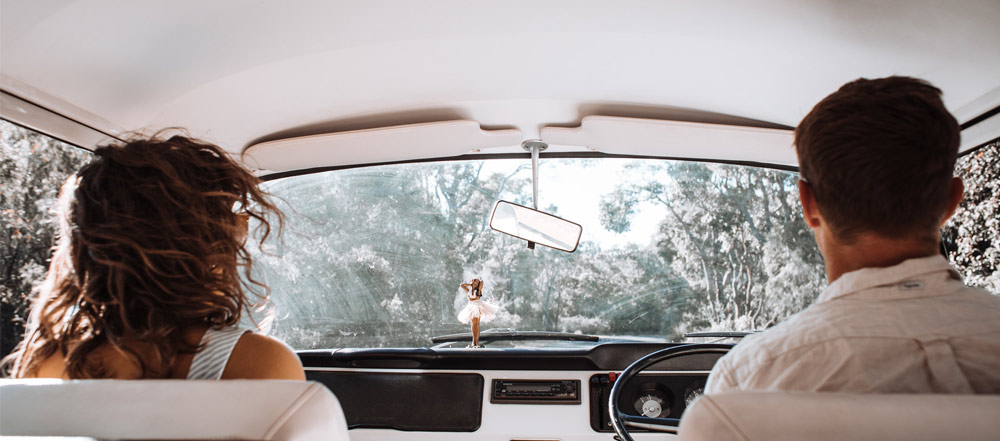
Driving a VW Campervan

What Are the Driving Licence Types and Requirements?

Depending on when you got your licence and what vehicles you’ve qualified to drive, there are a variety of driving licence categories that outline which vehicles you can legally drive. Each of these categories has a specific 1-3 letter and number code and the categories you will be interested in for driving your campervan are for cars (category B) and for
medium-sized/large vehicles (category C/C1).

Category C/C1 vehicles require a different test to the standard driving test in order for you to be legally permitted to drive them. Category C1 allows you to drive vehicles with a maximum authorised mass between 3,500kg and 7,500kg with a trailer up to 750kg. This range should cover you for the majority of campervans. However, if your campervan does have a MAM larger than this, a category C qualification allows you to drive vehicles over 3,500kg with a trailer of up to 750kg.

If you passed your test before 1st January 1997, then you can drive a Category B vehicle (smaller campervans and cars) and trailer combination of up to 8,250 kg MAM. You’ll also automatically have Category C1 (vehicles between 3,500kg and 7,500kg MAM) on your licence. This will cover you for pretty much every campervan or motorhome commonly available on UK roads, aside from the American RV style motorhomes.
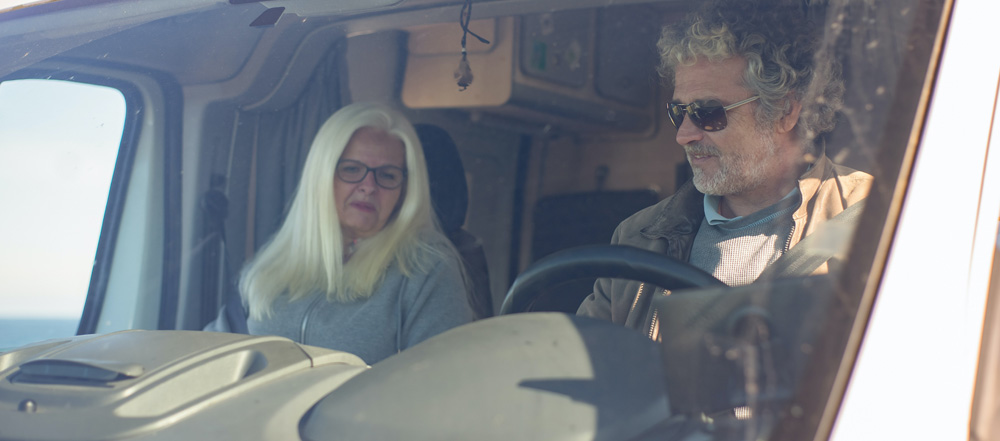
Driving a Campervan

However, if you passed your test on or after the 1st January 1997, then you’ll be able to drive a Category B vehicle and trailer combination up to 3,500kg MAM. This should cover you for smaller campervans and motorhomes – the heaviest VW T6 currently available is 3,200kg MAM, so you’ll be okay with Volkswagens. However, if you want to drive anything bigger, like a Mercedes Sprinter, you’ll inevitably need to get your Category C1 qualification.

Upgrading Your Licence

In order to apply for a C1 licence you’ll have to be over the age of 18 and already hold a category B licence. You will then be required to take a medical assessment as the medical standards for a C1 licence are higher than for a category B driving licence. This medical test is done by doctors, who will fill in a D4 medical form, and has two parts: a vision assessment and a medical assessment.

Once you have completed this medical assessment you can apply for a provisional licence to get provisional entitlement to drive a larger vehicle. To do this you’ll need to submit a D2 form, which you can order online from the DVLA or collect from a post office. When you have the provisional licence, you can attempt the theory test. This theory test consists of 3 sections: a 100 question multiple-choice test, a 19 clip hazard perception test and a 50 question case study test.

Once you’ve passed your theory test, you can book a practical test. This test has two parts, the first of which is similar to the category B driving test and is a 90-minute test that assesses your safety knowledge and practical driving skills. Like the category B driving test, you can pass with 15 or less minor driving faults and no serious or dangerous faults. The second part of the test is a practical demonstration that shows you can correctly and safely load and unload your van, stop the trafficking of illegal immigrants, assess emergency situations and reduce physical risk to yourself and others. Full information about what it takes to get your C1 licence can be found on the gov.uk website.
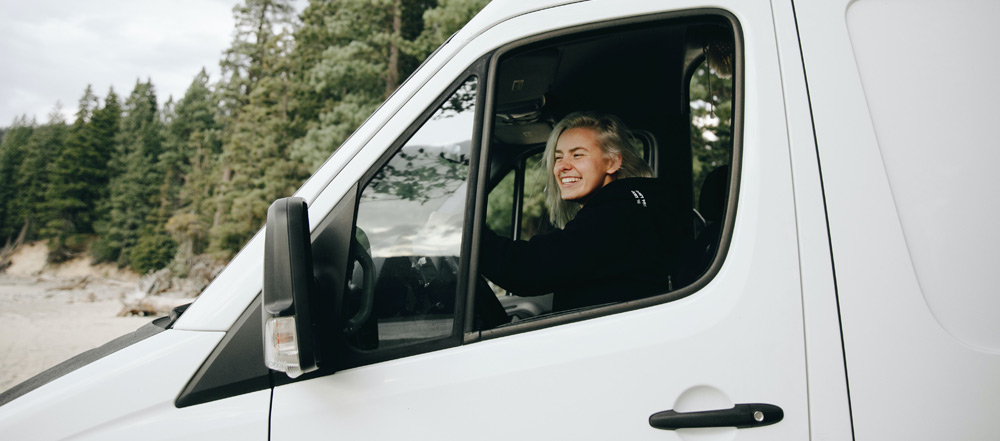
A woman driving a campervan with a smile on her face

So, Can You Drive a Motorhome or Campervan on a Car Licence? Here’s a Quick Summary

Technically, yes you can, as long as the campervan or motorhome is under the MAM weight that your licence allows.

All campers will of course need to be properly covered with insurance, too. And that’s where we come in. We’ve been offering tailored insurance since 1998, and we cover everything from self-built campervans, to cosy motorhomes.

Simply give us a call on 01256 44 45 46 or get an online quote today!

Head over to our sister company, Just Kampers, to find all the parts and accessories you need to make your camper your own, and keep it in top shape. You’ll get 10% off your orders if you insure with us, too – it’s a win-win.

Looking to insure your Campervan? Give us a call on 01256 44 45 46 and let one of our specialist team discuss your requirements. Or get an online quote today or arrange a call back and let us call you at a convenient time.

What Should I Do and Not Do if I Have an Accident? FAQs

Do I need to tell my insurer about an accident if I’m not making a claim?

Yes, you should still notify your insurer about the incident, even if you don’t intend to claim for damage to your own vehicle. Your policy may require you to report incidents which could potentially lead to a claim, particularly if another driver later decides to make a claim against you.
Reporting the accident promptly also ensures your insurer has a record of your version of events.

How quickly should I contact Just Kampers Insurance after an accident?

You should report an accident as soon as reasonably possible. Having your policy number, details of what happened, information about the other people and vehicles involved, photographs and any witness details to hand can help make the process easier. Just Kampers Insurance customers have access to a claims service 24 hours a day, seven days a week.

Will I have to pay my excess if the accident wasn’t my fault?

If you make a claim through your own insurance policy, your policy excess may still be payable initially. Depending on the circumstances of the accident, you may subsequently be able to recover this from the responsible party.

Your claims handler can explain what applies to your particular claim and whether your excess may be recoverable.

Can legal protection help if the accident wasn’t my fault?

Just Kampers Insurance policies include legal protection, which can provide assistance following a non-fault accident, subject to the policy terms, limits and exclusions.

This can include help pursuing eligible uninsured losses, such as an excess you have paid, as well as assistance with certain legal expenses, vehicle hire or claims relating to injuries and other losses.

Will I get a courtesy car while my vehicle is being repaired?

This will depend on your cover and how your claim is handled. If you make a claim under a comprehensive policy and use an approved repairer, a courtesy car may be available for the duration of the repairs, subject to availability.

Different arrangements may apply following a non-fault accident, so speak to your claims handler before arranging alternative transport yourself.

What happens if my campervan or motorhome is written off?

Your insurer will assess the vehicle and the terms of your policy before determining how the claim will be settled.

This is particularly important for classic, converted and specialist vehicles, where modifications and the vehicle’s specification can have a significant impact on its value. If your policy includes Agreed Value cover, check your policy documents to understand how this applies to a total-loss claim.

What if modifications to my campervan are damaged in the accident?

Make sure you tell your claims handler about damage to modifications and converted parts of the vehicle, rather than documenting only the exterior bodywork.

Photograph damaged pop-tops, awnings, furniture, fitted equipment and other converted elements where it is safe to do so. Keeping photographs and documentation relating to modifications before an accident can also help demonstrate your vehicle’s specification and condition.

Should I arrange my own garage to repair the vehicle?

Speak to your insurer or claims handler before authorising significant repairs. The insurer may need to inspect the vehicle, review photographs or agree repair costs before work begins.

This can be especially important with classic vehicles, campervans and motorhomes, where specialist components or conversion work may require particular expertise.

What should I do if the other driver’s insurer contacts me directly?

Don’t ignore correspondence about the accident, but avoid getting drawn into discussions about liability or agreeing a settlement without speaking to your insurer.

Just Kampers Insurance advises customers to forward third-party correspondence unanswered so it can be dealt with appropriately.

What if the other driver doesn’t have insurance or leaves the scene?

Gather as much information as you safely can, including the vehicle registration, make, model and colour, photographs or dashcam footage, and witness details.

Don’t attempt to chase a vehicle that leaves the scene. Report the incident to the police where required and contact your insurer promptly so they can advise you on the next steps.

Can I claim for belongings damaged inside my campervan or motorhome?

Whether damaged belongings are covered will depend on your individual policy and the cover you have selected.

If items inside your vehicle are damaged in an accident, photograph them and keep any evidence of ownership and value, such as receipts. Don’t dispose of damaged items until you have spoken to your claims handler.

What happens to my no-claims bonus after an accident?

The effect on your no-claims bonus will depend on factors including how the claim is recorded and the terms of your policy. Even where you have a protected no-claims bonus, a fault or pending claim may still affect future insurance premiums.

Check your policy documents or speak to the Just Kampers Insurance team if you’re unsure how a particular claim could affect your policy.

What information should I have ready when I report an accident?

It helps to have as much information as possible available, including your policy number, the date and location of the accident, details of the other driver and vehicle, photographs of the scene and damage, witness details, dashcam footage and any police reference number.

Don’t worry if you don’t have everything immediately. Report the incident promptly, and your claims handler can explain what additional information may be needed.

Did you find this blog useful?

Click on a star to rate this blog

Average rating / 5. Vote count:

No votes so far! Be the first to rate this blog

Written by: Jason Sims

Jason is a Senior Marketing Executive at Just Kampers who is a fully-fledged VW enthusiast, with over 20 years’ experience in keeping Volkswagens old and new on the road, he currently owns a 69 Cal Look Beetle, and enjoys attending VW shows and Camping with friends and family.

Whatever you drive, we've got you covered

Get a quote now