This guide will take you through the ins and outs of using your campervan as your primary vehicle, exploring the benefits, challenges, and practicalities of making it your go-to mode of transport.
When you’re considering the viability of owning a campervan, one of the questions you might have to justify is “well, what’s that campervan going to do during the week?”
Campervans are used by many across the country as a daily driver, commuting vehicles, and even for some, their primary vehicle!
But how feasible is it to use your campervan as a daily driver, and more importantly, is it worth it? Let’s dive in!
Is It Practical to Use a Campervan as a Daily Driver?
Not only is driving round a vehicle that is larger than most cars a key consideration when using a campervan as a daily driver, there are also other logistical considerations you’ll need to think about.
Fuel efficiency, parking, and the duties for older diesel engines are just some of the issues. And for those who aren’t with a specialist campervan insurance provider, the restrictive limits that high street insurance policies have on only using your camper for social and domestic use.
That’s where we come in. At Just Kampers Insurance, we specialise in all things campervans – it’s our bread and butter! As one of the UK’s leading providers of campervan insurance, trusted by thousands of owners across the country, we understand the perks and challenges of campervan ownership. Many of us own campervans ourselves, so we’re proud to offer campervan cover that matches real lifestyles – including campers used as daily drivers.
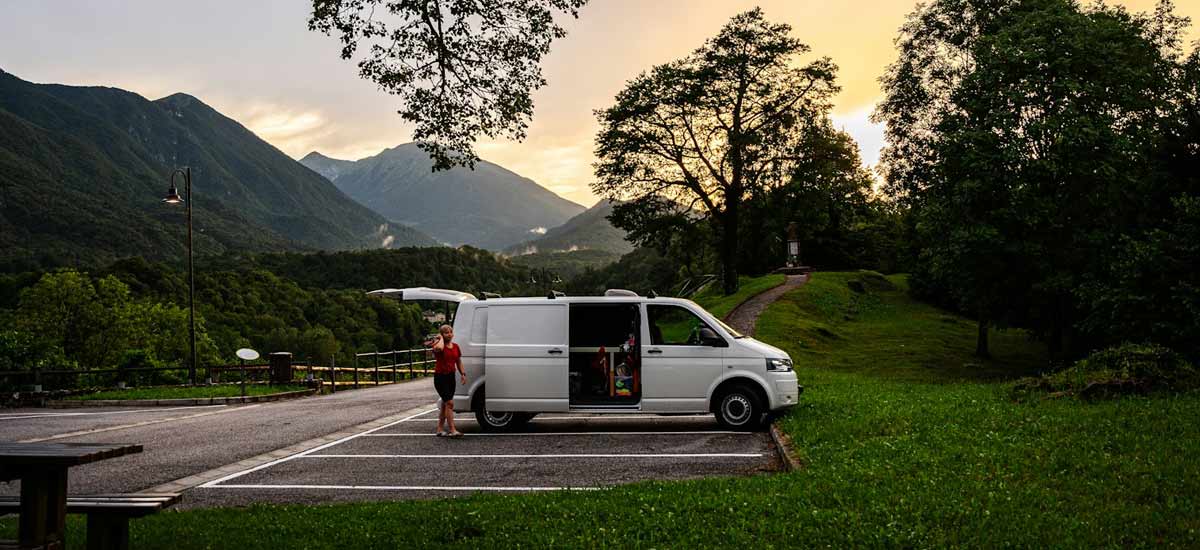
What MPG do Campervans Get for Commuting?
When driving long distances, the MPG (Miles Per Gallon) of a campervan will be higher, especially if you’re driving at the optimal speed of 55mph. This means your campervan will get good fuel efficiency.
However, when driving in urban and suburban areas, the stop-start motions, plus the inevitable traffic jams at peak journey times will all negatively affect your MPG, so your camper will use up more fuel.
Plus, when your MPG is already lower because of the size and weight of the campervan, and with the ever-increasing cost of fuel, low MPG costs more than ever before.
Parking Problems When Commuting with a Campervan
As well as fuel consumption, the second biggest logistical issue with commuting in a campervan is parking. From parking spaces being too small, to there being height restrictions on public car parks, parking can sometimes be a problem.
That said, it is a problem you can often work around. With just a bit of extra planning using sites like Parkopedia to check the height allowance of any car park, and some talking with your employer to ensure they’re happy with a larger than normal vehicle parked in their car park, you can generally go about your business.
Increased VED (Vehicle Excise Duty) for Diesel Vehicles
Motorhomes and campervans are split into two bands for VED (Vehicle Excise Duty). You will either be taxed based on the revenue weight (also called maximum gross vehicle weight, or MGM), or you will be taxed like a car, based on your listed CO2 emissions. HonestJohn break down the cost into tables on their blog.
Regardless of how your VED is taxed, if it’s an older diesel it is going to be expensive. And, if you’re commuting into a city centre with a low emission zone, you’ll be paying for that every day.

Are There Any Legal Implications of Commuting in a Campervan?
Unless your insurance policy does not cover you for commuting in your campervan, there are no other legal implications for commuting in a camper.
How Do I Know Whether I Can Commute in my Campervan?
Your insurance certificate should state the legitimate usage you are covered for. For example, a social, domestic and pleasure insurance certificate will only cover you for driving to anything that isn’t work.
Most insurance companies and policies also have exceptions for certain situations. Racing your campervan on a racetrack isn’t covered by standard insurance policies, for example.
To be able to commute to work in your campervan, you’ll need a Social, Domestic, Pleasure and Commuting insurance policy. Commuting isn’t offered as standard, as the risk of being on the road at peak times and being in a collision are higher than any other time of day.
What are the Benefits of Commuting with a Campervan?
While it may seem like there are some practical elements to overcome, there are many benefits to using your campervan as your primary vehicle.
1. The Joy of It
Many people state that the reason they use their campervan as their primary vehicle is simply because they enjoy the experience. When you’ve put so much time and love into your campervan, only being able to use it occasionally can feel like wasted time. Hence why a huge benefit for many people is simply the joy of it.
2. Saved Space on Driveways
If you’ve got a car and a campervan, the space on your drive will be sacrificed, especially if you’re working on your campervan. By using your campervan as your primary vehicle, you can save a lot of space on your drive. It’s a small benefit but if you have young children, it’s additional valuable space for learning to ride bikes, drawing and general time outdoors.
3. Extra Space for School Runs
If you’re doing the school run, every additional bit of space that can be used for school bags, ingredients for cooking with, PE bags and so much more is valuable. If you don’t have to do the school run, this extra space could be used for work equipment, instruments or whatever you like, even if it is your mountain bike!

What are the Downsides to Using a Campervan for Commuting?
As with the practical limitations, there are some disadvantages for those who want to commute in a campervan.
1. The Fuel Cost
Campervans only really have good MPG (Miles Per Gallon) over long distances. For daily drives, even the VW T6 hits 32 MPG. The additional fuel cost will be an impact to consider, although it does depend on what your MPG was on your car or previous commuting vehicle.
2. Car Parks with Height Restrictions
If your workplace car park has height restrictions, it may not be suitable for your camper, in which case you will have to either find alternative parking, or park a distance away and walk in. This does depend on what the height restriction is, but it can pose problems, especially for those with Sprinter style campervans.
3. Navigating Urban Streets
Unlike city cars that are small and nimble, campervans do take up more road room, and aren’t as easy to manoeuvre on parked up streets, or on tight bends. For those who work in city centres or heavily residential areas, this can be problematic if you commute at peak times, and potentially cause damage to your campervan. However, it is dependent on where your workplace is.
Looking for a Campervan Insurance Policy that Covers Daily Drivers and Commuting?
At Just Kampers Insurance, in 99% of cases, we can adjust your policy to cover you for commuting. Just speak to one of our experts who will be able to help you.
Summary
So, in conclusion, you can use your campervan as your primary vehicle – as long as you have the right insurance and it suits your day-to-day lifestyle.
For many people, using a campervan as their main vehicle makes perfect sense, but it’s important to consider both the pros and cons before deciding if it’s the best option for you.
Looking for parts and accessories for your camper?
Visit our sister company, Just Kampers!
They have thousands of top-quality campervan parts, from windows and heaters to ventilation and fridges. And, when you insure with us, you’ll get 10% off your JK orders!
In this article
- Is It Practical to Use a Campervan as a Daily Driver?
- What MPG do Campervans Get for Commuting?
- Parking Problems When Commuting with a Campervan
- Increased VED (Vehicle Excise Duty) for Diesel Vehicles
- Are There Any Legal Implications of Commuting in a Campervan?
- How Do I Know Whether I Can Commute in my Campervan?
- What are the Benefits of Commuting with a Campervan?
- 1. The Joy of It
- 2. Saved Space on Driveways
- 3. Extra Space for School Runs
- What are the Downsides to Using a Campervan for Commuting?
- 1. The Fuel Cost
- 2. Car Parks with Height Restrictions
- 3. Navigating Urban Streets
- Looking for a Campervan Insurance Policy that Covers Daily Drivers and Commuting?
- Summary
- Looking for parts and accessories for your camper?