We’ve put together this quick guide to help you improve your campervan security and enjoy peace of mind, in times where campervans and motorhomes are consistently at risk of theft.
This means you can decrease the likelihood of your camper being targeted, by making it as off-putting or difficult to steal as possible.
At Just Kampers Insurance, we’ve been providing specialist campervan cover since 1998 – so we understand what it takes to keep your home on wheels safe, and how security measures can often help lower your premium. Many of us are campervan owners ourselves, so the safety tips we are about to share are the same ones we use to protect our own vehicles.
How can you keep your campervan safe and secure?
While there’s relatively little you can do to stop a truly determined thief from stealing your campervan, there are a lot of quick and easy things you can do to put off opportunistic thieves from making off with your pride and joy.
From simple changes to minor investments in new accessories, this quick guide to campervan security should help to make the prospect of stealing your camper – or stealing things from it – much less tempting for would-be thieves.
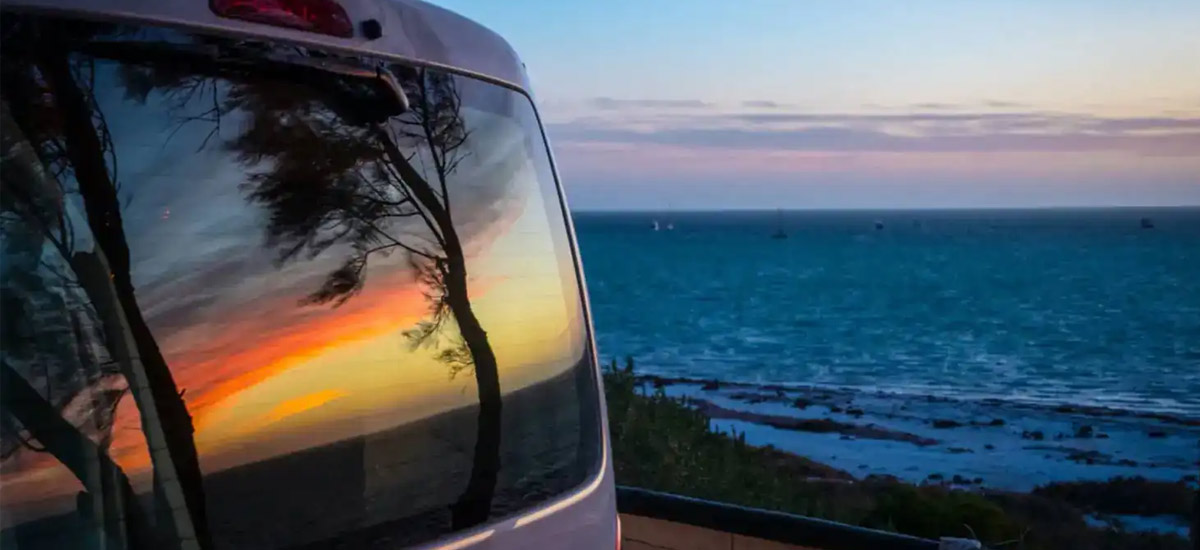
1. Ensure the doors lock, and the windows shut correctly
As campervan owners ourselves, we know from our own experience that a lot of older campervans have some idiosyncrasies when it comes to the doors and windows, and the original locks and keys don’t always function as well as they used to.
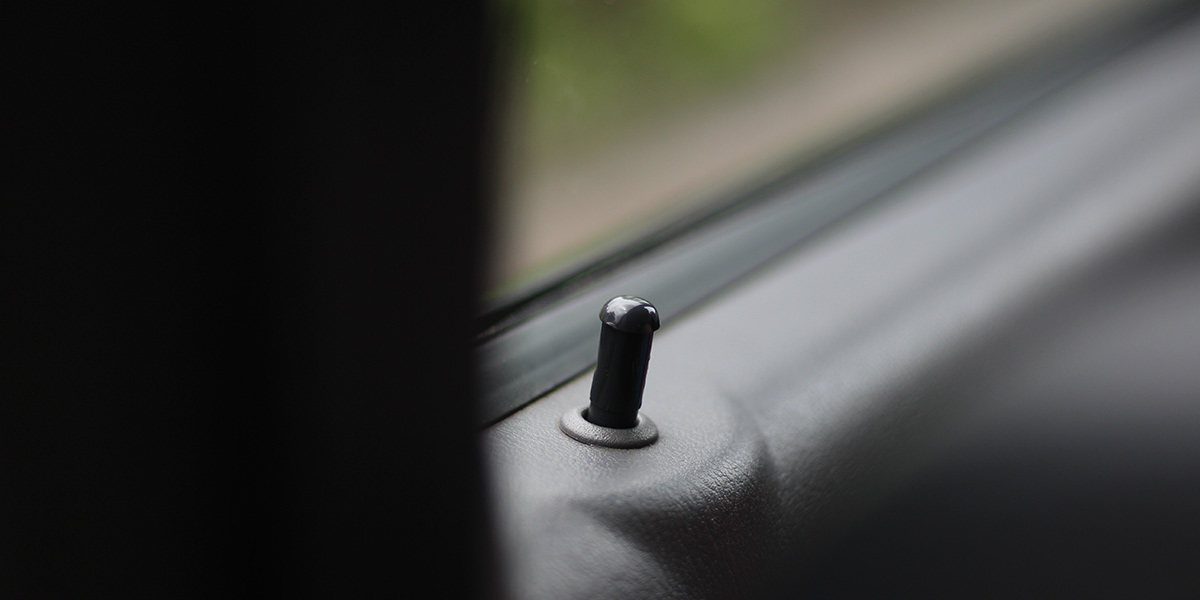
It’s not uncommon for vehicles like the VW T2 Bay to end up having different keys for different locks, or windows which don’t quite wind up all the way. These little quirks can lead to some security issues, especially as many older campers will have ‘pop up’ door locks which could be pulled up with some wire and a slightly-open window.
Before leaving your camper, whether you’re parked up at home or off on a camping adventure, make sure that all of the doors are shut and locked, and that your windows are properly closed. Many thefts of (or from) vehicles are committed by opportunistic thieves who see an opportunity and take it – so by making it harder for them to access to your camper, you’ll go a long way towards keeping it safe.
If you do need to upgrade or replace your window components or door locks, check out Just Kampers – they have a massive and ever-growing range of parts for loads of different campervans. Plus, you’ll get a 10% discount from Just Kampers if you’ve got vehicle insurance with us!
2. Be conscious of where and how you park
Another anti-theft measure which won’t cost you a penny is thinking about where you park your campervan, and how you park it.
If you’re parking your camper on a road, always try to park up underneath a street light. This means that people will have a much clearer view of anyone snooping around your vehicle at night, and will likely put off casual thieves.
When parking on your driveway, it’s often a good idea to ‘block yourself in’ with a second vehicle (if you have one), so that your camper can’t be so easily accessed by thieves who’ve come equipped with a trailer.
You can also park your vehicle in such a way that it’s easily visible from your house, and in a way that makes it difficult for anyone to access your engine bay. This is fairly easy with campers like the VW T2 Bay where the engine is at the rear, and the rear itself is pretty flat, so you can back right up to a wall or garage door (with someone to help!) and block access to your camper’s engine.
Installing a CCTV camera and security light overlooking your campervan is also a great visual deterrent and could help capture some important evidence if anyone does attempts to steal your vehicle.
3. Always keep your valuables out of sight
On the subject of opportunistic thefts, you should always ensure that valuables and important documents are hidden away out of sight whenever you’re not using them.
Mobile phones, laptops, tablets, and cameras are often targeted, but if you’re travelling overseas then passports and other important documents will also need to be secured away.
Whether you’ve created a secret compartment within your campervan to store your valuables, or you make use of the existing storage cabinets and cupboards, it’s important that anyone glancing into your campervan can’t see a few thousand pounds worth of technology sitting on a table inside.
One way to prevent this is to stop people from being able to see inside the vehicle at all. Blackout curtains, or thermo mats, can serve the dual purpose of keeping your camper at a comfortable temperature (and letting you sleep past dawn) as well as stopping anyone from seeing inside.
Just Kampers has a range of blackout curtains and thermo mats for a huge range of different makes and models of campervan, and if you’re insured with us here at Just Kampers Insurance, you’ll get 10% off orders from Just Kampers for the duration of your policy.
Click here to take a look at the different blackout curtain kits for your camper.
4. Consider a safe for your campervan
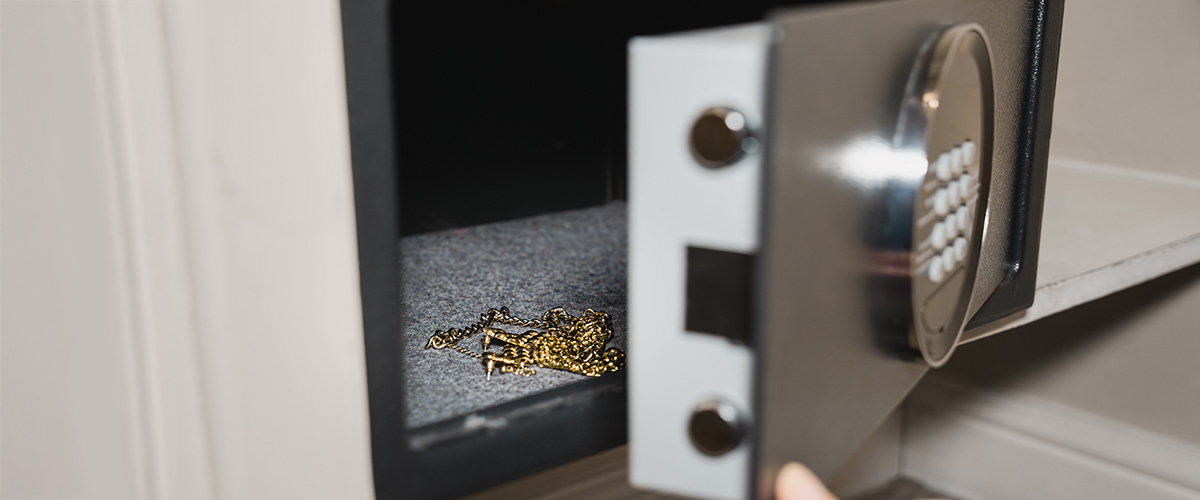
If you want to go one step further to protect any valuables inside your camper, consider installing a safe in your vehicle to keep them secure and locked away.
A small safe (like the kind you might use in your house) might fit somewhere inside your camper’s cupboards, or you could look at getting one which fits underneath your passenger seat.
While you might think the size and weight of a safe is too awkward to include in your campervan, it’s worth taking a look at the different options available if you’re after extra peace of mind while you’re on the road.
5. Get yourself some window air vents
If you like to keep your windows open a little, but don’t want hands (or bugs) to be able to get into your camper, then window air vents are definitely worth looking at.
While you should never leave your vehicle unattended with window air vents fitted, they can be great for allowing a good flow of air through your camper during the day or overnight while you’re still in or near your camper.
For example, if you’re hanging out on one side of your van and want a nice breeze to flow through the interior, you can fit some window air vents and not feel like you have to keep checking the windows on the side you can’t see!
6. Check out the different options for campervan trackers
Tracking devices are highly technical, invisible bits of equipment which can monitor your vehicle’s location, or alert you to the fact that it’s moved if you weren’t expecting it to do so.
Popularly, tracking devices may be “Thatcham Approved”, which means they are accredited by a leading authority in after-market security solutions and are therefore, easier to locate if they are stolen.
There seems to be an ever-growing number of different types of tracker available, all of which offer different pros and cons, so it’s worth doing a bit of research to find the tracker that’ll work best for you and how, when, and where you use your camper.
7. Secure your campervan’s pedals, steering wheel, gearstick, and wheels
While these are certainly less high-tech than trackers, things like steering wheel locks and wheel clamps send a clear message that stealing your campervan is going to be really difficult, if not virtually impossible.
Steering locks are available which either cover the whole of your camper’s steering wheel, or slot though it to prevent it from being turned. They’re often brightly coloured and immediately obvious, which can be great for putting off opportunistic thieves before they even attempt to steal your vehicle.
Similarly, gearstick locks can prevent anyone who doesn’t have the key from shifting your camper out of neutral, making it almost impossible for thieves to fire up your camper and make a quick getaway by driving it away.
You can also get locks which fit over the pedals of your camper, which can’t be removed without a specific key. These will also prevent anyone from being able to drive away in your vehicle, and are available from Just Kampers for a range of different Volkswagen campers.
Wheel clamps are an immediately obvious and infamously tricky measure against theft, which will stop your camper’s wheel from turning until the clamp is removed. This can prevent anyone from driving away in your campervan, as well as making it incredible difficult to load onto a trailer or tow away.
This isn’t an exhaustive list, and they’re not guaranteed to work, but there are a lot of things you can do to make your camper less of an appealing target, and to make it much more difficult for your campervan to be stolen.
Consider using a combination of these security features to optimise your campervan’s protection.
For more information about tailoring insurance policies to your campervan or motorhome, whether you’re after affordable premiums, or something with that little bit more protection, consider coverage from the experts at Just Kampers Insurance.
Which Vehicles Are More Likely to be Stolen?
The major target for theft is luxury or staycation vehicles, such as campervans or motorhomes. In fact, not only are vehicle-related crimes alarmingly common, but the majority of general insurance quotes for campervans and motorhomes alike have discovered a lack of security measures.
According to the article, approximately 45% of these vehicles lack a basic alarm system, and only 6% of owners have tracking devices fitted, regardless of the price of the campervan.
Vehicle theft is becoming more sophisticated as it learns from technology, just as custom or classic vehicles are greater targets because of their age and lack of security measures. Whether you own a classic or a modern campervan – from a VW T2 Split to a T6 – without security measures, it will be a lot more vulnerable to this type of crime.
Additionally, as demand for staycation vehicles grows, the likelihood for theft unfortunately increases with it.
Nowadays, campervan security can too easily be forgotten when considering all of the optional gear and costs. There is currently no legal requirement for a security device, but does that mean you should risk your campervan’s security?
Campervan Security FAQs
What is the best security measure for my campervan?
Prevention is the best security method. A combination of visual/physical devices and technical ones should help limit the opportunities for crimes of theft to occur.
What happens if my campervan is stolen?
If your campervan has been stolen, notify the police straight away. Using the crime number from the report you filed, notify your insurance company.
It will help the police to recover your campervan if it is fitted with a tracker. Without proper security measures it may make it more difficult to recover your stolen vehicle.
Does having an alarm and immobiliser fitted in my camper reduce insurance premiums?
The greater the security options fitted in your camper, the safer it becomes. This should reflect in the cost of your insurance premiums, as immobilisers and alarms are recognised as crime deterrents.
What is ‘Sold Secure’?
This is an organisation that tests, verifies and reviews locking systems for a range of leisure vehicles (grading from Bronze to Diamond), coordinated through the Master Locksmiths’ Association. Owners may notice the brand when shopping around for locking systems and other security products.
What is a Thatcham category alarm?
Thatcham is the standard for insurance companies, and many providers will insist that your vehicle is fitted with their alarms for basic security. Devices of a certain standard will receive a Thatcham Security Certification to reaffirm this security.
How does a vehicle tracking system work?
This relies on technical equipment to monitor the location of your vehicle. Typically, the vehicle owner will have a few options with their supporting subscription, whereby they can either buy it yearly, or cover two, three, four or even up to five years at a time. The police will use this tracking service to locate and recover a stolen campervan.
Categories of security systems for this kind of vehicle recovery include:
- Category Five/ Thatcham after-theft systems
- Category Six/ Stolen Vehicle Tracking
- Category Seven/ Stolen Vehicle Location
The difference between categories will depend on your vehicle and its requirements.
How do I check if my campervan has an engine immobiliser?
Since 1998, immobilisers have been fitted into all new vans. This may be done during production, or installed later. The best way to check if your campervan has this fitted is to read the handbook.
How Can Just Kampers Insurance Help?
Whether your prized possession is a classic, custom, or converted camper, security should be a top priority for any owner. With theft cases rising, owners need to ensure their vehicles are fitted with enough safety and security features to prevent and limit opportunities for crime.
As an experienced campervan insurance specialist, we know the value of a campervan can feel priceless. That’s why we help our customers achieve a reassuring sense of security through their insurance. To find out more, request a quote today.
A Quick Summary
There are loads of different security accessories you can use and install to keep your campervan secure, but not all security measures cost money. Remembering a few handy tricks like how and where you park it can help to protect against theft.
Furthermore, taking a number of precautions is equally better than just using one security feature, so consider a combination of them for optimal campervan security.
Don’t forget, it’s always best to protect your camper with reliable insurance, just in case the worst should happen.
In this article
- How can you keep your campervan safe and secure?
- 1. Ensure the doors lock, and the windows shut correctly
- 2. Be conscious of where and how you park
- 3. Always keep your valuables out of sight
- 4. Consider a safe for your campervan
- 5. Get yourself some window air vents
- 6. Check out the different options for campervan trackers
- 7. Secure your campervan’s pedals, steering wheel, gearstick, and wheels
- Which Vehicles Are More Likely to be Stolen?
- Campervan Security FAQs
- How Can Just Kampers Insurance Help?
- A Quick Summary